
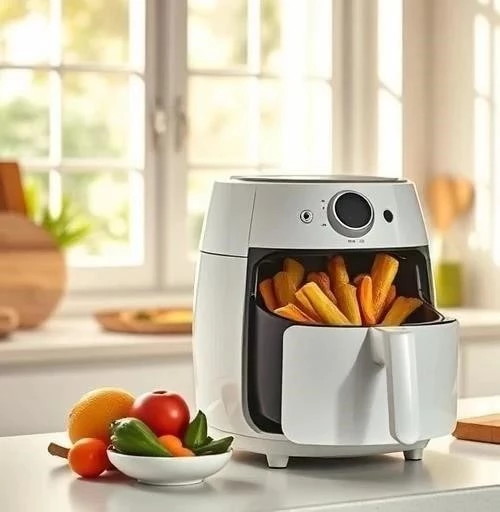
An air fryer can make weeknight cooking easier, but the right model depends on your household, kitchen space and cooking habits. Despite its name, it does not actually fry food in a bath of oil. A heating element and fan circulate hot air around the food, helping it brown with little or no added oil. Use the guide below to compare models by the features that matter in everyday use.
Choose a practical capacity
Capacity is usually the first decision. A compact, single-basket fryer may suit one or two people, while a larger household may need a roomy basket or a dual-drawer design. Check the usable cooking space, not just the advertised volume: a broad basket can fit a layer of food more effectively than a narrow, deep one. For crisp results, food should generally sit in a single layer, so consider how much you cook at once.
- One or two people: a compact model can save counter space and energy.
- Three or four people: look for a larger basket or enough room for a family-sized portion.
- Different foods at once: dual baskets let you cook separate dishes, sometimes at different temperatures.
Large capacity is useful only if the appliance fits your kitchen and you can store it conveniently. Measure the counter, nearby cupboards and the space needed to pull out a drawer safely.
Match the shape to your cooking
Basket-style models are straightforward and often compact. They work well for fries, vegetables, chicken pieces and reheating. Oven-style air fryers have shelves or trays, offering more room for flat foods and sometimes allowing several items to cook at once. However, shelves may need rotating for even browning, and the larger appliance can take up more space. Choose the style that suits your regular meals rather than the longest feature list.
Consider power and temperature control
Wattage can indicate how quickly a fryer heats, but it is not a guarantee of better cooking. Compare the manufacturer’s temperature range, timer, and ability to adjust settings easily. A clear display and simple controls are valuable when you cook often. Preset programs can be convenient, yet they are starting points—not substitutes for checking food and adjusting time to suit portion size and personal preference.
A good model should circulate air evenly and recover heat quickly after you add food. Reviews can help reveal whether a particular appliance cooks consistently, but look for repeated comments across multiple sources rather than relying on one unusually positive or negative review.
Look for useful, not decorative, features
- Shake or turn reminders help prompt you to move food for more even browning.
- Sync or finish-together settings are helpful on dual-basket models when foods need different cooking times;
- A viewing window and interior light let you check progress without opening the drawer.
- Dishwasher-safe parts can simplify cleanup, but confirm which components are actually safe to wash that way.
Keep in mind that extra presets, touchscreens and app connections may add cost without improving the meals you usually make. Prioritize dependable cooking, easy controls and parts that are simple to clean.
Check cleaning, noise and build quality
Food residue can collect in baskets, trays and corners. Removable parts with a smooth, non-stick surface are generally easier to wash; avoid abrasive tools that may damage a coating. Check whether replacement baskets or trays are available. A sturdy handle, stable base and well-fitting drawer are useful signs of thoughtful construction. Since fan noise varies by model, listen to one in a store if possible or check detailed owner reviews.
Think about safety and placement
Air fryers need room for hot air to escape. Follow the manual’s clearance instructions and place the appliance on a stable, heat-resistant surface away from curtains and the edge of the counter. Keep the air outlet unobstructed, and use the handle rather than touching a hot basket. Before buying, check the power requirements and warranty, and make sure the cord can reach a suitable outlet without creating a trip hazard.
Set a sensible budget
Compare the total value, not just the purchase price. A more expensive model may offer a larger capacity or stronger warranty, but a basic fryer may be perfectly suitable for simple meals. Include the cost of accessories only if you expect to use them, and check whether the manufacturer offers support and spare parts. A reliable appliance that fits your routine is better value than a feature-packed one that stays in a cupboard.
A quick buying checklist
- Estimate how many portions you normally cook.
- Measure the counter and storage space.
- Choose a basket or oven-style design to suit your meals.
- Compare usable capacity, controls, cleaning and warranty.
- Read reviews for consistent notes on cooking and durability.
The best air fryer for your home is not necessarily the biggest or most advanced. Choose one that accommodates your usual portions, fits your kitchen, is easy to clean and gives you straightforward control. If possible, compare the basket dimensions in person. That simple check can help ensure the appliance will be convenient long after the novelty wears off.

3 Comments. Оставить новый
I like that this explains the difference between basket-style and oven-style models without treating one as best for everyone. The household-size examples make it easier to narrow down the options.
Useful guidance for choosing an air fryer based on everyday cooking habits rather than a long list of features. The reminder to measure counter and storage space is easy to overlook but important.
A clear, practical guide that focuses on the details shoppers actually need to compare, especially usable basket space and kitchen storage. The advice about cooking food in a single layer is especially helpful.