
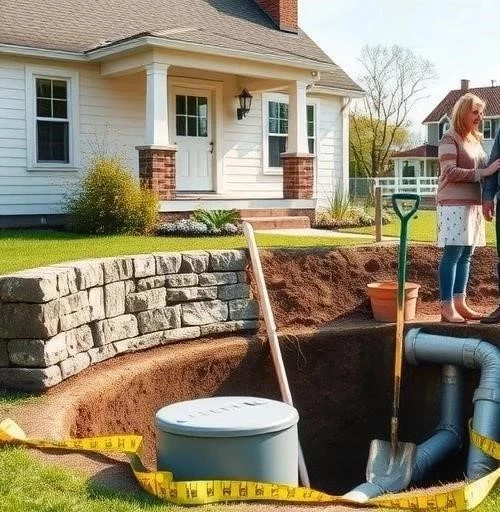
A septic tank is not a glamorous purchase. It works underground, asks for little attention, and becomes unforgettable only when it is chosen badly. The smartest septic tank for a private home is not necessarily the biggest or most expensive: it is the one that matches your household, plot and habits. Think of autonomous sewerage as a quiet backstage crew, not a trophy to buy by appearance.
Start with people, water and rhythm
Before comparing brands, write down the number of users and estimate daily water consumption. Include showers, laundry, guests and kitchen use—not just the figures on a brochure. A volume calculation should also allow for a batch discharge: several appliances emptying at once can challenge a system that looks adequate on paper. Check the required septic tank capacity and septic tank volume against local installation standards, rather than paying for a vast reserve you will never use.
Let the land have a vote
The plot is part of the design. The groundwater level, soil type, slope and available space determine which wastewater treatment system can work safely. Sandy, well-drained ground may suit soil polishing through a drainage field; clay or high groundwater can make that option impractical. A drainage well is not a universal shortcut. Ask for a site assessment before buying: real installation conditions can change both the design and the final bill.
Choose treatment, not just a tank
A simple storage tank collects wastewater and needs regular pumping by vacuum truck. It can suit a small seasonal cabin, but frequent visits may erase the lower purchase price. A non-electric septic tank uses gravity and can be economical where the ground allows further treatment. An energy-dependent septic tank or biological treatment plant can clean wastewater more intensively, but needs power and attentive septic maintenance. These are different tools, not “cheap” and “best” versions of the same product.
Compare the whole-life price
Ask for an itemized septic tank price and installation cost: excavation, delivery, pipes, electrical work, soil replacement and commissioning may be separate. A turnkey installation can reduce coordination headaches, but only if its scope is written down. Compare expected operating costs, service intervals, electricity use and the equipment lifespan, not just the sticker price. For manufacturer selection, look for clear technical documents, accessible service and spare parts—not a dramatic discount with no support.
Buy for the life you actually live
For country-house sewage used on weekends, a compact arrangement may be enough. A septic tank for year-round living must handle steady flow, winter conditions and real household peaks. The cheapest system can become costly if it is oversized, poorly installed or unsuited to the soil. Choose by measured needs, verified site conditions and realistic maintenance. Then your treatment facilities can do their work quietly—while your budget stays above ground.
3 Comments. Оставить новый
A refreshingly sensible guide: it weighs pumping visits, electricity, maintenance and site conditions instead of crowning a flashy “best” tank. The strongest takeaway is that wastewater treatment begins with asking better questions, not buying a bigger box.
The article treats the plot like a co-author, which is exactly right: soil and groundwater can rewrite a purchase plan faster than any sales brochure. Practical, grounded advice with no promise that one machine can charm every landscape.
I like the backstage-crew comparison. It turns an unglamorous utility into a useful way to think about reliability—and reminds readers that the quietest system is often the one sized for real routines, not imagined perfection.