
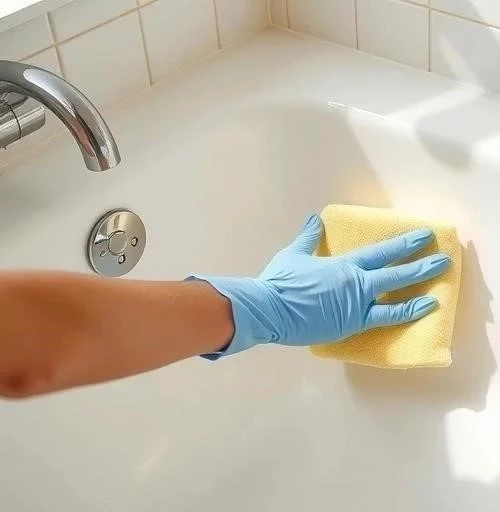
A yellowed or dull-looking acrylic bathtub does not always need a harsh chemical treatment. In many cases‚ the discoloration is a film of soap‚ body oils‚ or mineral deposits that can be lifted with gentle cleaning. The important point is to protect the acrylic while removing the cause of the stain: aggressive products and abrasive scrubbing may make the surface permanently dull or scratched. Start with the mildest method‚ check the tub manufacturer’s care instructions‚ and stop if the finish changes.
First identify what you are cleaning
Ordinary grime and soap scum often feel slightly greasy and improve after washing. Hard-water deposits may look chalky or form a ring near the waterline. Yellowing that remains after careful cleaning can have a different cause‚ such as prolonged exposure to sunlight‚ an aging surface‚ or damage to the coating. Cleaning can remove deposits‚ but it cannot restore acrylic that has chemically deteriorated or lost its original finish.
If you are unsure whether the tub is acrylic‚ or whether it has a special coating‚ consult its manual or the manufacturer. Test any cleaner on a small‚ inconspicuous area first. Wear household gloves‚ ventilate the bathroom‚ and keep children and pets away while you work.
Gentle method for routine yellowing
- Rinse the bath. Use warm—not boiling—water to wash away loose dirt. Very hot water can stress some surfaces‚ so avoid pouring it directly from a kettle.
- Wash with mild detergent. Add a small amount of dish soap or a mild‚ non-abrasive bathroom cleaner to warm water. Wipe the tub with a soft microfiber cloth or non-scratch sponge‚ using light pressure.
- Give the cleaner time. For a film of soap or body oils‚ let the suds sit for several minutes. Do not allow the surface to dry with cleaner on it.
- Rinse and inspect. Rinse thoroughly‚ then dry with a soft towel. Drying helps reveal whether the discoloration remains and reduces fresh water marks.
For a stubborn‚ localized mark‚ make a thin paste from baking soda and water. Apply it gently with a damp cloth‚ without grinding the powder into the surface. Work briefly‚ rinse completely‚ and check the test spot. Baking soda is milder than many scouring powders‚ but it is still a particulate cleaner; if the manufacturer advises against it‚ do not use it.
Mineral deposits: use caution
A chalky waterline may be mineral scale rather than dirt; Do not assume that a strong acid is safe for acrylic. Some care guides permit a diluted vinegar solution for brief contact‚ while others advise against acids altogether. Follow the tub manufacturer’s directions; if vinegar is permitted‚ test it first‚ use it diluted‚ keep contact short‚ and rinse very thoroughly. Never leave a solution to soak overnight. A cleaner labeled safe for acrylic is a more dependable choice.
Products and tools to avoid
- Scouring powders‚ abrasive pads‚ steel wool‚ and stiff brushes can scratch or dull the finish.
- Solvents such as acetone‚ paint thinner‚ and nail-polish remover can damage acrylic.
- Do not use bleach‚ ammonia‚ drain cleaner‚ or concentrated acids unless the manufacturer specifically approves the product for your tub. A product that whitens another material may harm acrylic.
- Never mix cleaning products. In particular‚ combining bleach with acids or ammonia can release dangerous gases.
Read the label rather than relying on a product’s color‚ scent‚ or “natural” claims. “Bathroom cleaner” does not automatically mean “safe for acrylic.” Use only as directed‚ and rinse away all residue before applying anything else.
When cleaning does not work
If the tub is still yellow after gentle cleaning‚ do not respond by scrubbing harder or escalating to stronger chemicals. The color may be embedded in a worn‚ scratched‚ or UV-damaged surface. Contact the manufacturer or a professional bathtub refinisher for advice. Polishing or refinishing can sometimes improve appearance‚ but the correct method depends on the tub and its condition; an unsuitable repair kit can make the damage worse.
Keep the surface bright
After each bath‚ rinse away soap and wipe the tub dry. Clean regularly with a mild product instead of waiting for a thick buildup to form. Use a soft cloth‚ and avoid storing harsh cleaners where they can leak onto the surface. These simple habits are more reliable than occasional intensive bleaching—and much less likely to shorten the life of the bath.
Bottom line: For most household discoloration‚ begin with warm water‚ mild soap‚ and a soft cloth. Use a gentle spot treatment only after checking compatibility. Acrylic is best whitened by removing residue without damaging its finish; if the color does not lift safely‚ seek professional guidance rather than risking permanent surface damage.

4 Comments. Оставить новый
The article makes a useful distinction between removable deposits and lasting damage to the acrylic. That helps readers avoid expecting cleaning to fix discoloration caused by an aging or damaged surface.
The step-by-step approach is clear and practical, especially the advice to rinse and dry the tub before judging whether a stain remains. That makes it easier to tell whether routine grime was the cause.
The safety guidance adds useful context to the cleaning instructions. Checking the manufacturer’s care information is a sensible recommendation, since tubs may have different finishes or coatings.
I appreciate the emphasis on starting with mild cleaners and testing a hidden area first. These precautions are important because abrasive products can dull acrylic, potentially making the problem worse.