
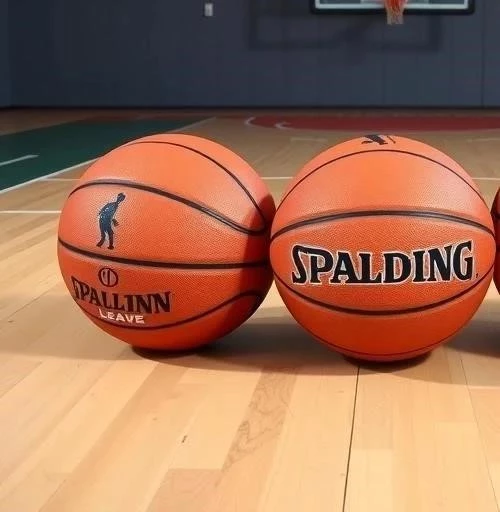
The best basketball is not necessarily the most expensive or the one used by professionals. It is the ball that suits your age, hand size, playing surface and training routine. Choosing carefully matters: a good fit makes dribbling and shooting more comfortable, while the wrong ball can be difficult to control or wear out quickly.
Start with the right size
Size affects grip and technique, so check the recommended size before buying. Size 7, about 29.5 inches in circumference, is the standard for adult men’s competition. Size 6, about 28.5 inches, is commonly used in women’s play and by many younger players. Size 5, about 27.5 inches, is often suitable for children. Age guidelines vary by league, so check your coach or competition rules. If possible, hold the ball: you should be able to control it without straining your fingers.
Match the ball to the court
Where you play determines what the cover must withstand. For an indoor wooden court, a quality composite-leather ball offers a soft feel and reliable grip. Traditional leather can feel excellent, but often needs to be broken in and is usually a higher-priced choice. For outdoor concrete or asphalt, choose durable rubber or an outdoor-rated composite cover. These resist abrasion better, though they may feel harder and less refined. If you regularly switch between surfaces, a ball labelled for indoor and outdoor use is a practical compromise; expect it to wear faster than a court-specific ball.
Check construction and feel
Look for even panel seams, a centred valve and a surface that feels secure in your hands, including when they are slightly damp. A ball should bounce consistently rather than wobble or feel unusually hard in one area. Brand reputation can help, but it is not a substitute for checking the product: construction and grip vary between models. If buying online, read reviews from players who use the same type of court and check the return policy.
Inflation, budget and care
Follow the pressure printed on the ball or recommended by its manufacturer; overinflation can make it harsh and may damage it. A sensible budget depends on frequency: occasional players can choose a dependable entry-level model, while regular training justifies a more durable cover and better grip. Avoid paying extra for a professional league logo unless you value its feel or specification. Keep the ball clean and dry, store it away from heat, and use it on the surfaces it was designed for. In short, choose the correct size first, the right cover second, then buy the best-made ball within your budget.
4 Comments. Оставить новый
The explanation of indoor and outdoor covers makes the trade-offs easy to understand. I appreciate that the article does not present an all-surface ball as a perfect solution and notes that convenience may come with faster wear.
This offers sensible advice without assuming that the most expensive ball is automatically the best choice. A fuller discussion of inflation and care would make the guide even more complete, but the selection advice already gives readers a strong starting point.
This is a practical guide because it connects ball size to comfort and control rather than treating size as a minor detail. The reminder to check league rules is especially useful, since age-based recommendations can differ.
The construction checks are helpful for shoppers who may be comparing products online. Looking at seams, the valve and player reviews can provide useful clues, though trying a ball in person remains the best way to judge its feel.