
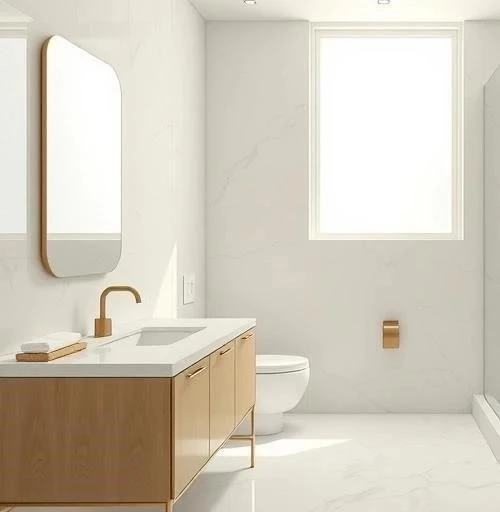
Natural stone can make a bathroom feel calm, spacious and enduring. To create a bright contemporary interior, consider its color, finish, scale and response to light together. Light natural stone, a restrained palette and carefully planned bathroom lighting help bring out the material’s character without making the room feel busy.
Choose a light, balanced palette
White marble reflects light and gives the room a crisp, elegant quality. Beige travertine adds warmth, while gray stone in the interior creates a cooler, understated effect. These materials work well with a light color palette, especially when wall and floor tones are related rather than identical. The natural stone texture adds subtle variation, so a room can feel layered even with few colors.
For a more affordable or lower-maintenance option, light stone-look tile can echo these tones. Large-format stone slabs reduce the number of grout lines and create a continuous visual surface. This can support the visual expansion of space in a compact room. A pale, lightly veined finish also encourages the reflection of natural light from windows and mirrors.
Use stone with purpose
Marble in the bathroom can appear on walls, floors, a vanity top or a shower surround. Stone wall cladding works especially well as a bathroom accent wall behind a bath or basin. Rather than covering every surface, select one focal area and keep the rest quiet. This approach suits contemporary style and minimalism in the bathroom, where material quality takes the place of excessive decoration.
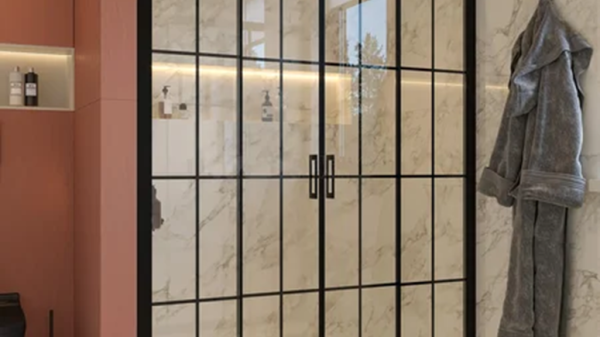
Travertine in the interior brings a softer, more tactile look. Beige travertine pairs naturally with timber cabinetry, creating a pleasing combination of stone and wood. For a lighter, seamless effect, stone and glass in the interior can be combined in shower enclosures, screens or shelving. Limestone for bathroom finishes is another option, provided the selected product and finish are suitable for wet areas.
Consider finish, detail and light
A matte stone surface diffuses light and gives floors a quieter appearance; check that the chosen floor finish is suitable for use when wet. A polished marble surface reflects more light and can make a vanity or wall feel luminous, though it may show water marks more readily. Stone bathroom flooring should be selected with slip resistance and the room’s maintenance needs in mind.
A stone countertop or natural stone basin can provide a small but distinctive focal point. Backlit onyx is another striking choice: use it selectively, such as on a feature panel, so the glow complements rather than overwhelms the room. Layered bathroom lighting—general, task and accent—helps stone retain its depth after daylight fades.
Plan for performance and care
Natural stone is not automatically maintenance-free. Before installation, confirm that the material, sealant and grout are appropriate for moisture exposure. Water-resistant finishes around showers and baths protect the assembly, while ventilation helps limit lingering humidity. Follow the supplier’s guidance for natural stone care; use suitable cleaners and avoid unapproved acidic products, which may damage some stones.
With thoughtful material selection, a light-toned bathroom interior can feel open without losing warmth. Let the stone’s pattern remain visible, repeat its tones in a few details, and balance reflective surfaces with softer textures. The result is a practical modern bathroom interior where daylight, simple forms and natural materials work together.

8 Comments. Оставить новый
The article explains how related wall and floor tones can create a cohesive palette while allowing the stone’s natural variation to remain visible.
The focus on texture, scale, and lighting provides a useful framework for planning a contemporary bathroom. The material comparisons are concise and clear.
The discussion of light reflection and large-format slabs connects material choices to the perception of space. It is a helpful consideration for smaller bathrooms.
The article presents a balanced approach to natural stone, combining visual appeal with practical considerations such as maintenance and suitability for wet areas.
The article gives a clear overview of how stone color and finish can influence the feel of a bathroom. Its emphasis on using a focal area rather than covering every surface is practical.
The comparison of marble, travertine, and gray stone makes the design options easy to understand. The mention of stone-look tile also adds a useful alternative.
The examples involving stone with timber and glass make the design ideas more concrete. The advice to keep surrounding surfaces restrained is easy to apply.
The suggestions are measured and avoid recommending one stone for every situation. The note about choosing finishes suitable for wet areas is especially relevant.