
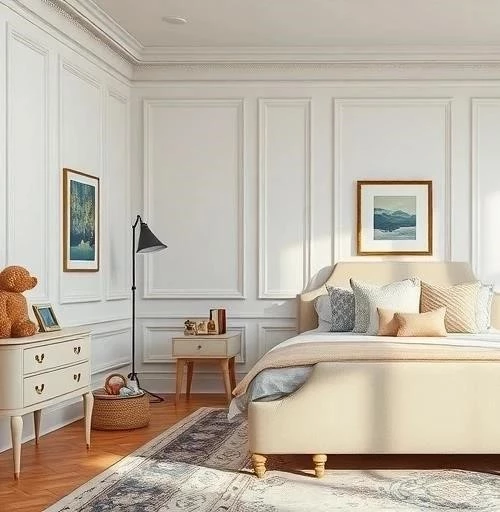
A classic nursery can feel like a little storybook: graceful furniture, soft colours and details that seem to belong to another era. But children grow faster than interiors do. The secret to a successful refresh is not to erase the room’s character, but to let it grow up alongside its owner—keeping the charm while making everyday life easier, safer and more flexible.
Keep the spirit; lighten the mood
Begin with the room’s visual “architecture.” Traditional mouldings, framed wall panels or a cherished wooden bed can remain the stars, while paint and accessories bring in a fresher rhythm. Cream, warm beige and muted sage create a light, restful backdrop. If the walls feel too formal, paint the panels in the same shade as the wall: their texture stays, but the effect becomes quieter. This is modern classic style—not a museum recreation, but a classic interior with room to breathe.
Natural materials make the update feel warm rather than merely fashionable. Wood, cotton and wool age gracefully and feel pleasant to touch. Choose child-safe finishes, rounded corners and sturdy furniture anchored securely to the wall. A beautiful piece is only truly timeless if it is safe to use.
Design for the way a child lives
Plan the room around three changing territories: study, rest and play. Place the desk near daylight, with a task lamp for cloudy afternoons. Keep the bed away from distracting screens, and make the play area easy to reach from the floor. A rug can mark its boundaries without adding another wall. This simple zoning gives each activity a home, while preserving a clear path through the room.
Choose furniture that can change jobs. A classic bed with an upholstered headboard may suit a young child and a teenager alike; just update the bedding. A wardrobe with adjustable shelves can adapt as clothes, books and hobbies change. A desk with drawers, plus a wheeled box for art supplies, makes tidying feel less like a parental command and more like a quick reset.
Storage works best when children can use it independently. Put everyday toys in open baskets at their height, and keep keepsakes or seasonal items on higher shelves. Labels with pictures help younger children return things to their places. A clear floor is not just tidy: it gives play more room and makes the whole interior feel calmer.
Use light and textiles to soften the classics
A chandelier can be the room’s graceful centrepiece, but it should provide even, comfortable light and be securely fitted. Add wall lights beside the bed and adjustable lighting at the desk. Layered light lets the room shift from homework mode to a cosy evening retreat.
Classic curtains can frame the window without turning it into a heavy stage. Choose washable fabric, a child-safe fixing and a length that does not trail across the floor. Cushions, a patterned blanket and framed artwork bring personality; swap these small accents as interests change instead of replacing the whole room.
Refresh in stages
Before starting a full renovation, identify what already works. Repaint, improve lighting, reorganize storage and replace worn textiles first. Then consider larger changes only where daily routines demand them. Take the child’s age, height and preferences seriously: invite them to choose a colour, display a drawing or decide where a reading nook belongs. Their room should feel like a place they helped shape—not a miniature version of an adult’s home.
A thoughtful update keeps the elegance of a classic setting while making it practical for real childhood: messy, imaginative, busy and always changing. The best room is not frozen in perfect order. It is a welcoming backdrop that can evolve, one small detail at a time.

7 Comments. Оставить новый
The best part is the invitation to make tidying easier rather than turning it into a battle. A wheeled art box sounds like a small, wonderfully practical peace treaty.
I love the idea that a room can grow without losing its childhood. Keeping the old details while changing the way they work feels more meaningful than starting from a blank slate.
The same-colour panels are a clever touch: like turning down the volume on a beautiful old song rather than changing the tune. I’d never thought of traditional moulding that way.
Natural materials bring a kind of quiet magic here. Wood, cotton, and wool don’t demand attention; they simply make a room feel more welcoming each time you come back to it.
This makes safety feel like part of good design, not an afterthought. Rounded corners and anchored furniture can be every bit as elegant as a carefully chosen headboard.
The three-zone approach is refreshingly practical. I can almost picture the rug as a tiny island where play happens, while the desk and bed each keep their own quiet shores.
A lovely reminder that timeless design isn’t about freezing a room in time. It’s about choosing pieces sturdy enough to witness new hobbies, changing tastes, and a few excellent messes.