
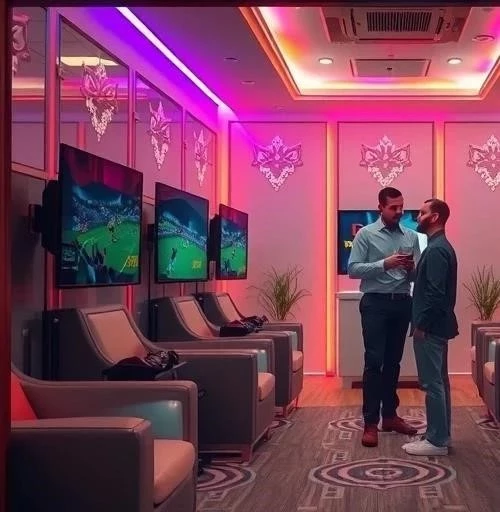
Opening a PlayStation gaming club in Kazakhstan can be a viable business, but success depends on more than buying consoles and renting a room. The key decisions are whether local demand supports your costs, whether your games and branding may be used commercially, and whether the premises can operate safely and legally. Treat the project as a small entertainment business, not simply a hobby.
Test demand before committing
Choose a city and neighbourhood by studying likely customers: students, young adults, families, and existing gaming communities. Visit competing clubs at different times, compare hourly prices, equipment, tournaments, and occupancy, and speak with potential customers. Check access by public transport, parking, visibility, and nearby cafés or universities. A low-rent location is not automatically a good one if customers will not travel there.
Prepare a basic financial forecast before signing a long lease. Estimate setup costs, monthly rent, utilities, internet, staff, taxes, repairs, payment fees, marketing, and replacement controllers. Calculate the break-even number of paid console-hours: divide monthly fixed costs by the average revenue earned per occupied hour after variable costs. Model quiet weekdays as well as busy evenings and weekends. Keep a reserve for several months of operating expenses.
Register and confirm local requirements
Select an appropriate legal form, such as an individual entrepreneur or a limited liability partnership, based on ownership, liability, staffing, and planned scale. Register through the relevant Kazakhstan government service and confirm the activity classification, tax regime, reporting duties, and social-payment obligations with a qualified local accountant. Rules and thresholds can change, so verify current requirements rather than relying on old online advice.
Before opening, ask the local authorities or a Kazakhstan lawyer which requirements apply to your specific premises and services. Check lease permissions, fire and evacuation rules, electrical safety, sanitation, signage, working hours, and accessibility. Arrange compliant payment processing and fiscal receipts where required. If you employ staff, document contracts, schedules, payroll, and workplace safety. Establish clear customer rules, refund procedures, and a process for handling complaints.
Resolve commercial-use and branding rights
This step is essential. Owning a PlayStation console or buying a game for personal use does not necessarily grant permission to charge customers to play it. Review the applicable console, game, and online-service terms, and seek written confirmation from Sony Interactive Entertainment or the relevant rights holders about commercial operation in Kazakhstan. Ask publishers about public-performance or commercial licences where applicable. Do not assume that a personal subscription or ordinary retail copy covers a gaming club.
Likewise, do not present the venue as an official Sony or PlayStation centre, use official logos, or imply sponsorship unless you have express authorization. A safer approach is to describe it accurately as an independent gaming club and use your own brand, while complying with trademark rules. Get legal advice if the permissions are unclear; resolving this before purchasing equipment can prevent expensive disputes or forced closure.
Choose equipment and design the space
Buy reliable consoles, quality displays, comfortable seating, headsets, and spare controllers. Compare the cost and availability of warranties and repairs in Kazakhstan. Use stable, appropriately fast internet, secure the router, and test online play during peak hours. Provide ventilation, safe cable management, suitable lighting, and enough space between stations. Plan for cleaning and controller checks between sessions. Keep an inventory with serial numbers and record damage promptly.
Offer more than a row of consoles: consider private rooms, group bookings, tournaments, or refreshments if local rules permit. Set age-appropriate policies, communicate supervision expectations to parents, and check applicable rules for minors and late-night operation. Avoid collecting unnecessary personal information; protect booking and payment data, and publish a clear privacy notice where required.
Set prices and build repeat business
Use simple hourly prices, with transparent peak and off-peak rates, group packages, and advance booking. Base discounts on real capacity: a cheaper weekday session can fill otherwise empty hours, while excessive discounts during busy periods sacrifice revenue. Promote through local social networks, maps, student communities, and small tournaments. Publish rules, prices, location, and opening hours clearly. Encourage reviews, but never buy misleading ratings.
Opening checklist
- Validate demand and calculate break-even occupancy.
- Register the business and confirm tax, premises, safety, and employment duties.
- Obtain written clarity on commercial game use and branding.
- Sign a suitable lease, install tested equipment, and train staff.
- Launch with a limited schedule, track bookings and costs, then adjust.
Bottom line: A sustainable club is built on verified rights, compliant operations, dependable equipment, and realistic unit economics. Start small enough to test demand, keep accurate records, and confirm Kazakhstan-specific rules with local professionals before opening.

7 Comments. Оставить новый
The suggestion to keep several months of operating expenses in reserve is sensible. Even a promising club may take time to build repeat customers, and a reserve can help it manage early fluctuations in revenue.
The break-even calculation is a useful starting point because it connects monthly costs to the number of paid hours the club must sell. It would be wise to test that estimate against quiet periods as well as busy weekends, as the article recommends.
I like that the article treats a gaming club as a business rather than just a room with consoles. Including expenses such as repairs, payment fees, and replacement controllers helps aspiring owners avoid underestimating their ongoing costs.
The advice to test local demand before committing to a lease is especially practical. Visiting competitors at different times can reveal whether apparent popularity is consistent or limited to peak hours, which makes the financial forecast more realistic.
The focus on location is well judged. Rent alone should not determine the choice; access, visibility, and proximity to likely customers can affect whether the club attracts enough visitors to cover its costs.
This is a measured and useful introduction for anyone considering a gaming club in Kazakhstan. Its strongest point is encouraging research and financial planning before signing a lease or buying equipment.
The reminder to verify current registration, tax, and reporting requirements with local professionals is important. Regulations can change, so relying on outdated online guidance could create avoidable problems for a new business.