
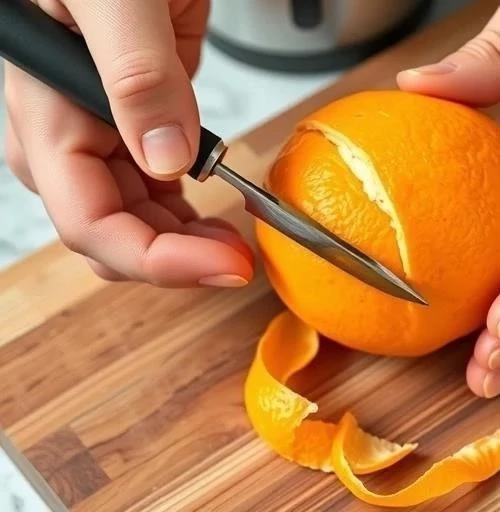
Peeling an orange with a knife is useful when the rind is thick, the fruit is firm, or you want neat, even pieces for serving. It can also be easier than pulling the skin off by hand. The key is to cut through the colored peel and white pith without slicing deeply into the juicy flesh. Work slowly, keep the fruit stable, and use a sharp knife rather than forcing a dull one.
What you’ll need
- A clean, sharp paring knife or small kitchen knife
- A stable cutting board
- A ripe orange, washed and dried
Method 1: Remove the peel in strips
- Prepare the fruit. Rinse the orange under running water and dry it. Place it on the cutting board. If it rolls, trim a very thin slice from the bottom to make a flat base. Avoid cutting away much fruit.
- Make a shallow cut. Hold the orange steady with your fingertips curled away from the blade. Starting near the top, guide the knife down the curve of the fruit. Cut only through the rind and most of the pith; the blade should barely touch the flesh.
- Continue around the orange. Make several lengthwise cuts, spacing them about an inch apart. Divide the rind into manageable panels rather than trying to remove it in one piece. Keep the knife directed away from your hand and body.
- Lift off each panel. Slide the tip of the knife just beneath an edge of peel, then use your fingers to pull the panel away. If it resists, make the cut a little deeper—but do not saw toward your hand.
- Remove remaining pith; If thick white patches remain, shave them off carefully or leave them in place. A little pith is harmless, though removing some can make the fruit taste less bitter.
Method 2: Peel a whole orange in a spiral
For a continuous strip, cut a shallow circle around the top of the orange, avoiding the flesh. Begin at that cut and guide the knife around the fruit in a gentle spiral, keeping the blade close to the skin. Turn the orange with your free hand instead of twisting your wrist sharply. This technique looks attractive, but it requires more control; choose separate panels if you are new to using a knife.
For wedges or segments
If you want clean, pith-free segments, first cut off the top and bottom so the orange sits flat. Stand it upright and slice downward along its curve, removing the peel and pith in narrow sections. Then hold the peeled orange over a bowl and cut between the thin membranes to release each segment. This takes more time, but it produces tidy pieces for salads, desserts, or a garnish.
Safety and useful tips
- Use a cutting board that will not slide; place a damp towel underneath if necessary.
- Keep the orange stable and your fingertips tucked back. Never try to catch a falling knife.
- Use light pressure. A sharp knife gives you more control, while a dull blade may slip.
- Do not rush to remove every trace of white pith. It is edible, and scraping aggressively can waste juice and damage the fruit.
- Wash the knife and board after peeling, especially before preparing other foods.
Which technique should you choose?
For an everyday snack, shallow lengthwise cuts and hand-lifted panels are usually the simplest option. Choose the spiral method when presentation matters and you are comfortable controlling the blade. For elegant, pith-free segments, remove the rind in narrow strips and separate the flesh from its membranes. In every case, the best result comes from prioritizing control over speed: a gentle, shallow cut protects both your fingers and the orange’s juicy flesh.


7 Comments. Оставить новый
The article is organized in a way that makes the process approachable, and the distinction between the strip and spiral techniques is useful. It also avoids overstating the need to remove every bit of pith, which keeps the advice practical.
These instructions offer a good balance of technique and caution. The reminder not to force a dull knife is important, and the explanation that a small amount of pith is harmless helps readers avoid unnecessary trimming.
I like that the article recommends making several manageable cuts instead of trying to remove the rind in one piece. That approach seems easier to control, especially for someone who has not peeled an orange with a knife before.
The two methods suit different needs: strips are practical for everyday peeling, while a spiral can make a more decorative presentation. The explanation is easy to follow, though the spiral method would benefit from a little more detail about finishing the cut safely.
The safety reminders are a strong part of these instructions, particularly curling the fingertips away from the blade and turning the fruit rather than twisting the wrist. A brief note about using a nonslip cutting board could make the guidance even more complete.
The article gives clear, practical guidance on removing orange peel while avoiding unnecessary cuts into the fruit. I especially appreciate the emphasis on keeping the knife shallow and the orange stable, since those details make the instructions safer as well as more useful.
This is a helpful guide because it explains not just what to do, but why shallow cuts matter. The advice to remove only thick patches of pith is also sensible, since it avoids wasting edible fruit.