
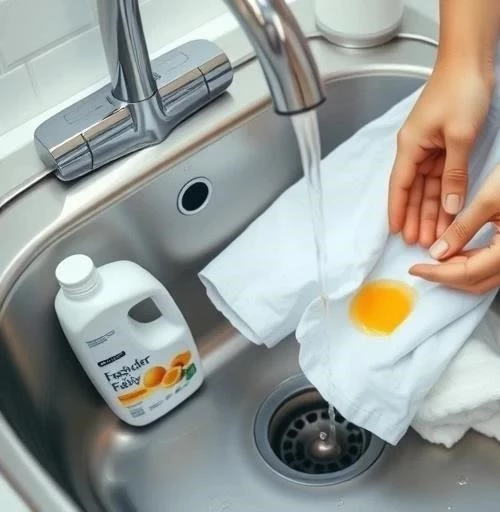
Orange juice can look harmless, but it may leave a visible mark, especially on pale fabric. The good news is that a fresh stain is usually manageable if you act promptly. The key is to lift away the fruit rather than rub it deeper into the fibres, and to avoid heat until you are sure the mark has gone. Orange flesh and juice are largely water-soluble; any oily residue from the peel may need a different treatment.
Act quickly and check the care label
First, check the garment’s care label. Cotton and many washable synthetics can generally be treated at home, while silk, wool, leather, and items marked “dry clean only” may need specialist care. If the garment is valuable or delicate, do not experiment with household products: take it to a cleaner and explain what caused the stain. For washable clothing, test your chosen detergent or stain remover on an inconspicuous seam, following its instructions.
Removing a fresh orange stain
- Lift off solids. Use a spoon or the edge of a blunt knife to remove pulp. Work from the outside toward the centre so you do not spread the stain.
- Blot, don’t scrub. Press a clean white cloth or paper towel against the area to absorb liquid. Rubbing can force pigment into the fibres and enlarge the mark.
- Rinse from the back. Hold the stained section under cool running water, with the reverse side facing the stream. This helps push juice out of the fabric instead of through it. Avoid hot water at this stage.
- Apply detergent. Put a small amount of liquid laundry detergent on the mark and gently work it in with your fingertips. Leave it for about 10–15 minutes, or use the time stated on the product label. Do not let detergent dry on the fabric.
- Wash as directed. Launder the item at the warmest temperature allowed by its care label. Use the usual amount of detergent; more is not automatically more effective and can leave residue.
Before putting the garment in a dryer, inspect the damp area in good light. If a shadow remains, repeat the pretreatment and wash again. This matters because dryer heat can make a remaining stain harder to remove. Air-drying between attempts is the safer choice.
If the stain has dried
Dried juice takes longer to loosen, but the garment may still be salvageable. Gently brush or lift away any crusted pulp, then soak the washable item in cool water for 20–30 minutes. Apply liquid detergent directly to the stain and allow it to work before washing. For a washable, colourfast fabric, an oxygen-based stain remover may help; follow the package directions and test it on a hidden area first. Do not use a product unless its label says it is suitable for that fabric.
After washing, check the stain before drying. If it has faded but not disappeared, repeat the treatment rather than increasing the water temperature or turning to a more aggressive chemical. Several gentle treatments are often safer for fabric than one harsh attempt.
When peel oil leaves a greasy mark
If squeezing or peeling the orange has left an oily patch, treat that spot separately. Blot excess oil without spreading it, then apply a little liquid laundry detergent or a fabric-safe dishwashing liquid to the affected area. Gently work it in, wait several minutes, and rinse thoroughly before laundering. Dishwashing liquid can be too strong for delicate materials, so test first and avoid using it on silk, wool, or other sensitive fibres unless the care instructions permit it.
Special fabrics and common mistakes
For silk, wool, rayon, or a garment with unstable dye, blot with cool water and seek professional advice if the mark persists. Do not soak an item whose label prohibits it. On coloured clothing, test any stain remover in a hidden spot because colour loss may look worse than the original stain.
- Do not rub the stain vigorously; friction can damage fibres and spread the juice.
- Do not begin with hot water, an iron, or a tumble dryer. Heat can set a stain that remains.
- Do not pour chlorine bleach directly onto the garment. It can weaken fibres and remove colour; never mix cleaning products.
- Do not combine stain removers or use an unlabelled remedy. Follow product directions and rinse when instructed.
Why this method works
Prompt rinsing removes much of the water-soluble juice, while detergent helps release material that clings to fibres. Treating an oily peel mark with a suitable detergent addresses a different kind of residue. Gentle steps are therefore more reliable than scrubbing or applying strong chemicals at random. In short: remove pulp, rinse cool from the back, pretreat, wash according to the label, and check before applying heat. If the stain remains after repeated careful attempts—or the garment is delicate—consult a professional cleaner.



6 Comments. Оставить новый
The article gives a clear reason for avoiding vigorous scrubbing: it can push the juice into the fibres and enlarge the mark. That explanation helps readers understand the method rather than simply follow instructions.
The warning about heat is especially useful. Checking the stain before using a dryer can prevent a faint mark from becoming harder to remove, and that final inspection is an easy step to overlook.
The advice to check the care label first is important, since a treatment that works on cotton could damage a delicate fabric. I also appreciate the suggestion to test products on a hidden area before applying them to the stain.
This is a practical guide because it explains why blotting and rinsing from the back can help prevent the stain from spreading. The steps are easy to follow, even for someone dealing with a spill for the first time.
I like that the guidance distinguishes between washable clothing and items that should go to a professional cleaner. That caution makes the advice more responsible than a one-size-fits-all stain remedy.
The detergent and washing instructions are sensibly qualified by product directions and the garment’s care label. This makes the advice useful while acknowledging that fabrics and stain removers can behave differently.