
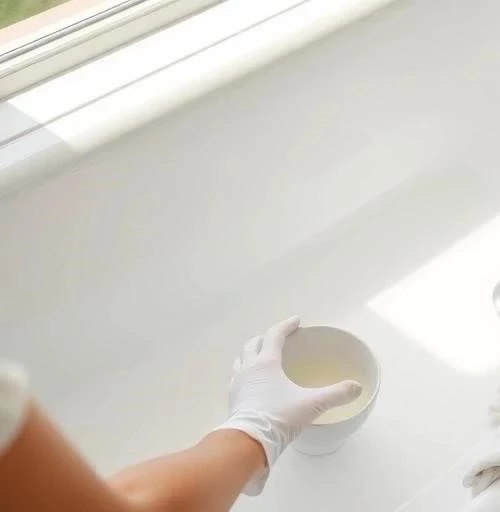
Yellow stains on an acrylic bathtub are often caused by soap film, mineral deposits from hard water, or residue from bath products. The discoloration does not always mean the acrylic itself has changed color. Start with the mildest method: aggressive scrubbing or harsh chemicals can dull the glossy surface and make future staining more likely.
Begin with gentle cleaning
- Rinse the tub with warm water to loosen surface grime.
- Apply a small amount of mild dish soap or a non-abrasive bathroom cleaner. Use a soft microfiber cloth or sponge, then wipe gently in circles.
- Rinse thoroughly and dry with a clean towel. Drying helps prevent fresh mineral spots.
If the yellowing remains, make a paste from baking soda and a little water. Spread it over the mark, leave it for about 10–15 minutes, and wipe gently with a damp, soft cloth. Baking soda is a mild abrasive, so do not press hard or use it repeatedly on the same area. Test any cleaner on an inconspicuous spot first, and follow the tub manufacturer’s care instructions.
For hard-water or soap deposits
White vinegar diluted with water may help dissolve mineral film, but use it only if the manufacturer permits acidic cleaners. Apply briefly with a cloth, rinse very well, and do not let it sit for a long time. Avoid vinegar on nearby natural stone or metal fittings. Never mix vinegar with bleach or other cleaners; mixing products can release dangerous fumes.
What not to use
- Scouring pads, steel wool, abrasive powders, or rough brushes: they can scratch the acrylic.
- Bleach, ammonia, acetone, paint thinner, and drain cleaner: these may damage, discolor, or weaken the finish.
- Strong “stain removers” not labeled safe for acrylic: a quick result is not worth permanent surface damage.
If the stain will not come off
Persistent yellowing may be embedded in a worn finish, caused by aging, or related to the water supply rather than removable dirt. Do not keep scrubbing harder. Ask the tub manufacturer or a professional about an acrylic-safe polish or repair. If stains return quickly, clean and dry the tub regularly, rinse away bath oils and dyes after use, and consider a suitable water filter or softener. Gentle, consistent care is safer and usually more effective than one harsh treatment.

9 Comments. Оставить новый
The warnings about bleach, solvents, and abrasive pads are important. Acrylic can be damaged by products people might otherwise reach for when faced with a stubborn stain.
The advice to start with mild soap and a soft cloth is practical. It makes clear that yellowing can come from surface deposits, so harsh scrubbing should not be the first response.
I appreciate the reminder to check the manufacturer’s care instructions and test a cleaner in an inconspicuous spot. Those steps can help prevent a cleaning attempt from damaging the tub.
The suggestion to dry the tub after rinsing is a simple, sensible way to limit new mineral spots. I also like that the article recommends gentle cleaning before trying anything stronger.
The article explains the difference between removable buildup and discoloration caused by an aging or worn finish. That distinction is useful because it discourages repeatedly scrubbing a stain that may not come off.
This is a clear, measured guide. Explaining that baking soda is mildly abrasive—and advising readers not to press hard—adds useful context to a common household suggestion.
The vinegar guidance is appropriately cautious: it notes that acidic cleaners may not suit every tub and should be rinsed away promptly. The warning not to mix cleaning products is especially helpful.
A helpful overview for anyone unsure how to approach yellow marks on an acrylic tub. The emphasis on gentle methods, careful product selection, and manufacturer guidance makes the recommendations reassuring.
The step-by-step approach is easy to follow, and the advice to stop rather than scrub harder when a stain persists is responsible. It helps protect the finish while setting realistic expectations.