
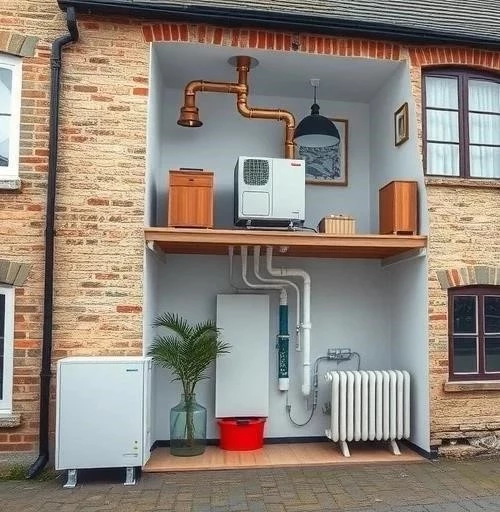
Replacing a gas system in an old building is not simply a matter of choosing a new boiler. The sound decision is to reduce demand first, then select equipment to meet the remaining load; Otherwise, expensive appliances will keep compensating for poor insulation and uncontrolled heat loss. This order makes heating without gas more reliable and keeps running costs manageable.
Start with the building
Before modernizing heating, inspect the roof, walls, windows, ventilation, and existing pipes. A professional heat-load calculation should reflect the building’s actual condition and room-by-room needs. Insulating walls, improving roof insulation, replacing leaky windows, and sealing drafts can reduce heat loss substantially. These measures often cost less over time than buying an oversized system. They also improve comfort and energy efficiency.
In a reconstruction project, check whether the old heating circuit can be retained. Pipe condition, available electrical capacity, chimney safety, and space for fuel storage all affect the design. Modernizing utilities alongside the heating installation prevents incompatible equipment and costly rework.
Compare heat sources
A heat pump can be efficient where the building is well insulated and outdoor conditions suit the selected model. It works especially well with underfloor heating or correctly sized radiators, which deliver warmth at lower water temperatures. An electric boiler is simpler to install, but electricity prices and supply capacity may make operating costs higher. Electric convectors and infrared heating can suit individual rooms or occasional use; relying on them throughout a large, poorly insulated building may be costly.
A solid-fuel boiler can provide dependable heat where fuel is readily available, but it requires regular loading, safe flue arrangements, and storage. A pellet boiler automates much of the fuel feed, although it needs space and maintenance. Solar collectors can support hot-water production or reduce seasonal demand, but should be treated as a supplement rather than the sole winter heat source.
Design for long-term performance
For a private house or a building without a gas connection, there is no universal winner. Compare installation cost, fuel availability, maintenance, comfort, and expected service life—not just the purchase price. A well-designed autonomous heating system should include suitable controls, balanced circuits, and backup for severe cold or equipment failure. Commissioning matters: poor installation can erase the savings promised by efficient technology.
In short, combine insulation, a measured heat-load calculation, and a system matched to the building. This approach makes reconstruction safer, improves comfort, and reduces lifetime heating costs.
Key terms: отопление без газа; альтернативные источники тепла; автономная система отопления; реконструкция старого здания; модернизация отопления; тепловой насос; электрический котел; твердотопливный котел; пеллетный котел; солнечные коллекторы; инфракрасное отопление; электрические конвекторы; теплый пол; радиаторное отопление; утепление здания; теплопотери; энергоэффективность; теплоизоляция стен; утепление крыши; замена окон; отопительный контур; расчет тепловой нагрузки; монтаж системы отопления; стоимость отопления; эксплуатационные расходы; энергосбережение; отопление частного дома; отопление здания без подключения к газу; модернизация инженерных сетей.


9 Comments. Оставить новый
The article sensibly treats insulation as part of a heating project, not as an optional extra. Improving the building envelope can increase comfort while allowing a smaller system to meet the home’s needs.
The article makes a strong case for reducing heat loss before choosing replacement equipment. A heat-load calculation based on the building’s real condition can prevent oversizing, which otherwise raises both installation and operating costs.
It is helpful that the article balances convenience with maintenance needs. Solid-fuel and pellet boilers can be viable alternatives, but fuel storage, regular upkeep, and safe flue arrangements should be part of the decision from the beginning.
The advice to coordinate utility upgrades with the heating installation is especially practical. Checking the chimney, wiring, pipes, and fuel-storage space early can reduce the risk of delays and incompatible equipment.
This is a clear overview of the trade-offs involved in replacing gas heating. It would be even more useful with example running-cost calculations for different climates and energy prices, but its emphasis on assessing the building first is sound.
The comparison of heating options is appropriately conditional rather than presenting one technology as best for every home. Insulation, local energy prices, available space, and the building’s heat emitters all affect the sensible choice.
I appreciate the attention to the existing heating circuit and electrical capacity. These practical checks are easy to overlook, yet they can determine whether a proposed system will work safely without expensive changes later.
The distinction between whole-home and room-by-room electric heating is important. Electric convectors or infrared units may be practical for occasional use, but relying on them throughout a poorly insulated building could lead to high bills.
The explanation of heat pumps is useful because it connects their efficiency to lower-temperature heating systems. That detail helps readers understand why a heat pump may require changes to radiators or other parts of an older installation.