
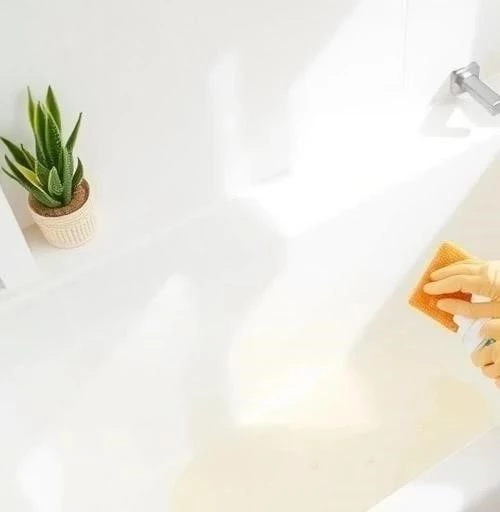
Yellowing on an acrylic bathtub is often caused by soap residue, hard-water minerals, body oils or products left on the surface. Sometimes the discoloration comes from aging or damage within the acrylic itself; in that case, ordinary cleaning may not restore the original color. Start with the gentlest method and test any cleaner on a small, inconspicuous area.
Start with a gentle wash
Rinse the tub with warm water. Add a few drops of mild dishwashing liquid to a soft sponge or microfiber cloth, then wipe the yellowed areas without pressing hard. Rinse thoroughly and dry with a clean towel. This is often enough to lift surface grime and prevent fresh water marks.
Try baking soda for stubborn marks
Make a soft paste from baking soda and a little water. Spread it over the stain, leave it for about 10–15 minutes, then gently wipe with a damp, non-abrasive sponge. Rinse very well. Baking soda can help with surface residue, but it should not be scrubbed vigorously: even a mild powder may dull acrylic if rubbed hard.
For mineral deposits, use diluted vinegar cautiously
If the yellowing looks like a hard-water film, dampen a cloth with a mixture of equal parts white vinegar and water. Place it on the affected area for a few minutes, then wipe gently and rinse generously. Do not leave vinegar on the tub for a long time, and check the bathtub manufacturer’s care instructions first. Avoid this method if the maker advises against acidic cleaners.
What not to use
- Do not use scouring pads, steel wool, abrasive powders or stiff brushes; they can scratch the glossy surface.
- Avoid strong solvents, drain cleaners and products containing acetone or other aggressive chemicals.
- Do not use chlorine bleach unless the manufacturer specifically says it is safe for your tub.
- Never mix cleaning products. In particular, combining bleach with vinegar or ammonia can release dangerous gases.
Keep the tub bright
After bathing, rinse away soap and shampoo, then wipe the surface dry. Clean regularly with a non-abrasive bathroom cleaner approved for acrylic. Use a soft cloth, follow label directions, ventilate the room and wear gloves if the product recommends them. The sooner residue is removed, the less likely it is to build up into a yellow film.
When cleaning does not work
If the stain remains after gentle cleaning, do not keep scrubbing or reach for a harsher chemical. The discoloration may be embedded, caused by UV exposure, or associated with worn or damaged acrylic. Ask the manufacturer or a bathtub-restoration professional about suitable polishing or repair options. A persistent stain is not always dirt, and aggressive treatment can make the surface harder to restore.


5 Comments. Оставить новый
The reminder to start with mild dish soap and a soft cloth is practical. It’s easy to damage acrylic by scrubbing too aggressively.
This is a useful guide because it explains that some yellowing may come from aging or damage, not just dirt.
The safety advice about never mixing cleaning products is especially helpful. Clear, sensible steps for tackling surface stains.
I appreciate the caution about vinegar and checking the manufacturer’s instructions first. That’s an important detail for acrylic tubs.
Good advice on using baking soda gently and rinsing thoroughly. I’ll try the mildest method first.