
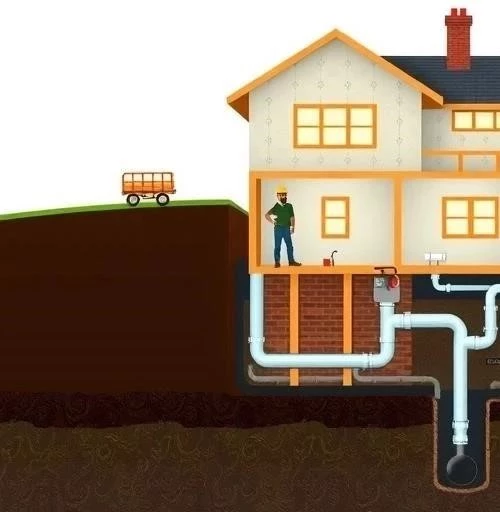
Cutting the budget for a sewer system does not mean choosing the cheapest pipes․ Poor design can cause leaks, blockages and expensive repairs․ The sound approach is to plan the whole system before construction, compare life-cycle costs and follow building codes․
Design before digging
Include sewer design in the early planning of all utilities․ Place bathrooms, the kitchen, a septic tank or a connection to the public sewer along a practical route․ A shorter route usually means less excavation, fewer fittings and easier maintenance․ The estimate should cover materials, labor, earthworks, permits and future servicing—not just the pipe price․
Specify pipe diameter, slope and burial depth for the site and local rules․ An incorrect pipe slope can cause solids to settle or wastewater to move too quickly․ Proper pipe laying and coordinated earthworks help prevent rework․ Coordinate the external sewer with the internal system, drainage and stormwater sewer: separate systems are often needed, and mixing them can overload treatment equipment․
Choose a system and materials carefully
Where a central sewer connection is available, compare its connection fees with the long-term cost of an autonomous system․ For a home without access, size a septic tank for the household and soil conditions․ A local treatment plant may suit a small plot or stricter discharge requirements, but its purchase price is only part of the cost: power use, filters and servicing matter too․
Compare polypropylene and PVC pipes by strength, temperature resistance, fittings and installation requirements․ Buy compatible components and avoid unnecessary premium features․ A well-designed sewer well gives access for inspection and cleaning; a drainage system should be planned separately to manage groundwater and runoff․
Save without creating future problems
Ask contractors for an itemized estimate and compare the same scope of work․ The cost of sewer installation depends on access, soil, depth, pipe length and equipment, so unusually low bids may omit essential work․ Savings come from efficient routing, accurate quantities, sensible material selection and doing excavation alongside other planned site work—not from ignoring standards․ Arrange regular sewer-system maintenance to identify small faults before they become costly failures․
Key terms: система канализации; проектирование канализации; монтаж канализации; автономная канализация; наружная канализация; внутренняя канализация; канализационные трубы; прокладка труб; уклон канализационной трубы; глубина прокладки труб; септик для частного дома; установка септика; очистные сооружения; локальная очистная станция; канализационный колодец; дренажная система; ливневая канализация; инженерные коммуникации; смета на канализацию; стоимость монтажа канализации; расчет расходов; экономия на строительстве; выбор материалов; полипропиленовые трубы; ПВХ трубы; земляные работы; строительные нормы; водоотведение на участке; подключение к центральной канализации; обслуживание канализационной системы․
8 Comments. Оставить новый
The explanation of pipe slope is especially helpful. It shows why sewer installation should follow site conditions and local requirements rather than relying on a generic design, since poor flow can lead to blockages or other maintenance problems.
I appreciate the emphasis on coordinating the sewer with other utilities before construction begins. A well-planned route can reduce unnecessary digging, while keeping wastewater and stormwater systems appropriately separate helps avoid overloading treatment equipment.
The article appropriately treats septic tanks and local treatment plants as site-specific choices. Household size, soil conditions and discharge requirements should guide the decision, while ongoing operating costs deserve as much attention as the initial price.
It is sensible to compare pipe materials based on the actual installation requirements, not just the purchase price. Compatibility between pipes and fittings also matters, because mismatched components can create avoidable problems during construction or later repairs.
The recommendation to request itemized estimates is valuable. Comparing contractors only works when they are pricing the same scope, including earthworks, permits and servicing, rather than presenting different versions of the project.
The comparison between a public sewer connection and an autonomous system is practical. Looking at connection fees alongside ongoing energy, servicing and maintenance costs gives homeowners a more realistic basis for choosing.
The article makes a useful point: choosing the lowest-cost pipe is not the same as minimizing the total cost of a sewer system. Planning the route and including excavation, labor and future maintenance in the estimate can help prevent expensive surprises.
A sewer well may seem like an extra expense, but access for inspection and cleaning can make future maintenance easier. This supports the article’s broader message that thoughtful design can save money over the life of the system.