
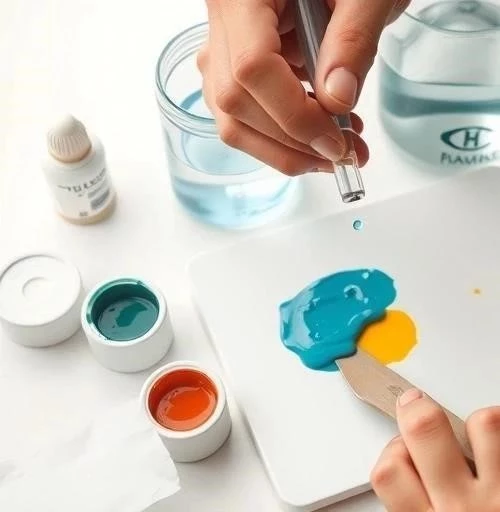
Acrylic paint is a shape-shifter. Straight from the tube‚ it can stand up like frosting; with a little water‚ it flows like a wash; with the right medium‚ it can glide across a canvas without losing its strength. The trick is knowing what you want it to do before you start adding liquid. Thin it thoughtfully‚ and you control the paint. Thin it carelessly‚ and the color may lose its grip.
First‚ choose your destination
“Thinning” can mean several things. You might want a transparent glaze‚ a soft watercolor-like layer‚ a smoother brushstroke‚ or simply paint that moves more easily. These are not quite the same job. Water changes the paint’s consistency and can reduce the amount of acrylic binder in a mixture. Acrylic mediums are made to change flow‚ transparency‚ or texture while helping the paint form a durable film.
- For a slightly looser consistency: add a few drops of clean water.
- For transparent layers or glazes: use glazing medium‚ or a suitable fluid medium.
- For smoother flow without much added transparency: try a flow-improver or flow medium‚ following its label.
- For a fluid‚ ink-like effect: use fluid acrylics or a product designed for pouring or very thin applications.
Products vary‚ so the paint manufacturer’s instructions take priority over any universal ratio. There is no magic number that suits every brand‚ pigment‚ surface‚ and technique.
The gentle-water method
- Start with a small amount. Put a dab of paint on a palette. A ceramic plate‚ disposable palette‚ or non-absorbent surface works well.
- Add water gradually. Dip a brush or pipette into clean water and mix in a few drops. Stir until the paint looks even; do not merely swirl water across the top.
- Test the stroke. Try the mixture on a scrap of the same surface. Notice whether it flows‚ covers‚ and dries the way you want.
- Adjust in tiny steps. Add more water only if needed. It is easier to loosen paint than to rescue an over-thinned puddle.
For ordinary brush painting‚ a modest amount of water is usually enough to improve flow. Some artists use a rough working guideline of no more than about one part water to one part paint‚ but this is not a guarantee of performance: formulations differ‚ and the intended surface matters. If the mix becomes very watery‚ use an acrylic medium instead‚ especially for layers that must adhere reliably.
When water is not the answer
Imagine the binder as the invisible net that holds pigment to the surface. Add too much water and that net becomes sparse. The paint may look beautifully transparent while wet‚ then dry patchy‚ chalky‚ weak‚ or easy to lift. Thin applications on a properly prepared surface can be perfectly sound‚ but extreme dilution is risky—particularly on a slick‚ dusty‚ greasy‚ or unsuitable surface.
Acrylic medium provides extra binder along with a change in handling. Mix it into paint to make transparent layers‚ extend color‚ or improve flow‚ depending on the product. A glazing medium is useful for translucent color; a matte or gloss medium changes the final sheen. A retarder slows drying rather than simply thinning paint‚ and should be used sparingly according to its label. It is not a substitute for water or a general-purpose medium.
Match the mixture to the effect
For a wash
Use a small amount of paint and enough water or fluid medium to make a transparent mixture‚ then test it on the intended surface. Paper must be suitable for acrylics or mixed media; ordinary thin paper can buckle. Lay the wash down confidently and avoid repeatedly scrubbing a layer that is already beginning to dry.
For a glaze
Mix transparent or semi-transparent color with glazing medium. Apply a thin layer over fully dry paint. Because acrylics can dry quickly‚ prepare enough mixture for the area you plan to cover. Let each glaze dry before adding another; the color deepens like stained glass built one pane at a time.
For fine detail
Try a small amount of flow medium or fluid acrylic‚ and use a brush suited to the line. If the paint beads or breaks apart‚ check that the surface is clean and that the mix is not overly watery. A smoother stroke may come from a different brush or paint consistency‚ not from adding ever more liquid.
Common mistakes—and quick fixes
- Pouring in a lot of water at once: add it drop by drop and test between additions.
- Painting directly over a wet layer: acrylic may lift or muddy. Allow the layer to dry before glazing or layering.
- Using household additives: soap‚ oils‚ and random solvents can interfere with adhesion. Use products labeled for acrylic paint.
- Saving a watery mix for later: diluted paint can separate or dry in the palette. Mix only what you need‚ and keep the lid on the original paint.
- Ignoring the surface: even a good mixture struggles on a dirty or incompatible base. Use a suitable‚ prepared surface.
A quick studio test
Make three small swatches: paint straight from the tube‚ paint loosened with a little water‚ and paint mixed with the medium you plan to use. Label them‚ let them dry fully‚ and compare opacity‚ sheen‚ adhesion‚ and how they feel under a clean finger. This tiny experiment is a practical map of your materials—and often more reliable than a one-size-fits-all recipe.
Close the paint pot between mixes‚ rinse brushes before paint dries‚ and avoid breathing spray or sanding dust; follow product safety directions. The best dilution is the smallest change that gives you the mark you imagined. Let the paint flow‚ but leave enough of its invisible net behind to hold the color in place.

7 Comments. Оставить новый
Acrylics have a reputation for being easygoing, but this explains their secret rules without making them feel intimidating. “Thin thoughtfully” is a phrase I’ll remember next time my brush gets ambitious.
The scrap-surface test is a small step with big studio wisdom: let the paint rehearse before it takes the stage. That advice could save a canvas—and a few colorful sighs.
I like how this treats thinning as a choice of destination rather than a desperate splash of water. The paint seems less like a stubborn tube and more like a tiny, workable weather system.
The distinction between water, glazing medium, and flow medium is genuinely useful. It turns a vague question—“How do I make this paint move?”—into several better questions.
A clear, thoughtful guide that gives each medium a distinct role instead of treating every thin mixture as the same thing. I especially like the idea of deciding what effect you want before changing the paint.
I appreciate the reminder that there is no universal magic ratio. Paint behaves like a conversation between pigment, brand, surface, and artist; the test stroke lets everyone have a say.
This makes the palette feel like a little laboratory, but one where curiosity matters more than precision instruments. The advice to add water in tiny steps is wonderfully practical.