A Kitfort air fryer cooks food by circulating hot air around it. This can produce a browned, crisp exterior with less oil than deep-frying, but good results depend on airflow, portion size and the exact model. Since controls and accessories vary, treat the steps below as general guidance and check your model’s manual before cooking.
Before the first use
- Place the appliance on a stable, level, heat-resistant surface, leaving space around its air vents. Keep it away from curtains, walls and water.
- Remove all packaging. Wash the removable basket and tray with warm, soapy water, rinse and dry them. Do not immerse the main unit in water.
- Check the manual for first-use instructions. Some models recommend running the empty appliance briefly to clear manufacturing odours. Ventilate the room if you do this.
Basic cooking steps
- Prepare food in reasonably even pieces. Pat wet ingredients dry; a light coating of oil can help some foods brown, but avoid pouring oil into the appliance.
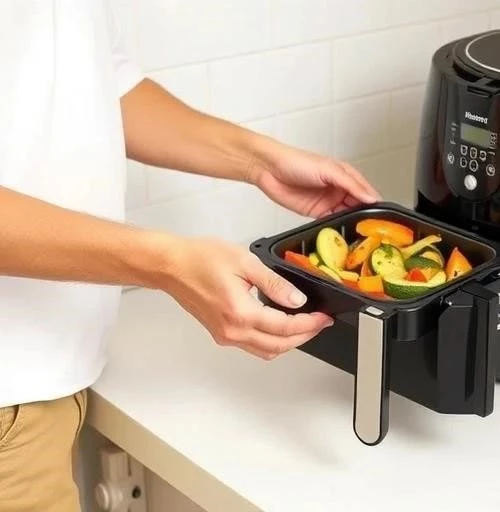
- Fit the tray or rack as directed, then arrange food in a loose, even layer. Air must circulate, so cook in batches rather than overfilling the basket.
- Slide the basket fully into place. Set the temperature and cooking time using the controls. If your model has presets, use them as a starting point, not a guarantee: thickness, quantity and starting temperature all affect cooking.
- Halfway through, pause or carefully remove the basket to turn or shake food if appropriate. Return it securely and continue cooking. Use oven mitts: the basket and escaping steam can be very hot.
- Check that food is cooked through before serving. Add short cooking intervals if needed, checking between them. For meat and poultry, use a food thermometer and follow safe internal-temperature guidance.
Temperature and timing
There is no single setting that works for every Kitfort model or recipe. Frozen foods may need more time than fresh ones, while small portions cook faster than crowded baskets. Follow the recipe and your appliance manual, and begin checking before the estimated finish. If the outside browns too quickly, lower the temperature; if food cooks unevenly, reduce the load and turn it during cooking.
Preheating is model- and recipe-dependent. If the manual or recipe calls for it, run the empty appliance for the stated period; otherwise, preheating may not be necessary. Avoid relying on preset labels alone, especially for thick or raw foods.
Safety and cleaning
Keep the appliance attended while operating. Do not block its vents, touch hot surfaces, or pull the plug by its cord. Place the hot basket on a heat-resistant surface and open it away from your face to avoid steam. Never use a damaged cord or appliance.
After cooking, unplug the unit and let it cool. Wash removable parts according to the manual, using a soft sponge to protect non-stick coatings. Wipe the exterior and heating area only as instructed; keep water away from electrical components. Clean away grease and crumbs regularly, since residue can smoke and affect flavour.
If something goes wrong
If food is pale or soft, avoid overcrowding, dry it more thoroughly and check that the basket is seated correctly. Smoke may indicate excess fat or food debris; switch off and unplug the appliance, let it cool, then clean it. If controls, heating or the fan behave unusually, stop using the unit and consult the model-specific manual or Kitfort support. These checks are safer and more reliable than guessing at a repair.