
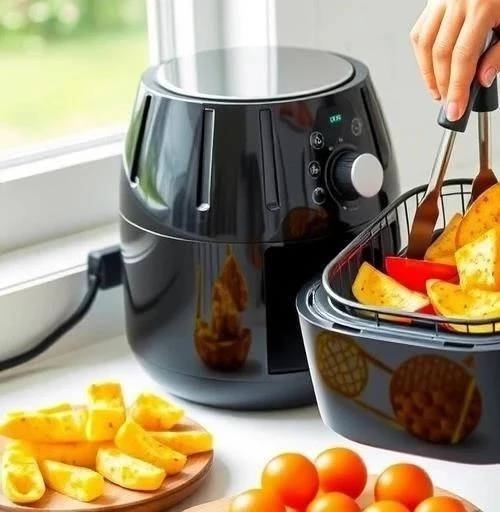
A Tefal air fryer cooks food by circulating hot air around it. It can produce crisp results with much less oil than deep-frying, but it is not a pressure cooker or a microwave: food still needs space, suitable settings and, in many cases, turning. Because controls and accessories differ by model, use the instructions supplied with your exact appliance whenever they conflict with general guidance.
Before the first use
- Place the fryer on a stable, heat-resistant surface with clear space around its air vents. Do not push it against a wall, cover it, or set it beneath cupboards that may be damaged by heat.
- Check that the basket, tray and other removable parts are fitted correctly. Wash the removable parts with warm, soapy water, rinse and dry them. Wipe the appliance’s interior and exterior with a damp cloth. Never immerse the main unit or its cord in water.
- Set the fryer up and run it empty only if the model’s manual recommends this. A brief initial smell can occur; ventilate the room and follow the manual’s directions rather than assuming every model needs the same preparation.
Cooking step by step
- Prepare food in reasonably even pieces. Pat wet ingredients dry, and use only a small amount of oil if needed. Oil is optional for many foods; excess oil can drip into the pan and create smoke.
- Put food in the basket without packing it tightly. Air needs to move around the pieces, so cooking in batches is often better than filling the basket to its limit. Use an oven-safe accessory only if it is approved for your model.
- Slide the basket fully into place. Choose a temperature and time using the control panel or a preset, then adjust them to suit the food and its thickness. Presets are starting points, not guarantees: different quantities and starting temperatures affect cooking time.
- For fries, vegetables or small pieces, shake the basket or turn the food partway through if the manual or recipe advises it. Pull the basket out carefully; hot air and steam can escape. Return it promptly so cooking can continue.
- Check doneness before serving. Thick food may need extra time, while smaller portions may finish early. For meat, use a food thermometer and follow safe internal-temperature guidance; colour alone is not a reliable test.
Safety and cleaning
Keep hands away from hot surfaces and vents, use the handle, and place the hot basket on a heat-resistant surface. Do not operate the fryer with a damaged cord, obstruct its airflow, or pour water into the heating unit. Unplug it and let it cool before cleaning. Wash removable parts as directed in the manual; avoid abrasive tools and harsh cleaners that may damage the coating. Wipe the interior gently and make sure all parts are dry before reassembly.
Getting consistent results
Preheating is useful for some recipes, but not required for every Tefal model or food; follow the manual. If food is pale or uneven, try a smaller batch, turn it during cooking, or add a little time. If it smokes, switch off the appliance, let it cool, and check for excess fat or residue. The best routine is to begin with model guidance, monitor the first batch and record adjustments. This is safer and more dependable than copying a time from another fryer, since capacity, controls and heating performance vary.



5 Comments. Оставить новый
The explanation that airflow requires space is useful and practical. Advising readers to cook in batches rather than overcrowd the basket helps set realistic expectations for crisp results.
I appreciate the clear distinction between air frying and other cooking methods. The article avoids promising identical results for every appliance and points readers back to their own manual.
This is an approachable introduction with useful reminders about oil, basket capacity and checking food during cooking. The excerpt ends mid-sentence, though, so the cooking instructions appear incomplete.
The article gives sensible, safety-focused guidance, especially its reminder that appliance instructions vary by model. That qualification makes the general advice more reliable.
The cleaning and setup advice is particularly helpful for new owners. It clearly distinguishes removable parts from the main unit, which is important for avoiding water damage.