
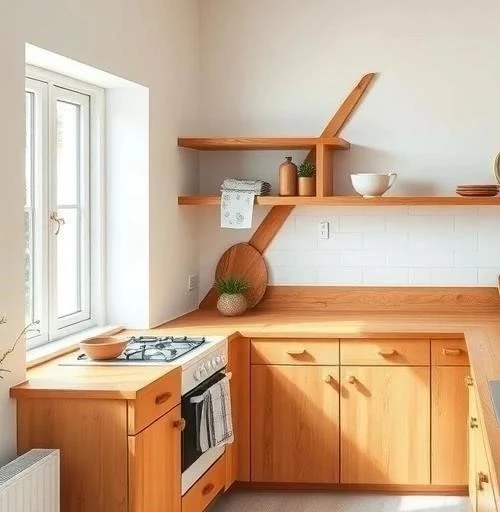
A Scandinavian kitchen can feel like a quiet morning: pale light, honest materials and room to breathe․ Natural wood in a kitchen interior brings that warmth without demanding a full renovation․ But a few boards can turn calm into clutter․ The secret is not to cover every surface; it is to give wood a clear role in a functional interior․
Choose a small, thoughtful dose
For a budget-friendly interior update, begin with one visual anchor: wooden fronts, a wooden countertop, or timber wall panels behind an open shelf․ A wooden backsplash can be striking, but it sits close to splashes and heat, so it needs a suitable finish and careful placement․ Cladding with tongue-and-groove boards can add cottage character; use it on one wall, not as a wooden envelope around the room․ This kind of cosmetic kitchen update keeps existing cabinets and changes the mood, not the floor plan․
Light-colored woods—pine, birch, oak and ash—work beautifully with a light color palette, yet they are not interchangeable․ Pine is soft and expressive; birch is pale and even; oak has bold grain; ash has a lively, open pattern․ Mixing several incompatible wood tones is one of the most common kitchen-finishing mistakes․ Pick one main species, then repeat its tone in smaller details․ Natural wood grain should look like a deliberate feature, not a sample book․
Balance, light and material
A white kitchen with wood makes the pairing of wood and white feel fresh, while a little stone can ground the room and metal can add a crisp edge․ These combinations work when one material leads and the others support it․ Scandinavian minimalism is not a rule that everything must be pale; it is the art of editing․ Too much wood, especially across fronts, backsplash, floor and ceiling, can flatten the design․ Dark finishes in a small kitchen may shrink the room visually, so use them sparingly if visual expansion of space is the goal․
Furniture made of solid wood can last for years, but it is not automatically the practical choice for every busy kitchen․ Before choosing a species, consider the room’s humidity, use and maintenance․ A wrong wood choice can mean dents, stains or constant worry․ Poorly matched textures—glossy stone, strongly grained timber and ornate metal all competing—create visual noise rather than warmth․ A practical kitchen design leaves clear work surfaces and makes everyday tasks easy․
Protect the wood, then enjoy it
Moisture protection matters: seal exposed edges, wipe spills promptly and keep wood away from standing water․ Oil treatment for wood gives a natural, repairable finish; wood varnish can offer a tougher barrier, but choose a durable coating intended for kitchen use․ Temperature changes and steam test any finish, so good kitchen ventilation is essential․ Care for wooden surfaces with gentle products and follow the coating maker’s guidance; harsh cleaners can dull the grain․
For a do-it-yourself kitchen decor project, replace handles, oil a small countertop, or add a narrow shelf rather than dismantling cabinets․ Choose eco-friendly materials where possible, and test colors in daylight before committing․ The best update is not the one with the most timber, but the one that makes the room easier to use and more inviting․ Let wood be the warm note, white the light, and open space the pause between them: a cozy kitchen, refreshed without a major renovation․


6 Comments. Оставить новый
I like the idea of treating wood as the room’s quiet focal point rather than a material to spread everywhere. The “one visual anchor” approach feels practical—and it leaves space for the kitchen to breathe.
This makes a small kitchen refresh feel achievable: keep the layout, change the atmosphere. A carefully chosen wooden detail can do more than a room full of competing finishes—and probably age more gracefully, too.
A wooden backsplash looks lovely in the imagination, but the mention of heat, splashes and finishes brings the idea back to earth. That balance between inspiration and upkeep makes the advice feel refreshingly honest.
I appreciate the suggestion to let one material lead while stone and metal play supporting roles. It’s almost like arranging a band: wood carries the melody, and the other textures keep the rhythm interesting.
The comparison of pine, birch, oak and ash reads like a small cast of characters: soft-spoken birch, dramatic oak, lively ash. It’s a useful reminder that choosing a wood tone is also choosing the mood of the room.
The strongest design tip here might be the least flashy one: repeat a single wood tone instead of collecting several. A kitchen can have plenty of personality without looking like a timber showroom.