
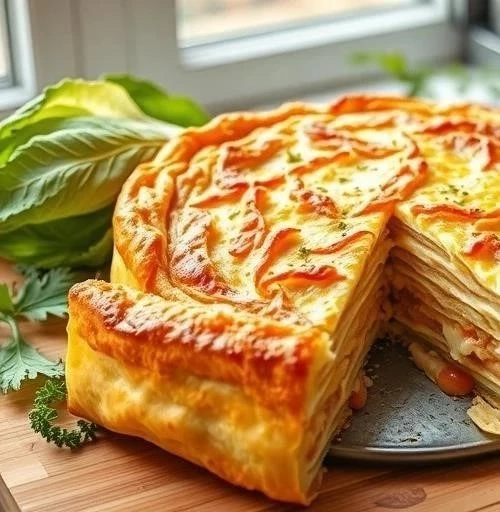
Why Ingredient Substitutions Matter in Cabbage Achma (ачма с капустой)
Sound swaps matter: structure should guide each choice.
Start with the recipe’s structure (рецепт ачмы): assess how each замена ингредиентов affects moisture, texture, and flavor. Choosing suitable альтернативные продукты is more reliable than swapping ingredients at random.
For рецепт ачмы, judge every замена ингредиентов by its effect on moisture, texture, and flavor. Choose альтернативные продукты that preserve the dish’s structure; random swaps can make layers too wet, dense, or bland. A measured adjustment is more reliable because each component must work well as a whole.
Choose a Cabbage and Pastry Base That Can Hold the Filling
Choose firm cabbage and pastry to hold the filling well.
Белокочанная капуста offers a sturdy, familiar filling; пекинская капуста cooks faster and releases more moisture, while квашеная капуста adds tang but should be drained. For the layers, тонкий лаваш is a practical shortcut, тесто фило gives a crisp finish, and домашнее тесто offers the most control.
Белокочанная капуста stays firm; пекинская капуста cooks faster, so drain excess liquid. Квашеная капуста brings tang and also needs draining. Choose тонкий лаваш for ease, тесто фило for crisp layers, or домашнее тесто for control; each base should support the filling. Sound base keeps the layers in place.
Replace Cheese According to Its Saltiness and Moisture
Match cheese swaps by salt, moisture; balance matters.
To decide чем заменить сыр, compare the original cheese’s character: сыр сулугуни is stretchy and savory, адыгейский сыр is mild, брынза is saltier, творог is soft, and моцарелла melts well but is moist. These options are not interchangeable in equal amounts, so adjust seasoning and drain wetter cheeses.
To choose чем заменить сыр, compare salt and moisture: сыр сулугуни is savory and stretchy; адыгейский сыр is mild, while брынза needs less added salt. Творог is soft, and моцарелла melts but holds water. These cheeses differ, so match amounts to taste and drain wet options first. For a better-balanced mix.
Adapt the Binding Ingredients Without Losing a сочная выпечка
Good binding choices keep the filling moist and tender.
Кефир, сметана, or натуральный йогурт can add moisture to the mixture, but their thickness and tang differ. Keep яйца for binding where possible; use сливочное масло for a richer flavor or растительное масло for a lighter, dairy-free layer, adjusting the amount to avoid a dry filling.
Кефир, сметана, and натуральный йогурт differ in thickness, so adjust amounts to keep the mixture moist, not runny. Keep яйца for binding; сливочное масло adds richness, while растительное масло is lighter. Add fats gradually, since measured changes help preserve tenderness. Small changes protect softness.
For запекание в духовке, balance the cabbage’s moisture with the cheese and pastry so the layers set instead of turning soggy. This measured approach respects the character of грузинская кухня while making the начинка для ачмы adaptable to what is available.
For запекание в духовке, balance moisture in the начинка для ачмы: excess liquid can leave pastry soggy, while too little dries the layers. Bake until the center is set and the surface golden. This well-judged review preserves грузинская кухня’s savory, layered character and makes substitutions dependable.




8 Comments. Оставить новый
The cheese section wisely focuses on saltiness and moisture rather than suggesting that all cheeses can be exchanged in equal amounts. That advice should help prevent an overly salty or watery result.
This is a reasoned approach to recipe substitutions: evaluate how each ingredient functions before changing it. The emphasis on draining wetter fillings and cheeses is particularly practical.
The article makes a useful point that substitutions should preserve the dish’s structure, not just replace one ingredient with another. Considering moisture, texture, and flavor together is especially important in a layered dish like achma.
The article balances useful options with cautions about their different effects. I would find a short note on adjusting baking time helpful, since wetter or thinner layers may cook differently.
The advice to season according to the cheese’s salt level is an important detail that is easy to overlook. It makes the substitutions feel more adaptable without losing control of the final flavor.
I appreciate the practical comparison of cabbage options. Noting that napa cabbage and sauerkraut need draining helps readers avoid a wet filling that could weaken the layers.
I like that the article treats the filling and pastry as parts of one structure. Choosing a sturdy base and managing excess moisture are sensible ways to keep the finished achma cohesive.
The pastry guidance clearly explains the trade-offs between lavash, phyllo, and homemade dough. It would help a cook choose based on both convenience and the texture they want.