
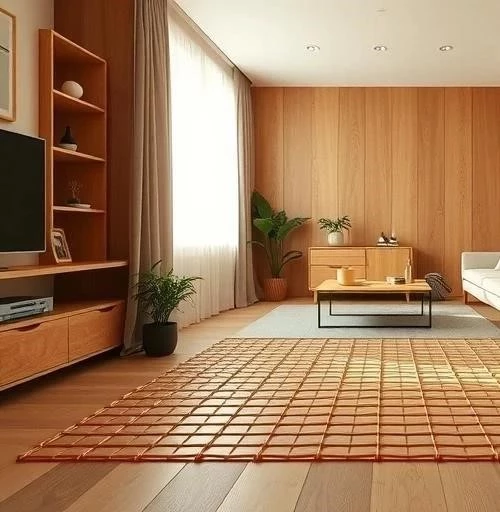
A one-room apartment renovation in Japandi style works best when every choice supports calm, comfort and everyday use. Japandi combines Japanese minimalism with Scandinavian style: both value natural materials, light wood, simple forms and a neutral color palette. Beige shades can soften the room without making it feel dull. The result is a modern apartment interior that feels warm rather than crowded.
Plan the space before choosing finishes
A functional layout matters more than decorative details in a small home. A design project should map daily routines, storage and circulation before work begins. Zoning can distinguish sleeping, working and dining areas using lighting, rugs or open shelving instead of bulky partitions. Compact furniture, such as a bed with drawers or a folding table, preserves floor space. Built-in storage keeps belongings out of sight, supporting visual expansion of the space and the ergonomics of a small apartment.
Choose durable, comfortable flooring
Flooring should suit both the look and the heating system. Engineered wood offers a natural surface, while luxury vinyl (quartz-vinyl) is practical and moisture-resistant. Wood-look tile is durable in an entry or kitchen and works particularly well with underfloor heating. Check the manufacturer’s temperature limits and installation instructions before buying. Floor sound insulation is also worth considering, especially in an apartment building, but its layers must be compatible with the heating assembly.
Water-based underfloor heating can be efficient in a suitable building, but it requires careful coordination with the building’s system and floor height. Electric underfloor heating is often simpler for a renovation or a single zone. Correct underfloor heating installation, a compatible thermostat and insulation beneath the heating layer help deliver energy-efficient warmth. For tile, specify a heating system designed for under-tile use; do not cover heating elements until they have been tested.
Keep finishes and lighting restrained
Wall finishes should be durable and quiet in appearance: matte paint, subtle plaster or a limited area of natural wood can all work. Select materials as a whole, checking samples in the actual daylight; this prevents beige tones and wood shades from clashing. Layered interior lighting is essential: combine general illumination with task lights and warm, diffused light near the bed. This makes the room adaptable while preserving a cozy interior.
Budget for the whole result
A turnkey renovation may simplify coordination, but compare the scope, materials, warranties and heating controls in each estimate. Save money through practical renovation solutions, not by skipping floor preparation, insulation or electrical safety. A clear budget and a coherent apartment design make it easier to prioritize quality where it affects comfort most. In Japandi, restraint is not an empty room: it is a carefully planned home where useful objects, natural textures and warmth have space to breathe.


4 Comments. Оставить новый
The article makes a persuasive case for planning a small apartment around daily routines rather than starting with decoration. Its advice on zoning, compact furniture and concealed storage is practical and well suited to a Japandi interior. The flooring and underfloor-heating section also adds useful technical considerations, though the article appears to end mid-sentence.
The discussion of visual calm is balanced by sensible advice about comfort and everyday use. I found the suggestions for defining zones with lighting or rugs particularly relevant for a one-room apartment, where bulky dividers can make the space feel smaller. The article could be improved with a brief example of how these ideas might work in a specific floor plan.
This is a thoughtful overview that avoids treating style as separate from practical planning. It explains why natural materials and neutral colors can support a warm, uncluttered look while also highlighting important installation considerations for flooring and heating. The technical section would benefit from a clearer distinction between general guidance and decisions that require a qualified installer.
I appreciate how the article connects Japandi’s restrained aesthetic with functional decisions such as circulation, storage and material durability. The reminders to check temperature limits and coordinate heating with the floor assembly are especially valuable because these details can prevent costly renovation mistakes. A little more information on choosing finishes for different budgets would make the guidance even more accessible.