
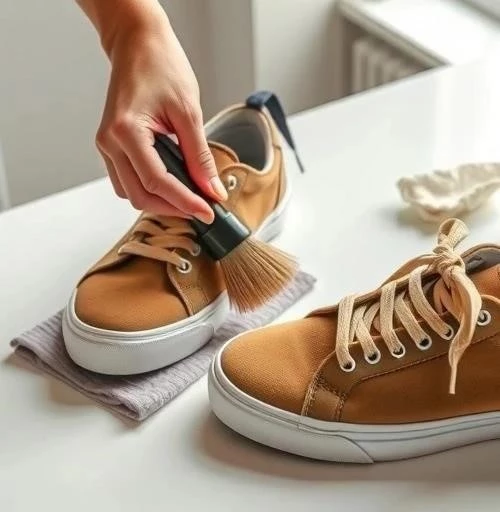
Consistent care is worthwhile: checking your skate shoes helps teens spot wear early, protect comfort, and avoid premature replacements.
Check the Materials First, Because Suede, Leather, and Mesh Need Different Cleaning Methods
Before choosing a cleaner, check the shoe’s product label and identify every material because New Balance skate styles combine suede, leather, and mesh. A gentle method suited to one panel can stain or weaken another, so do not treat the whole shoe alike. Suede has a napped surface and generally calls for a suede brush and a cleaner specifically labeled safe for suede; test any product on a hidden spot first. Leather is smoother, but harsh chemicals can dull its finish, so use a soft cloth with a mild, compatible cleaner. Mesh is porous and can snag, making a soft brush and light pressure the safer choice. If panels are mixed, follow the most delicate material’s care directions and check the cleaner label.
Remove Dry Dirt After Skating, Since Brushing Before Spot-Cleaning Helps Prevent Stains from Spreading
After each skate session, let loose dust and grit fall away before reaching for a damp cloth. Brush gently with a clean, soft shoe brush, working from the upper toward the sole so debris does not smear across the fabric. Wait until dirt is dry; brushing wet grit can push particles deeper and leave a larger mark. Use short strokes rather than hard scrubbing, and tap the brush clean often; this limits the transfer of grit between panels. Pay extra attention to seams and textured edges, where dust collects after repeated pushes and board contact. A quick dry brush outdoors or over a washable mat keeps the mess contained, which is useful for teens sharing a room or entryway to keep grit off shared floors too.
Clean Gently and Skip the Washing Machine, Which Can Damage Materials, Adhesives, and Shoe Shape
Clean skate shoes by hand with a soft cloth and a small amount of mild cleaner, applying only light pressure. This controlled approach is safer than a washer, whose tumbling motion can bend toe boxes, twist panels, and grind parts against the drum. Machine cycles also expose shoes to prolonged water and detergent, which may weaken adhesives that hold the sole and upper together. For teens, a quick hand-cleaning routine is practical: use a basin, follow cleaner directions, and work carefully rather than rushing. Keep cleaning focused and gentle; preserving the shoe’s construction matters because skate footwear needs good support during everyday wear and sessions. Hand cleaning avoids rough machine treatment.
Air-Dry Shoes Fully and Freshen the Insoles, Because Heat and Trapped Moisture Can Shorten Their Life
After skating, loosen the laces and remove the insoles so air can reach damp areas. Set both parts in a ventilated room, away from radiators, hair dryers, and direct sunlight; strong heat can warp materials or weaken bonds. Give both parts time to dry completely before wearing them again, because moisture trapped inside encourages odor and discomfort. Freshen insoles separately by airing them, then return them only when dry. If they still smell, use a shoe-safe deodorizing product as directed rather than masking the odor with fragrance. This simple routine helps teens keep footwear comfortable and reduces avoidable wear from heat and lingering dampness. Keep them open, not packed away in a sealed bag after use.
Protect High-Wear Areas and Check the Soles Regularly, Since Early Attention Can Help Shoes Stay Skate-Ready
Skateboarding puts repeated friction on toe edges, sidewalls, and sole’s tread, so inspect these areas every week and after tough sessions. Early checks matter: a small worn patch is easier to address than damage that spreads and compromises grip. Consider a skate-specific protective patch or compatible shoe adhesive on exposed high-wear sections, but follow its instructions and test an inconspicuous spot first. Examine the outsole for smoothing, separation, or uneven wear; compare both shoes, since one foot may take more board contact. If tread is badly worn or the sole begins to detach, ask an experienced shoe-repair professional whether repair is practical, or replace the pair before skating becomes unsafe.
8 Comments. Оставить новый
This is a helpful start to a shoe-care guide, though the final section appears to end mid-sentence and would benefit from completion.
This is practical guidance for skate shoes, and the reminders to use gentle tools and test cleaners first make the recommendations more responsible.
I appreciate the emphasis on brushing away dry dirt first; that simple step can prevent grit from spreading and make later cleaning easier.
The clear, cautious recommendations should help readers avoid common mistakes, particularly scrubbing wet dirt or using an unsuitable cleaner.
I like that the advice includes keeping dirt off shared floors, which makes the routine relevant to everyday life as well as shoe care.
The material-specific approach is a strength because suede, leather, and mesh need different care rather than one harsh cleaning routine.
The advice to identify each shoe material before cleaning is especially useful, since mixed panels can react differently to the same product.
The article explains why careful hand-cleaning matters, connecting gentle methods with protecting the shoe’s shape and construction.