
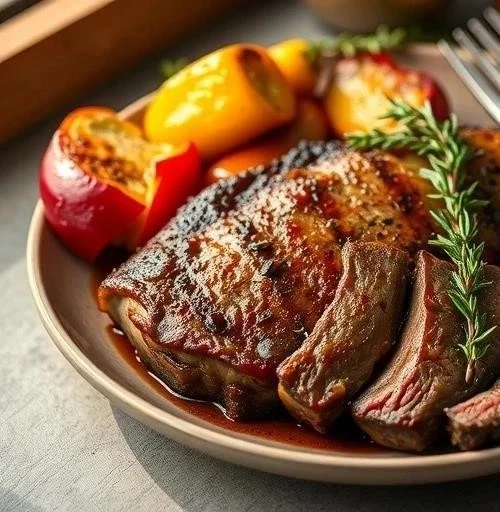
A well-seared steak served with colorful vegetables makes a satisfying meal without requiring complicated equipment. Thyme adds a gentle, earthy aroma that complements the beef, while a short rest after cooking helps keep the meat juicy. This stovetop method works in a heavy frying pan and can be adapted to the cut and thickness of the steak.
Ingredients
Serves: 2 Preparation: 15 minutes Cooking: about 20 minutes
- 2 beef steaks, about 2.5–3 cm thick, such as ribeye, sirloin, or tenderloin
- 1 medium red or yellow bell pepper, seeded and cut into strips
- 1 small zucchini, sliced into half-moons
- 1 small red onion, cut into wedges
- 150 g cherry tomatoes, left whole
- 2 tablespoons olive oil, divided
- 2 garlic cloves, lightly crushed
- 4–6 fresh thyme sprigs, or 1 teaspoon dried thyme
- Salt and freshly ground black pepper
- 1 tablespoon butter, optional
Choose and prepare the steak
For a tender result, choose a steak with some fine marbling and an even thickness. Different cuts naturally vary in texture: tenderloin is especially soft, while sirloin and ribeye have a firmer bite and more pronounced beef flavor. Pat the meat dry with paper towels. Moisture on the surface can prevent it from browning properly. Season both sides with salt and pepper shortly before cooking. If the steak has been refrigerated, letting it stand briefly while you prepare the vegetables can take off some of the chill; do not leave raw meat at room temperature for an extended period.
Method
- Prepare the vegetables. Cut the pepper, zucchini, and onion into similar-sized pieces so they cook at a similar pace. Keep the tomatoes whole. Toss the vegetables with about one tablespoon of olive oil, a pinch of salt, pepper, and half of the thyme leaves.
- Cook the vegetables. Heat a large, heavy pan over medium-high heat. Add the vegetables in a single layer, working in batches if necessary. Cook for 6–9 minutes, turning occasionally, until lightly browned and tender but not mushy. Add the tomatoes near the end; remove the vegetables to a warm plate.
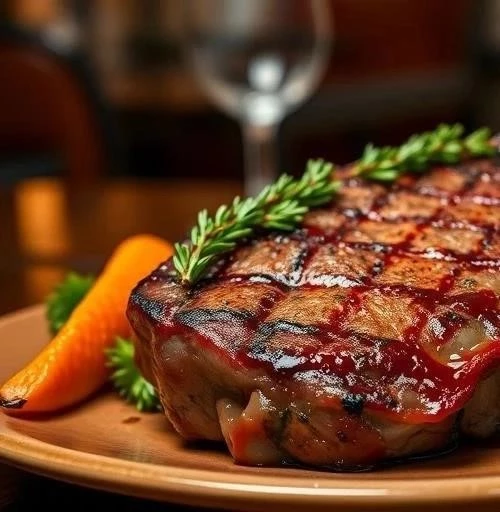
- Sear the steak. Carefully wipe out the pan if the vegetables left moisture behind, then return it to high heat. Add the remaining oil. When it is hot, lay in the steaks without crowding them. Leave them undisturbed for about 2–4 minutes, depending on thickness, to form a browned crust.
- Turn and flavor. Flip the steaks with tongs; Add the garlic, remaining thyme, and, if desired, butter. Cook the second side for another 2–4 minutes, spooning the fragrant fat over the meat. Exact timing varies with the cut, pan, and preferred doneness, so use a food thermometer rather than relying on time alone.
- Rest and serve. Transfer the steaks to a clean plate and rest for 5–10 minutes. This allows the juices to settle. Return the vegetables briefly to the pan to warm, then serve them alongside the steak with the thyme-scented juices.
Helpful cooking notes
A hot pan and a dry steak encourage browning; avoid moving the meat repeatedly while the first side sears. If the pan begins to smoke heavily, lower the heat slightly. For food safety, follow local guidance for beef doneness and check the thickest part with a clean thermometer. Whole cuts and mechanically tenderized meat may have different safety recommendations. After handling raw beef, wash hands and clean surfaces before using them for cooked food.
For a softer texture, slice the rested steak across the grain. This shortens the muscle fibers and makes each bite easier to chew. Add salt gradually to the vegetables, since the seasoned steak juices will contribute flavor when everything is served together. Fresh thyme is generally more delicate than dried thyme; if using dried, begin with a smaller amount and adjust to taste.
Serving and variations
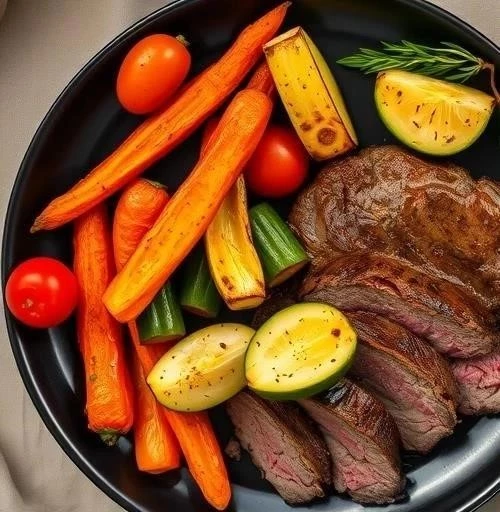
Serve the steak and vegetables as they are, or add boiled potatoes, rice, or crusty bread to make the meal more substantial. A squeeze of lemon can brighten the vegetables, while a small spoonful of mustard or a simple green salad offers a contrasting flavor. Other quick-cooking vegetables, such as mushrooms or asparagus, can replace the zucchini or pepper. Cut firm vegetables thinly and add delicate ones later so that all components finish at a similar time.
Leftovers should be cooled promptly, stored covered in the refrigerator, and reheated gently until hot. The steak may become firmer after reheating, so warming it briefly with the vegetables and a splash of water or stock can help retain moisture. This recipe is intended as a flexible guide: adjust seasoning and cooking time to suit the steak’s thickness, the pan, and personal preference.




1 Comment. Оставить новый
The recipe gives clear preparation guidance and useful options for different steak cuts. Cooking the vegetables and steak in a heavy pan makes the method practical for a home kitchen.