
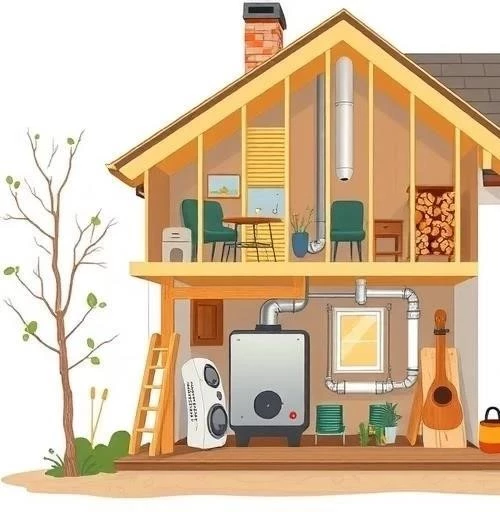
Choosing wood heating for a new house is different from adapting an existing building. During construction‚ the owner can plan for fuel storage‚ a suitable chimney‚ equipment access and heat distribution before walls and floors are finished. This makes wood-fired home heating easier to integrate‚ but it also requires early decisions about the house heating layout and future operation.
Planning the system
Heating design should begin alongside the architectural plans. The expected heat demand depends on the building’s size‚ layout‚ climate and home insulation. Better insulation can improve energy efficiency and reduce wood consumption‚ the size of the equipment required and the heating cost over time. A heat-loss calculation helps determine whether the home needs a wood boiler‚ a solid-fuel boiler‚ stove heating‚ or a combination of systems.
A wood boiler can supply hydronic heating to heating radiators or underfloor heating. The design must account for pipe routes‚ controls‚ circulation and safe operating temperatures. A heating stove can provide direct warmth in one area‚ while a water-jacketed fireplace can also contribute heat to a water-based system. These options are not interchangeable: their output‚ operating routines and ability to heat the whole house differ.
Construction and installation
Heating during construction allows the chimney to be planned for the selected appliance‚ with appropriate height‚ position‚ clearances and access for inspection. A correctly designed chimney supports reliable draft and safe exhaust removal. Its route should be coordinated with the roof‚ floors and structural elements rather than improvised after completion.
Space for a boiler room in a private house‚ equipment servicing and a firewood reserve should also be considered early. Fuel storage needs to be dry‚ accessible and large enough for expected use. The heating system installation includes more than setting the appliance in place: it may require water connections‚ pumps‚ safety devices‚ controls and commissioning. Local building and fire-safety requirements should guide the work.
Operation and choices
Wood heating can provide autonomous heating‚ but it involves regular fuel handling‚ ash removal and attention to the appliance. The actual wood consumption and heating cost depend on fuel moisture‚ system efficiency‚ weather and household habits. A properly sized installation and dry‚ seasoned wood help make performance more predictable. A backup heat source can maintain comfort when the boiler needs refuelling or servicing.
Compared with gas heating or electric heating‚ wood systems require more space and routine involvement‚ while their running costs vary with fuel supply and local prices. The advantages and disadvantages of wood heating should therefore be assessed for the specific site‚ not in isolation. Alternative heating types‚ including a hybrid arrangement‚ may suit some households better.
For a new home‚ the key distinction is the opportunity to coordinate the appliance‚ chimney‚ insulation and distribution system from the outset. Careful planning can make a wood-based system practical and safe; poor sizing or late changes can add cost and reduce convenience.
5 Comments. Оставить новый
This is a helpful overview of the planning factors involved in wood heating. The emphasis on insulation, heat demand and chimney design makes the relationship between the building and the heating system easy to understand.
The article presents several relevant considerations for homeowners planning a new build, including fuel storage and equipment access. More detail on maintenance and operating costs could make the overview more complete.
The distinction between direct room heating and a water-based system is useful. The article also appropriately notes that different appliances have different outputs and operating requirements.
The article clearly explains why heating choices should be considered during the design stage of a new home. Its comparison of boilers, stoves and fireplaces is useful, while the discussion of installation requirements gives the topic practical context.
The practical focus on coordinating the chimney, appliance and building layout is a strength. The article gives readers a clear starting point for discussing heating design with qualified professionals.