
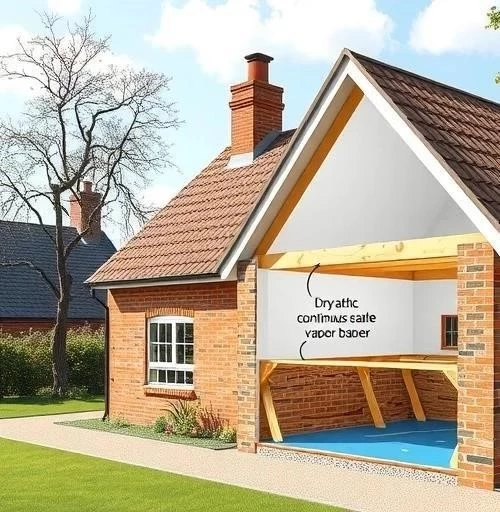
Condensation beneath a roof can damage insulation‚ timber and finishes‚ even when the roof covering appears sound. In a brick cottage‚ moisture may also rise from damp ground or a poorly ventilated basement. A durable solution therefore combines a correctly designed roof assembly with whole-house moisture control;
Build the roof assembly to manage moisture
Warm‚ humid indoor air rises. If it reaches a cold roof surface‚ it may cool below the dew point and form water. Control indoor air humidity‚ seal gaps around pipes and wiring‚ and fit a continuous vapor barrier on the warm side of the roof insulation. Tape overlaps and seal edges to walls; small leaks can carry more moisture than vapor diffusion through intact materials.
Above the insulation‚ install a suitable waterproofing membrane. A superdiffusion membrane allows vapor to escape outward while helping protect the structure from wind-driven rain. Check its vapor permeability and installation instructions: materials must be layered so the roof can dry outward. Do not confuse this membrane with the vapor barrier; they serve different purposes.
Provide a continuous ventilation gap between the membrane and the roofing‚ where the roof design requires one. Air should enter through eaves vents and leave near the ridge through a ridge vent or roof ventilators. Keep channels clear of insulation and debris. The correct arrangement depends on the roofing: metal tile and soft roofing have different details‚ so follow the manufacturer’s specifications and local codes.
Insulate and ventilate correctly
Roof insulation must fit snugly between or over the rafters without blocking airflow. Gaps create cold spots‚ while compressed insulation loses performance. For an unheated attic‚ attic insulation is usually placed across the ceiling‚ with attic ventilation maintained. For a mansard‚ plan ventilation of the living space and roof slopes separately; a ventilation gap is not a substitute for indoor ventilation.
Have the rafter system checked before work begins. A roofer can verify membrane laps‚ eaves intake‚ ridge exhaust and flashing details. In winter‚ persistent dampness‚ musty odors‚ frost beneath the roof or wet insulation are warning signs. A moisture meter and inspection can distinguish condensation from a roof leak.
Consider the site and the whole house
High groundwater does not directly cause roof condensation‚ but it can raise indoor humidity through a damp basement. Combine foundation waterproofing with site drainage that directs water away from the cottage. If the basement is wet‚ identify the source before arranging basement drying; simply heating a room may spread moisture. These measures support a healthier indoor microclimate and protect the roof as well as the masonry.
Key principle: keep indoor moisture out of the roof‚ let incidental vapor escape‚ and maintain an unobstructed airflow path. A coordinated design—not one extra vent—provides reliable moisture protection for a brick cottage.



5 Comments. Оставить новый
A clear explanation of why condensation can occur even when a roof looks intact. The distinction between the vapor barrier and the roof membrane is especially helpful.
The article does a good job connecting roof moisture problems with humidity elsewhere in the house. It makes clear that a lasting fix may require more than replacing roofing.
Helpful overview, particularly the explanation that attic insulation placement depends on whether the attic is heated. Following manufacturer guidance and local codes is sound advice.
A practical and easy-to-follow introduction to roof moisture control. I would use this as a checklist for questions to discuss with a qualified roofing professional.
I appreciate the practical reminders about sealing gaps and keeping ventilation channels clear. These details make the advice useful for homeowners planning an inspection.