
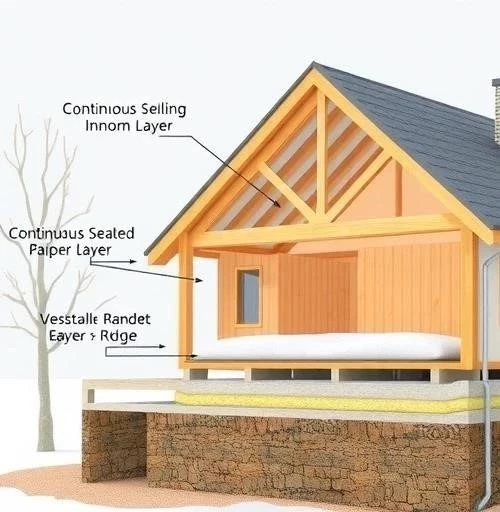
A roof does not live alone․ In a frame house, warm indoor air rises, while cold, shifting ground can move the structure below․ On heaving soil, seasonal movement may contribute to foundation deformation and house settlement, opening tiny joints where wind-driven rain can enter․ The goal is not simply to add insulation: it is to give moisture a safe way out and let the roof tolerate movement․
Think of the roof as a breathing system
A properly assembled roof sandwich keeps indoor vapor away from cold layers, then drains and vents any moisture that gets in․ From inside out, it generally includes an airtight vapor-control layer, a roof insulation layer, a vapor-permeable waterproofing membrane, a counter-batten cavity, and the roof covering․ This roof assembly works only when each layer has a clear job․ The key ideas are roof vapor barrier, roof waterproofing, roof insulation, and under-roof ventilation․
Warm room air carries moisture․ If it reaches a cold surface, it may cross the dew point and form condensation on the roof․ That is why vapor permeability of materials should generally increase toward the exterior: the inner layer limits vapor entry, while the outer building membrane allows vapor to escape but blocks liquid water․ Correct moisture protection is a planned route for water vapor to leave—not a plastic bag wrapped around the timber․
Build the escape route
Install the vapor barrier on the warm side of the insulation, with careful vapor-barrier installation․ Tape overlaps, seal edges at walls, and seal every cable or pipe penetration․ Sealing the joints matters more than adding another layer of insulation: a small air leak can carry more moisture into the roof than diffusion through an intact sheet․
Place the membrane above the insulation according to its marked orientation and the manufacturer’s instructions․ It is the roof’s raincoat, not a substitute for the inner air seal․ Above it, counter-battens create a continuous ventilation gap from eaves to ridge․ Keep the route clear, provide ventilation openings at intake and exhaust, and protect them with suitable mesh․ This ventilation of the under-roof space—also called under-roof ventilation—carries away vapor and helps the roof dry after rain․
Choose the roof for the room beneath
A cold attic and an insulated mansard roof need different detailing․ In a cold attic, insulate and air-seal the ceiling below; ventilate the attic itself․ In a mansard, fit the insulation closely between and, where designed, below rafters, without blocking the ventilation channel․ A suitable roof insulation material, often mineral wool, must stay dry to retain its performance․ Correct roof installation and whole-house thermal insulation work together: check indoor humidity, use kitchen and bathroom extraction, and avoid leaving wet construction materials enclosed․
Allow for movement, then inspect
Heaving soil can cause seasonal movement; it does not automatically mean roof failure․ A sound foundation design, drainage, and flexible, properly detailed connections help the frame accommodate movement․ After major temperature swings, inspect flashings, eaves, ridge vents, and membrane seams․ Watch for musty smells, dark marks, or damp timber: persistent moisture risks rafter rot and mold․ Good airflow, prompt repairs, and protection of wooden structures support roof durability and help prevent mold formation․
In short, successful frame-house insulation is a coordinated system: control indoor vapor, drain exterior water, and keep the air channel open․ On a moving site, careful detailing turns the roof from a sealed box into a small, well-managed climate․

1 Comment. Оставить новый
The roof-as-breathing-system image makes a technical subject feel wonderfully alive. Most memorable is the reminder that a tiny air leak can matter more than another blanket of insulation—a small detail with the force of a whole-house plot twist.