
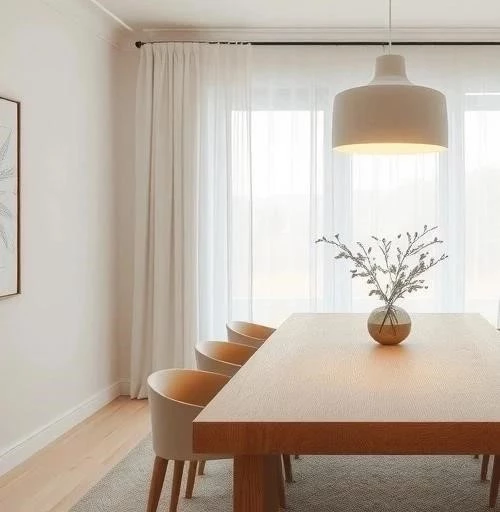
Scandinavian style in interior design is known for simplicity, natural materials and a calm connection to daylight. Thoughtful dining room lighting brings these qualities together: it makes meals comfortable, highlights the table and helps create a cozy atmosphere without making the room feel crowded. The goal is a functional interior where every fitting has a purpose and contributes to the overall mood.
Start with the dining area
Plan the lighting around the way the dining area is used. A table may be a place for family meals, homework and evening conversations, so one bright overhead source is rarely enough. Combine focused light above the table with softer sources around the room. This layered lighting scenario gives you flexibility throughout the day and makes kitchen-dining room lighting feel balanced.
Choose a pendant for the table
A chandelier over the dining table or a pair of pendant lights can create a clear focal point. Choose a size and height that suit the table: the fixture should illuminate the surface without blocking eye contact or views across the room. For a long table, several smaller dining room lights can spread illumination more evenly than one oversized shade. Look for clean lines, simple silhouettes and a minimalist design that feels light rather than imposing.
Glass lights are a useful choice in a bright interior because they allow light to pass through and preserve an open feeling. Opaque shades, meanwhile, direct light downwards and can reduce glare. Whichever style you choose, check that the light reaches the whole table and that the bulb is not uncomfortably visible when seated.
Layer light for comfort
Soft lighting is essential for a relaxed meal. Wall sconces can brighten darker corners and add a gentle glow, while a floor lamp in the dining room can make a reading or conversation spot feel inviting. These secondary sources should complement the main pendant, not compete with it. Dimmers are especially practical: lower the brightness for dinner and increase it when the table is used for detailed tasks.
Colour, materials and atmosphere
A neutral colour palette—soft white, warm grey, beige and pale wood—supports the calm character of Scandinavian decor. Natural materials such as timber, linen, paper and clear or opal glass add texture without visual clutter. Wooden elements in the table or chair frames can connect the lighting scheme to the rest of the room. Simple finishes and restrained details help maintain a cohesive look.
For everyday comfort, warm white light usually works well above a dining table. The choice of colour temperature affects how food, wood and wall colours appear: a warmer tone feels intimate, while a cooler one can seem crisp and practical. Select bulbs with good colour rendering, and use diffused light to soften shadows and avoid harsh contrasts. If daylight is limited, several gentle sources can make the space feel welcoming without relying on a single glaring fixture.
Keep the space practical
Good space ergonomics matter as much as appearance. Leave clear routes around chairs, position switches where they are easy to reach, and ensure fittings do not obstruct cupboards or doors. In a compact room, slim pendants and wall-mounted lights free up visual and floor space. In a larger one, a carefully scaled central fixture can anchor the table while quieter lights provide depth.
Ultimately, successful dining room lighting is both decorative and useful. Combine a well-placed pendant, comfortable colour temperature and a few supporting sources to create a flexible, balanced setting. The result is a bright, welcoming dining space that feels distinctly Scandinavian, works from breakfast through evening, and remains calm rather than overdesigned.



3 Comments. Оставить новый
A clear and practical guide to creating comfortable dining room lighting. The advice on combining a pendant with softer secondary lights makes the ideas easy to apply, and the Scandinavian design suggestions fit the topic well.
The layered-lighting approach is especially useful for a dining area that serves several purposes. The article is easy to follow and offers thoughtful ideas for making a room feel bright, balanced, and inviting.
I like the focus on both function and atmosphere. The tips about choosing fixture size and height, avoiding glare, and considering glass or opaque shades help readers make informed choices for their space.