
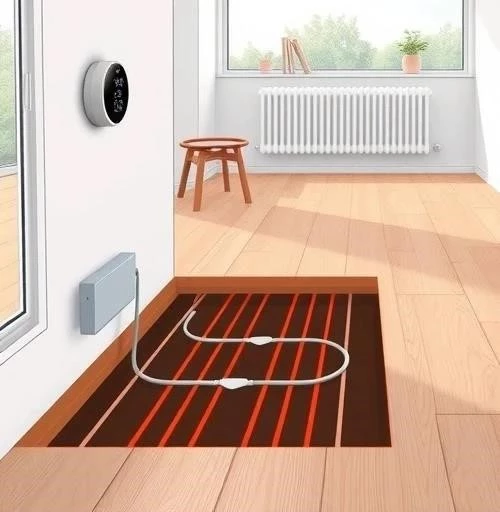
A thermostat for underfloor heating helps maintain a comfortable temperature while limiting unnecessary strain on the system. Models with remote heating control add another layer of convenience: a Wi-Fi thermostat can let users check settings and adjust operation through smartphone control, whether they are at home or away.
Temperature control and protection
Accurate temperature control depends on correct installation and suitable sensors. A floor temperature sensor measures the surface temperature and helps the thermostat respond before the floor becomes too hot. Overheating protection, where provided, can trigger automatic shutdown if readings exceed a configured limit. These functions support overheating prevention and help protect flooring and heating components.
A programmable thermostat can apply a temperature mode setting to match daily routines, reducing heating when rooms are unoccupied and restoring comfort at scheduled times. This approach may support energy savings, but settings should follow the flooring and equipment manufacturers’ limits. Remote temperature monitoring is useful for checking whether the system is behaving as expected; it does not replace inspection or professional servicing.
Electrical and system safeguards
Electrical protection is essential for safe operation. An RCD for underfloor heating can reduce the risk of electric shock by disconnecting a circuit when leakage current is detected. Voltage surge protection may help protect controls and connected equipment from supply disturbances. The correct protective devices, wiring, and thermostat rating should be selected and installed by a qualified electrician in accordance with local requirements.
Protection also depends on the type of heating. Electric underfloor heating control must be compatible with the heating cable and its load. A suitable thermostat provides heating cable protection through correct limits and operation, while installation checks help identify damage before the floor is covered. Water underfloor heating control typically operates actuators or a mixing valve; temperature limits and flow settings should be configured for the specific system.
Remote management and maintenance
When connected to a smart home system, heating monitoring may combine schedules, room sensors, and alerts. Remote heating control can help users notice unexpected temperature changes, but network access alone cannot guarantee stable operation of the heating system. Keep local controls available, use secure account settings, and confirm that alerts are enabled where supported.
Regular checks, correct sensor placement, and prompt attention to faults contribute to preventing failures. Avoid covering sensors or changing wiring without qualified assistance. Follow the manufacturer’s guidance for testing protective devices and arranging maintenance. These measures can reduce the likelihood of overheating, support stable operation, and help extend the service life of underfloor heating. Remote features are most effective when combined with appropriate installation, electrical protection, and sensible temperature limits.


6 Comments. Оставить новый
A useful summary of control and electrical safety considerations for underfloor heating. The focus on selecting equipment suited to the system makes the guidance practical.
The discussion connects temperature scheduling with comfort and potential energy savings while noting that equipment limits should take priority.
The article clearly outlines how sensors, temperature limits, and scheduled settings can support underfloor heating control. Its reminder to follow manufacturer guidance is useful.
The article explains the roles of floor sensors and overheating protection in accessible terms. Its advice to have wiring and protective devices selected by an electrician is sensible.
The distinction between remote monitoring and professional servicing is helpful. The article also appropriately emphasizes that installation and electrical protection require qualified expertise.
This is a practical overview of thermostat features and safeguards. Compatibility with the heating system and flooring is an important consideration highlighted in the text.