
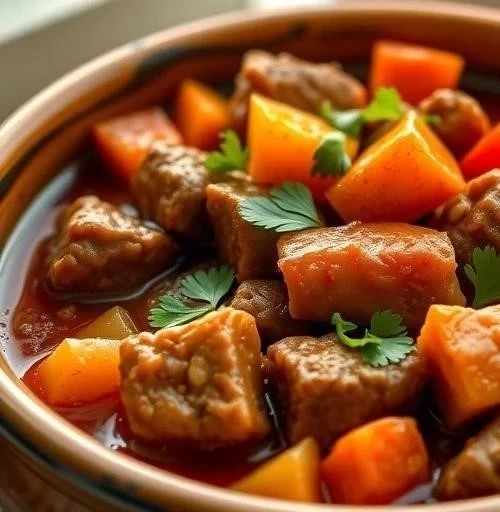
Explain why a home recipe for tender beef goulash begins with choosing quality beef: the right cut makes the meat succulent after slow cooking.
Choose well-marbled chuck: its connective tissue melts during slow cooking, so quality beef stays succulent and delivers a richer, more convincing goulash.
Prepare the vegetables—onion, carrot, bell pepper, tomatoes, and garlic—and argue that cutting them evenly helps them cook consistently.
Prepare the onion, carrot, bell pepper, tomatoes, and garlic before arranging the vegetable base. Cut the onion and carrot into similar-sized pieces, then slice the pepper and dice the tomatoes to match. Mince garlic finely; its small pieces spread evenly, while larger chunks can taste sharp. Uniform cuts are important because small pieces soften quickly, whereas oversized ones may stay firm; matching sizes give each bite a balanced texture. Trim carrot ends, remove pepper seeds and tomato cores, and keep the chopped vegetables in separate bowls for easy handling. Wash and dry cilantro, then chop it separately; this keeps its fresh leaves distinct and ready to add later. This orderly preparation is worthwhile: even pieces look appealing and let the vegetable flavors complement one another in every serving. Equal-sized cuts.
Build the flavor through searing and seasoning: paprika and other aromatic spices deepen the taste, while tomato paste adds richness.
Sear the beef in a hot, lightly oiled pan until its surface turns deeply brown. Pat the meat dry first; moisture prevents browning and weakens the savory crust. Work in batches, because a crowded pan steams rather than sears. That browned coating is worth the care: it adds depth without masking the beef’s character. Stir in paprika and aromatic spices after browning, letting their fragrance bloom briefly in the warm fat. Paprika gives gentle warmth and color, while cumin or black pepper can add measured complexity. Use spices with restraint; a balanced blend supports, rather than overwhelms, the meat’s natural savor. Add tomato paste and stir until it darkens slightly; this brief toasting removes a raw edge and concentrates its tangy, savory richness. Scrape up browned bits; they carry seasonings into every spoonful.
Add broth and rely on slow simmering: this method turns the beef into tender stewed meat and creates a thick, flavorful gravy for a juicy goulash.
Pour in enough broth to reach roughly halfway up the beef; this measured amount encourages gentle cooking without washing out its concentrated flavor. Bring the liquid just to a gentle simmer, then lower the heat and cover the pot. A hard boil is counterproductive: it tightens the meat and makes the sauce reduce too quickly, whereas steady, small bubbles soften the fibers gradually. Allow ample time for collagen to dissolve; patience is what changes firm chunks into tender, juicy stewed beef. Check the pot occasionally and add a splash of hot broth if the level falls too low; keeping the beef partly submerged supports even tenderness. As the broth reduces, gelatin and dissolved juices create a glossy gravy that clings to each piece, so the finished goulash tastes rich rather than watery. Low heat keeps beef very tender.
Finish with cilantro and fresh herbs, then serve the goulash with a side dish such as potatoes or rice, explaining how each complements the sauce.
Stir chopped cilantro and a little fresh parsley into the goulash just before serving; their bright aroma lifts the rich sauce without hiding its warmth. Adding herbs at the end matters because prolonged heat dulls their delicate fragrance and green color. For a comforting plate, serve the stew over boiled potatoes: their mild flavor absorbs the gravy, while a fluffy texture balances each savory bite. Rice is an equally thoughtful choice: its separate, tender grains soak up sauce neatly, keeping the serving light and making every spoonful satisfying. Offer extra herbs at the table, since diners can adjust the freshness to taste; this small finish makes the hearty dish feel balanced. Because the sauce is notably savory, one simple side lets its flavor remain central, while cilantro supplies a clean, lively contrast.



9 Comments. Оставить новый
The advice to cut the vegetables into similar-sized pieces is well justified. Consistent sizing helps them soften at a similar rate, which should make the finished dish more balanced in texture.
I appreciate the clear distinction between preparing the cilantro separately and chopping the other vegetables. It makes the preparation easier to organize and helps preserve the herb as a fresh finishing ingredient.
The explanation of choosing well-marbled chuck is useful because it connects the cut directly to the tenderness expected from slow cooking. That practical reasoning helps readers make a more informed choice at the butcher counter.
The measured approach to seasoning is sensible. Explaining that spices should support the beef instead of overpowering it is especially helpful for cooks who are unsure how much to use.
The guidance to dry the beef and sear it in batches explains how to avoid steaming the meat. These details make the browning advice practical rather than simply telling readers to use a hot pan.
The article makes a convincing case for building flavor in stages. Browning the beef before adding paprika and other spices gives readers a clear reason for the order of operations.
The advice is practical and focused on the qualities that make goulash satisfying: tender beef, evenly cooked vegetables, and layered seasoning. The specific preparation tips make those goals feel achievable for a home cook.
The article balances technique with explanation, especially in its discussion of why a crowded pan interferes with browning. That reasoning helps readers adapt the method to the size of their pan.
The preparation section is thorough and easy to follow, with useful notes about removing pepper seeds and tomato cores. Those small details can make the cooking process smoother and more predictable.