
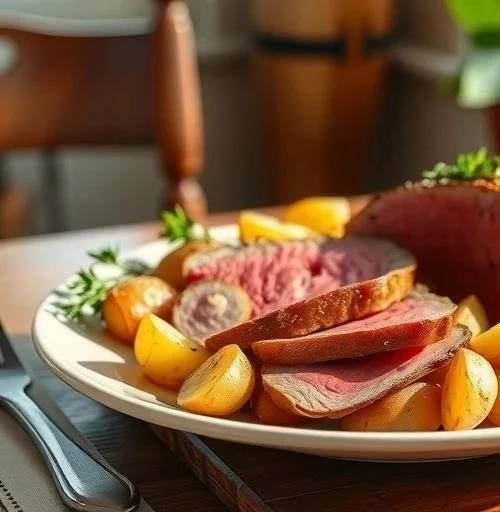
A Georgian feast opens: a spice-lit doorway, where tender beef and potatoes promise an unexpected welcome!
Choose the Cut: How to Turn Beef into Juicy, Tender Oven-Roasted Beef
For roast beef in the oven, choose a well-marbled ribeye or a compact sirloin: fine streaks of fat are tiny firebreaks against dryness, while an even shape cooks calmly from edge to heart. A top round works too, but give it a gentle hand and avoid a thin, ragged piece. Look for deep ruby color, a supple feel, and a modest fat cap; these are clues to juicy beef, not guarantees. Let the cut’s character lead: tenderness begins at the butcher’s counter, where the right piece turns a simple Georgian table into a velvet-and-crimson surprise. Choose with care, always.
Build a Georgian Marinade with Khmeli Suneli, Garlic, Cilantro, Coriander, Paprika, Adjika, and Aromatic Spices
Whisk a Georgian marinade for beef like a vivid, fragrant paint: olive oil, crushed garlic, chopped cilantro, ground coriander, paprika, a spoon of adjika, and khmeli suneli. Add black pepper, a little salt, and a thread of lemon zest; the citrus brightens the warm spices without stealing their stage. Massage this aromatic blend over the meat, pressing it into every fold, then let the flavors mingle until the surface smells of mountain herbs and gentle fire. Keep the mixture bold, not salty, so each spice can speak clearly. A fragrant hint from Georgia now
Roast Beef and Potatoes Together: Georgian-Style Potatoes, Oven-Baked Potatoes, Temperature, Timing, and Doneness
Nest Georgian-style potatoes around the beef only when their timing allows: cut them into equal wedges, toss with oil, salt, paprika, and a pinch of coriander. Roast at 220°C (425°F) until their edges turn bronze, then lower the oven to 180°C (350°F) for the beef. Use a thermometer, not guesswork: pull at 52–54°C (125–130°F) for medium-rare, or 57–60°C (135–140°F) for medium. A gap between pieces lets air circulate; turn the potatoes once, so each side catches a crisp, amber crust. Rest the meat before slicing; the potatoes can wait, warm and crackling.
Serve the Juicy Meat as a Festive Dish: A Creative Georgian Cuisine Recipe for Beef and Potatoes
Make the table feel like a tiny Georgian theatre: fan the sliced beef across a warm platter, then crown it with a bright spray of pomegranate seeds, torn cilantro, and thin rings of green onion. Tuck the potatoes beside the rosy slices, not beneath them, and add a small bowl of tkemali for a tart, jewel-like accent. Finish with toasted walnuts and a few herb leaves, letting guests build each bite their own way. Serve on dark pottery with a candle nearby; the ruby fruit glows, the herbs lift the aroma, and dinner becomes a generous story shared around the table.


6 Comments. Оставить новый
The spice list reads like a small Georgian orchestra, and khmeli suneli gets the solo it deserves. I especially like the reminder that a marinade should be bold without turning the beef into a salt lick.
A thermometer as the hero of the roast is excellent advice. The precise temperatures bring calm to what can otherwise feel like a dramatic kitchen mystery.
This has me imagining the kitchen smelling of garlic, herbs, and warm paprika before the first slice is even carved. A useful guide with a lively sense of place—now I’m hungry.
The potatoes deserve their own applause here. Equal wedges and breathing room are humble details, but they’re often the difference between crisp golden edges and a crowded, soggy pan.
“Tiny firebreaks against dryness” is a wonderfully vivid way to explain marbling. This makes choosing a roast feel less like a butcher-shop guessing game and more like learning to read the meat.
I love how the writing carries the meal beyond the oven and into a Georgian table. The blend of practical guidance and aromatic imagery makes the recipe feel like an invitation, not a checklist.