
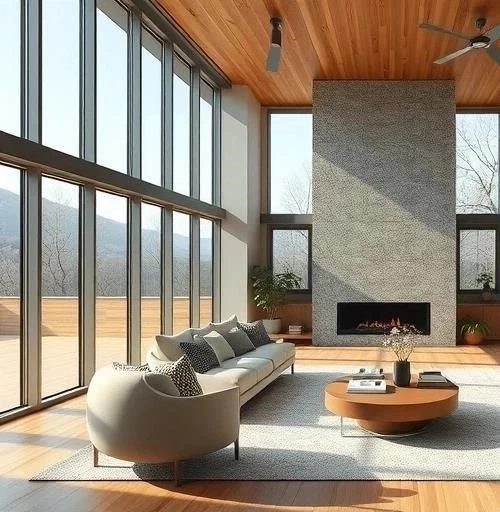
A room can feel like a quiet instrument: light is its melody‚ materials its rhythm‚ and movement the measure. In a modern architectural style‚ interior design begins not with a sofa‚ but with a question: how should life unfold here? Professional design turns the answer into an interior concept that is beautiful‚ practical‚ and unmistakably personal.
Start with the way people live
Interior planning and architectural design belong to one conversation. A bespoke project considers the building‚ its occupants‚ and the view beyond the window. Careful space planning creates functional zoning without turning an open space into a maze. Room ergonomics guide clearances‚ storage‚ and circulation‚ so comfort and functionality are felt rather than announced.
A strong design project tests ideas before construction begins. Interior visualization lets clients walk through the proposed atmosphere‚ while material selection compares finishes in real light. A restrained color palette can make a compact room feel expansive; tactile textures add warmth without visual clutter. Eco-friendly materials bring a quieter footprint and often a more honest character.
Let light and form do the work
Natural light is a design resource‚ not a lucky extra. The lighting scenario should shift from bright‚ focused work to a softer evening mood. Integrated lighting can reveal a textured wall‚ guide a hallway‚ or make cabinetry appear to float. Layered carefully‚ it gives the home a second architecture after sunset.
Minimalism in an interior does not mean emptiness. Geometric forms and clean lines create order‚ while modern furniture and considered object design introduce a human scale. A few decorative elements—a sculptural lamp‚ a handmade bowl‚ an artwork with a story—can speak more clearly than a crowded shelf. The goal is not to remove personality‚ but to give it room.
Make beauty work behind the scenes
Engineering systems deserve attention as early as the finishes. Heating‚ ventilation‚ acoustics‚ and smart controls should support the interior solution rather than disrupt it. Modern technologies can simplify everyday routines‚ provided they remain intuitive. This is where architectural aesthetics meet practical intelligence: every visible detail has a purpose‚ and every hidden system earns its place.
From the first sketch to the final fitting‚ the designer coordinates decisions and provides author’s supervision‚ protecting the original idea on site. The result is more than a polished image: a turnkey interior shaped around real habits. When thoughtful planning‚ honest materials‚ and carefully tuned light come together‚ spatial harmony feels effortless—and the home seems to have been waiting for its people all along.


1 Comment. Оставить новый
The best idea here is that a home can be designed like a quiet instrument—every detail tuned to the rhythm of real life. It’s a lovely reminder that good design doesn’t merely fill a room; it makes space for the people inside it.