
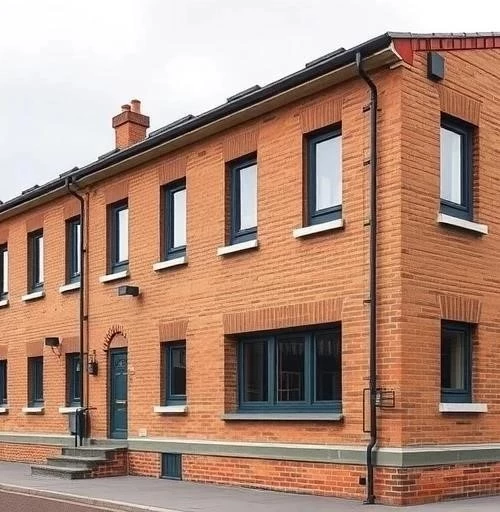
Clinker is valued for its rich color, low water absorption and long service life. Yet an attractive surface alone does not make a reliable facade: the design must also meet current safety, thermal and moisture requirements; Choosing clinker tile, clinker brick or another clinker facing system should therefore begin with the building’s use, climate and wall construction.
Choosing a suitable system
Clinker tile is lighter and thinner than clinker brick, so it can suit renovation projects where added wall load matters. Brick offers a traditional appearance and a deeper profile, but requires a structure designed to support its weight. Compare facade materials by frost resistance, water resistance, fire performance, expected maintenance and cost of finishing—not by price per square metre alone.
For direct facade cladding, the substrate must be stable, clean, level and compatible with the specified facade adhesive. Correct substrate preparation is essential: dust, weak render, unevenness or trapped moisture can lead to debonding and cracking. The installation method must follow the product manufacturer’s instructions and the project specification.
Thermal and moisture performance
Where insulation is included, the complete wall assembly must be assessed, not just the tile. Insulation thickness, fixing method, reinforcement and cladding weight affect safety and energy efficiency. A ventilated facade can help drain incidental moisture, but its cavity, air inlets and outlets must be designed correctly. In a bonded system, the designer must verify that the layers work together and that the wall can dry as intended.
Vapor permeability, waterproofing and moisture control should be considered alongside thermal insulation. Poorly detailed sills, parapets and window surrounds can admit water even when the tile itself is highly water-resistant. Specify compatible flashings and sealants, and avoid details that obstruct drainage or trap moisture within the wall.
Installation and compliance
Clinker installation requires accurate setting-out, consistent adhesive coverage and careful tile laying. Use the specified adhesive for the substrate, tile format and exposure conditions. Grout joints only after the adhesive has cured, using a suitable grout and filling joints fully. Movement joints must continue through the finish where required; they accommodate building movement and reduce the risk of cracking.
Before work starts, confirm that the design and installation comply with applicable building codes and local requirements; In Russia, relevant provisions may include GOST, SNiP and SP documents; their applicability depends on the system and project. Check structural loads, fire safety, fixing resistance, weather exposure and workmanship requirements. The chosen products should have documentation supporting their declared performance.
Appearance, service life and care
Modern design and architectural solutions can use varied formats, colors and joint patterns, but visual choices should not compromise drainage, fire safety or durability. Clinker is generally low-maintenance; periodic inspection of joints, flashings and vulnerable corners helps identify defects early. Cleaning should follow the manufacturer’s advice, since aggressive chemicals or abrasive tools may damage the surface.
Ultimately, the right choice of clinker tile balances appearance with performance and verified compliance. A properly designed and installed clinker facade can provide durable exterior finishing, while selected products may also be used for interior finishing. Request a system specification and compare the full cost of finishing, including preparation, insulation, accessories and labor. Professional design and quality control make the investment more predictable.



6 Comments. Оставить новый
The reminders about sills, parapets and window surrounds add valuable detail. These transitions are often where water problems begin, so compatible flashings and unobstructed drainage deserve careful attention.
The article makes a useful distinction between clinker tile and brick by focusing on weight and structural support, rather than appearance alone. That is an important starting point for both renovation and new-build projects.
The explanation of substrate preparation is practical and well judged. Calling out dust, weak render and unevenness helps clarify why installation quality matters just as much as the tile or adhesive chosen.
I appreciate the emphasis on assessing the complete wall assembly. A durable facing material cannot compensate for insulation, fixings or other layers that are poorly designed or incompatible.
The discussion of ventilated facades is helpful because it avoids treating the cavity as an automatic solution. Properly designed inlets, outlets and drainage are essential for the system to perform as intended.
This is a sensible overview of the decisions involved in choosing clinker cladding. Comparing service life, safety and maintenance alongside initial cost encourages a more realistic assessment of value.