
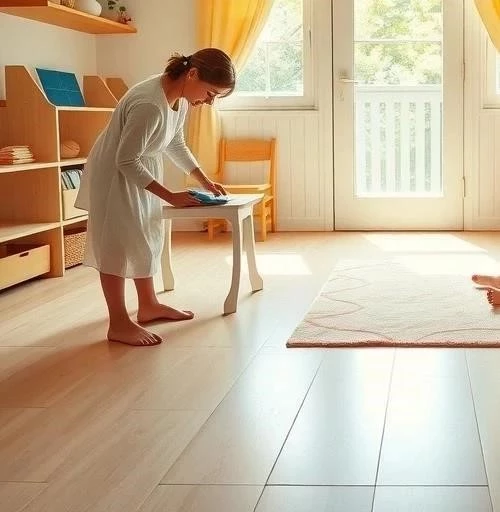
Linoleum can be a practical floor for a child’s room‚ but its lifespan depends on everyday habits‚ not just the product’s advertised durability. Regular care‚ prompt spill treatment and sensible protection prevent small problems from becoming costly repairs. These measures are especially worthwhile in a room where toys‚ wheeled chairs and frequent movement put the surface under constant stress.
Choose a suitable floor and prepare the room
Start with a product designed for residential use and appropriate for the room’s traffic. A durable surface is more likely to resist scuffs‚ but no material is damage-proof. Check the manufacturer’s care instructions before buying. If indoor air quality matters to your family‚ look for a product with credible emissions information and relevant safety certification; “eco-friendly” on its own is not proof. A comfortable‚ low-emission floor can be a safe choice for a child when it is installed and maintained correctly.
Clean gently and consistently
Remove grit with a soft broom or vacuum using a suitable hard-floor setting. Fine sand acts like an abrasive‚ so frequent dry cleaning helps prevent dull tracks. For routine washing‚ use a well-wrung mop and clean water‚ adding only a small amount of a mild cleaner approved for the surface. Excess water can seep into joints or edges‚ while harsh chemicals‚ scouring pads and abrasive powders may damage the finish. Drying the floor after washing is a simple precaution.
Deal with spills promptly. Blot liquids rather than rubbing them across the floor‚ then clean the area with a soft cloth and diluted‚ compatible detergent. Test any cleaner in an inconspicuous spot first. Avoid strong solvents unless the manufacturer specifically recommends them: they can discolour or soften the material. Prompt stain removal is safer and usually more effective than aggressive scrubbing later.
Prevent dents‚ scratches and wear
Fit felt or other suitable protective pads beneath chair and table legs‚ and replace them when they collect grit or wear thin. Lift furniture when moving it instead of dragging it. A rug or play mat in the busiest play area can reduce impact from dropped toys‚ but choose a backing that the floor maker confirms is safe; some rubber products may leave marks. Keep sharp toys‚ grit and small stones off the surface‚ and trim pets’ claws if relevant. These steps reduce damage without requiring a coating that may be incompatible with the floor.
Maintain a stable indoor environment
Follow the product’s guidance on temperature and humidity. Avoid prolonged exposure to direct sunlight‚ which can fade some floors‚ and do not place very hot objects directly on the surface. Use curtains or blinds where strong sun falls on the floor. Stable indoor conditions and routine inspection help reveal lifting edges or damaged seams early‚ when repair is often simpler.
Follow the care instructions
Do not apply wax‚ polish or sealant unless the manufacturer permits it. If the surface becomes scratched‚ consult the supplier about an approved repair product; deep cuts or loose seams may need professional attention. Replacing a damaged section promptly can prevent moisture and dirt from worsening the problem. Keep the care guide and use it as the authority for cleaning and repairs.
In short‚ the most reliable way to extend the floor’s service life is consistent‚ gentle maintenance combined with sensible prevention. The Russian search terms for these recommendations are included here as requested: уход за линолеумом‚ чистка линолеума‚ защита напольного покрытия‚ срок эксплуатации линолеума‚ износостойкость линолеума‚ детская комната‚ безопасное напольное покрытие‚ экологичный линолеум‚ влажная уборка‚ мягкие моющие средства‚ удаление пятен‚ защита от царапин‚ мебельные накладки‚ коврик для игровой зоны‚ профилактика повреждений‚ уход за напольным покрытием‚ температура и влажность в помещении‚ восстановление линолеума‚ правила эксплуатации линолеума‚ покрытие для детской комнаты.



8 Comments. Оставить новый
The article makes a helpful distinction between preventing wear and trying to repair damage afterward. Its advice is measured and practical, though readers will need to consult their flooring manufacturer for recommendations specific to their product.
I appreciate the clear explanation of how grit can wear down a floor over time. Regular dry cleaning is an easy step to overlook, but the article makes a convincing case that it can help prevent scuffs and dull tracks.
The article does a good job explaining why excess water and harsh cleaners can be risky. Its recommendations are straightforward enough to follow while still making clear that the manufacturer’s instructions should take priority.
The guidance on spills is sensible and appropriately cautious. Blotting promptly and testing a cleaner in an inconspicuous area are useful suggestions that may prevent a small mess from turning into lasting damage.
This is a balanced discussion of product claims and safety. Pointing out that a label such as “eco-friendly” is not proof encourages readers to look for credible emissions information instead of relying on vague marketing.
The advice is practical because it focuses on routine habits rather than suggesting that any flooring is completely resistant to damage. The emphasis on checking product-specific care instructions is especially useful, since cleaning methods can vary.
The focus on a child’s room makes the advice relevant to everyday family life. Toys and frequent movement can put a floor under extra stress, so preventive care seems more useful than waiting for visible damage.
I found the suggestions realistic rather than overly demanding. A soft broom, a suitable vacuum setting and a well-wrung mop are manageable tools for regular maintenance, and the article explains why each matters.