
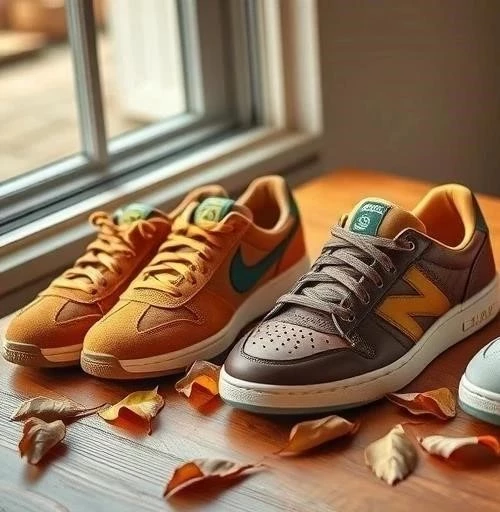
Autumn sneakers are the result of a long shift in what people expect from everyday footwear. A shoe once designed mainly for sport became a daily uniform; later, makers adapted that familiar shape for wet pavements, cooler weather and city life. The modern pair priced below €200 is not simply a cheaper version of a luxury trainer. It represents a practical compromise between athletic heritage, seasonal protection, comfort and style. Understanding that history helps explain why certain details—rubber soles, leather panels and darker colours—remain useful rather than merely fashionable.
From rubber-soled sport shoes to everyday icons
The story begins in the nineteenth century, when advances in rubber manufacturing made flexible, quiet-soled shoes possible. Early canvas-and-rubber footwear was light compared with many stiff leather shoes, though it offered little protection from cold or rain. In the early twentieth century, athletic footwear developed into specialised equipment for activities such as tennis and basketball. Its appeal soon escaped the playing field: a flexible sole and simple upper were comfortable for walking, and the sporty look signalled a new, informal style.
After the Second World War, trainers became increasingly visible in youth culture, music and street fashion. Brands built lasting identities around particular court, running and basketball designs. This mattered for autumn footwear because familiar sports silhouettes could be reworked without losing their recognisable character. A higher collar, a sturdier upper or a more substantial tread could make a classic shape more useful in cooler months, while its athletic associations kept it casual rather than resembling a formal boot.
Why autumn changed the design brief
Summer sneakers can prioritise ventilation and minimal weight. Autumn brings a different set of problems: damp ground, sudden showers, falling temperatures and longer periods outdoors. The response was not one single invention but a gradual adjustment of materials and construction. Leather and coated synthetics became popular because they are generally easier to wipe clean than open mesh. Suede offered a softer, richer appearance, but demanded more care and is a less convincing choice for persistent rain. These distinctions are more meaningful than a seasonal colour trend.
Soles also tell part of the story. A flat court sole looks clean and works well on dry urban surfaces, but its grip may be limited on slick leaves or wet paving. Deeper tread and rubber compounds designed for traction can improve confidence, although no sneaker makes every slippery surface safe. Some autumn designs borrow the raised profile of a hiking shoe; others keep a low, familiar outline and add only a more durable outsole. The best choice depends on the wearer’s routes, not on the word “autumn” printed in a product description.
The modern balance: protection without pretending to be a boot
Today’s autumn sneaker sits between a lightweight trainer and a traditional boot. Water-resistant treatments, gusseted tongues and lining materials can reduce discomfort in light rain and cool weather. However, “water-resistant” does not mean waterproof, and a treated suede upper is not automatically suitable for a downpour. This distinction is important: marketing can make modest protection sound absolute. For regular wet-weather use, check the construction, care instructions and reviews, and consider whether a dedicated waterproof shoe would serve better.
Comfort has evolved alongside protection. Cushioned midsoles, padded collars and removable insoles reflect lessons from performance footwear, while retro designs preserve the look of earlier decades. Yet extra cushioning is not automatically superior. A stable fit, adequate toe room and a sole suited to the wearer’s walking matter more than a dramatic technical claim. Autumn often means thicker socks, so trying shoes on with the socks you expect to wear is a simple but consequential test.
What a budget below €200 can realistically buy
A ceiling of €200 covers a broad range, from basic canvas or synthetic models to well-made leather sneakers and some weather-focused designs. It is enough to find durable everyday footwear, but it does not guarantee premium materials or waterproof construction. The sensible approach is to judge the whole shoe: upper quality, stitching, outsole grip, comfort, repairability and care requirements. A discounted classic may be a better purchase than a new release whose price reflects branding more than useful performance.
- For mostly dry city days: choose leather or a dense synthetic upper and a grippy rubber sole.
- For frequent showers: look for clearly stated water-resistant or waterproof construction, not just a dark colour or treated finish.
- For mixed outfits: neutral shades and restrained branding usually outlast short-lived seasonal trends.
- For longevity: check whether the insole can be replaced and whether the upper can be cleaned without specialist products.
Style, sustainability and the value of keeping a pair
The history of sneakers is also a history of changing taste. Canvas once suggested sport; later, leather court shoes became wardrobe staples, and retro runners turned technical design into everyday fashion. Autumn colours—brown, olive, burgundy, charcoal and cream—work partly because they coordinate with coats and heavier fabrics, but colour cannot compensate for poor construction. A versatile pair worn for several seasons can be better value than multiple inexpensive shoes replaced after one wet winter.
Repair and care are part of that calculation. Brush dirt away before it settles, dry wet shoes at room temperature, and avoid placing them directly beside a heater, which can damage materials and adhesives. Use a protector appropriate to the upper, and rotate shoes when possible so they can dry fully. These small habits do not make a sneaker indestructible; they simply help preserve its comfort and appearance, extending the useful life of a purchase.
Autumn sneakers under €200 reflect more than a century of change: rubber-soled sports shoes became cultural icons, then versatile footwear adapted to everyday weather. Their appeal lies in that combination of history and utility. The strongest purchase is not necessarily the newest or most technical model, but one suited to local conditions, comfortable with autumn socks and honest about its limits in rain. Choose for construction and intended use first, then for heritage and style. That is how a familiar sneaker becomes a dependable part of an autumn wardrobe.
9 Comments. Оставить новый
The explanation of rubber soles and flexible construction gives the historical section a useful connection to modern comfort. It also makes clear that some familiar design features have remained popular because they serve everyday purposes.
The comparison between summer and autumn footwear is especially helpful. It explains why a shoe designed for warmer weather may not be as comfortable or practical when the season brings rain and lower temperatures.
The article effectively links athletic heritage with contemporary street style. Its point that a higher collar or more substantial tread can change a sneaker’s seasonal usefulness is a practical way to explain how classic shapes are adapted.
The historical background helps show how sneakers moved from sports equipment into everyday wear. I also like the point that familiar athletic designs could be adapted for cooler weather without losing their casual character.
The discussion of autumn’s practical demands is convincing. Damp pavements and cooler temperatures make tread and sturdier materials relevant considerations, rather than details chosen only for appearance.
I appreciate the article’s measured view of sneakers under €200. It presents them as a practical compromise between several needs, rather than suggesting that price alone determines whether a pair is suitable.
This piece offers a thoughtful account of why autumn sneakers occupy a space between sportswear and more protective footwear. The emphasis on function as well as appearance makes the topic relevant to readers choosing shoes for daily city life.
This is a clear introduction to the evolution of everyday sneakers. The article connects changes in footwear design with shifts in culture and daily habits, which gives its discussion more context than a simple style guide.
The article makes a useful distinction between a less expensive trainer and a poorly made imitation. Its focus on the balance between comfort, seasonal protection and style explains why autumn sneakers have a purpose beyond following a trend.