
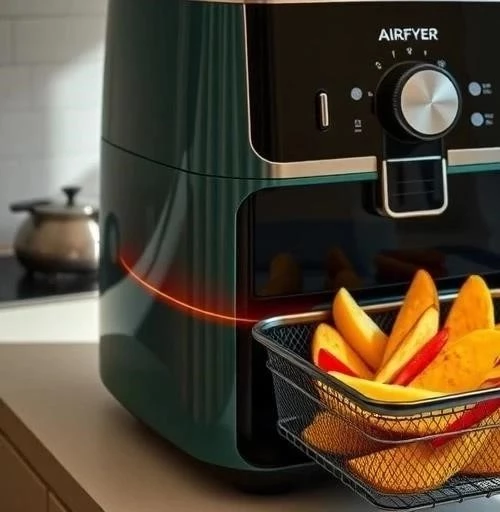
Imagine a tiny, powerful wind tunnel in your kitchen. A fan whips hot air around a basket of food, carrying heat across every exposed surface. That is the central trick of an air fryer: it cooks by rapid, circulating hot air, creating a browned, crisp exterior without submerging food in a pan of oil. It is less a miniature deep fryer than a compact countertop convection oven with excellent airflow and a flair for drama.
The crisping machine behind the name
Inside most air fryers, a heating element warms the air while a fan drives it around the cooking chamber. The food sits in a perforated basket or on a rack, so hot air can reach it from several directions. Moisture evaporates from the surface; meanwhile, heat encourages browning and the savory flavors associated with roasted or fried foods. The result can be crisp and golden, especially when the food has a little oil on its surface.
“Air frying” does not mean that air magically performs the same job as a bath of hot oil. Deep-frying transfers heat through oil and often produces a distinctive, rich crust. An air fryer uses moving hot air instead, so the texture and taste are similar in spirit, not identical. A thin coating of oil can help food brown, but a puddle of oil is neither necessary nor a good idea.
What it can do on a busy evening
An air fryer is a small multitasker. Depending on its model and settings, it can:
- Roast: Cook vegetables, chicken pieces, fish, or tofu until browned at the edges.
- crisp: Give frozen fries, nuggets, and similar convenience foods a crunchy finish.
- Bake: Make small cakes, muffins, pastries, or other recipes that fit in an oven-safe dish.
- Reheat: Restore some crunch to pizza, roasted potatoes, and leftovers that turn limp in a microwave.
- Toast or grill: Brown bread or cook small portions, if the appliance offers suitable settings and accessories.
It is especially handy for modest portions. Rather than heating a full-size oven for a handful of vegetables, you can warm a smaller chamber and get dinner moving quickly. It can also keep a crisp coating crispier than a microwave does: the microwave tends to heat water inside food, while circulating hot air helps drive surface moisture away.
The small habits that make a big difference
Give the air room to travel. A crowded basket traps steam between pieces and blocks the airflow that creates browning. Cook in batches when needed, and shake or turn the food partway through so different sides meet the heat. A light brush or spray of oil may improve color and texture; use only a little, and check your appliance’s instructions before adding anything to the basket.
Recipes written for a conventional oven may need adjustments. Air fryers often heat a smaller space quickly, so food can finish sooner than expected. Start checking early, particularly the first time you try a recipe. Temperature and timing vary by appliance, food size, and how full the basket is. A quick-read food thermometer is useful for checking that meat and poultry reach a safe internal temperature; a browned exterior alone cannot tell you that.
What it cannot do
An air fryer cannot make every food crisp. Wet batter may drip through the basket before it sets, and leafy greens can flutter toward the heating element. Delicate foods, large roasts, and dishes that need plenty of liquid may be better suited to another cooking method. You also cannot pour cooking oil into the drawer as if it were a deep fryer. The appliance is designed for hot air, not a reservoir of oil.
Capacity matters, too. A compact model may be perfect for one or two people but awkward for a family-sized meal. Basket-style machines are often quick and convenient; oven-style versions may hold more food or several trays. Either way, check the dimensions, clean the basket after use, and keep the appliance on a stable surface with the ventilation space its manual recommends.
So, what is the real magic?
An air fryer turns a blast of circulating heat into convenience: browned edges, fast cooking, and less oil than traditional deep-frying usually requires. It does not make food automatically healthy, and it does not reproduce every result of a fryer or oven. Think of it as a nimble little roasting room—particularly good at crisping small portions and rescuing leftovers. Treat it as a helpful tool rather than a miracle machine, and that rushing pocket of hot air can earn a regular place in your kitchen.
1 Comment. Оставить новый
I like the image of the air fryer as a “compact countertop convection oven with excellent airflow and a flair for drama.” It captures the appliance’s real magic: not replacing oil so much as choreographing heat around dinner. A useful, clear guide—and a reminder that a little oil can be the supporting actor without stealing the scene.