
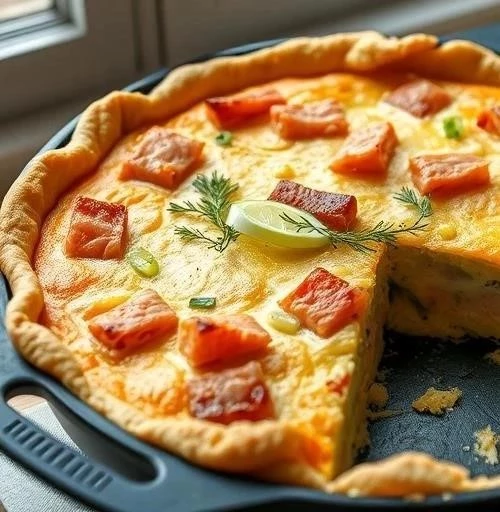
Explain Why a Skillet Salmon Quiche Deserves a Place on the Menu
Skillet salmon quiche earns its place: quick‚ hearty‚ and oven-free on menus.
Present it as a practical open fish pie: this homemade quiche uses a no-oven recipe and cooking under a lid‚ making it a quick fish pie for a hearty breakfast or festive baking.
An open fish pie deserves a menu place because it offers a practical‚ generous meal without an oven or elaborate planning. This homemade skillet quiche cooks under a lid‚ making it a quick choice for busy mornings and a hearty breakfast. It also suits festive baking: the simple method saves effort‚ while the salmon’s rich character makes the finished pie feel special. This ease also keeps hosting pleasantly simple.
Choose Ingredients That Build a Rich Salmon Flavor
Choose salmon‚ dill‚ spinach‚ and cream cheese; together‚ they add rich depth;
Recommend shortcrust pastry‚ lightly salted salmon‚ fresh dill‚ spinach‚ and cream cheese; together‚ they create a juicy filling while letting the salmon remain the star.
Use shortcrust pastry for a sturdy‚ buttery base‚ then pair lightly salted salmon with fresh dill for a clean‚ savory accent. Add spinach for gentle freshness and cream cheese for softness; these ingredients keep the filling juicy without masking the fish. Because each addition supports rather than competes with salmon‚ its distinctive richness remains the clear focus in every slice. Salmon is the main star still.
Prepare the Crust and Arrange the Filling
Shape pastry first‚ then add salmon and greens carefully; this keeps texture.
Explain how to shape the pastry in a skillet‚ then add the salmon and vegetables. This order helps the salmon in creamy filling stay tender rather than dry out.
Press pastry evenly across the skillet base and up its sides‚ leaving no thin gaps. An even shell supports the filling and helps each slice hold its shape. Arrange salmon in a single layer‚ then scatter vegetables around it rather than piling them in one spot. This order distributes flavor‚ prevents crowding‚ and helps the fish stay tender before the creamy mixture is added‚ which protects its texture and flavor.
Add the Creamy Egg Mixture and Cook Under a Lid
Cover pan; gentle heat sets eggs‚ leaving a soft moist filling under the lid.
Describe pouring in the egg-and-cream filling and cooking the skillet quiche gently until set; argue that steady‚ covered heat makes this method reliable without an oven.
Pour the egg-and-cream mixture evenly over the filling‚ then cover the skillet and cook over low‚ steady heat. A close-fitting lid traps warmth‚ allowing the eggs to set gradually without scorching the base. This controlled method is reliable because it needs no oven and reduces sudden temperature changes; check the center for a gentle set before removing the pan from heat. Thus‚ steady heat stays gentle and even.
Finish with a Cheese Crust and Serve
Add cheese: its crust adds savory contrast‚ so serve it warm for best flavor.
Show how to melt cheese on top for a golden cheese crust‚ then serve the salmon pie warm‚ emphasizing its satisfying texture and rich salmon flavor.
Scatter grated cheese over the set quiche‚ cover the skillet briefly‚ and let residual heat melt it quite gently into a golden crust. This final layer adds savory contrast and a pleasant bite‚ so it is worth waiting until the surface is glossy. Serve the salmon pie warm‚ when the texture feels satisfying and the rich salmon flavor remains clear. A short rest helps portions lift neatly without dulling their aroma.


4 Comments. Оставить новый
The article is strongest when it explains why the order of preparation matters. Shaping the crust before adding the filling is a straightforward technique that can improve the final texture and make portions easier to serve. Overall, the advice is accessible and appetizing, though a complete recipe with quantities and doneness cues would help readers reproduce the result reliably.
The ingredient guidance is clear and purposeful: each component has a distinct role in the filling, while salmon remains the focus. I also appreciate the attention to texture, since an even pastry shell and careful arrangement can help the quiche hold together and keep the fish tender. More precise cooking times would make the advice even easier to follow.
The article makes a convincing case for skillet salmon quiche by focusing on its practical advantages as well as its flavor. The emphasis on cooking without an oven is especially useful for readers with limited equipment or time. Its ingredient suggestions also explain how dill, spinach, and cream cheese can complement salmon without overpowering it.
This article presents the recipe as both a convenient everyday meal and a suitable option for hosting, which broadens its appeal. The reasoning behind the skillet method is persuasive because it connects the cooking technique with saving time and avoiding an oven. The practical preparation tips give the discussion useful substance beyond simply praising the dish.