
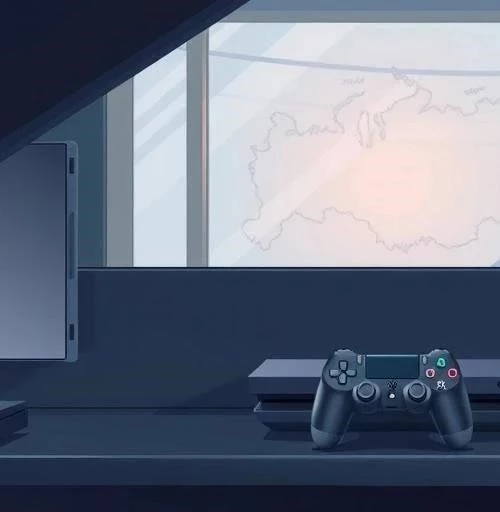
The short answer is that PlayStation’s retreat from Russia in 2022 was driven by the war in Ukraine and its consequences—not by a single technical or commercial decision. Sony Interactive Entertainment suspended shipments of PlayStation hardware and software to Russia, and access to important parts of the PlayStation Store was restricted. The move reflected a combination of political and reputational pressure, sanctions and payment difficulties, disrupted logistics, and the practical risks of continuing normal business during an international crisis.
It is also important to describe the decision precisely. Sony announced a suspension of commercial activity in Russia; that does not necessarily mean that the PlayStation brand disappeared worldwide, that every Russian console stopped working, or that Sony permanently abandoned the Russian market. The difference between suspending new business and switching off products already in customers’ homes is central to understanding what happened.
What changed in 2022?
Following Russia’s full-scale invasion of Ukraine in February 2022, many international companies reviewed or suspended their operations in Russia. Sony Interactive Entertainment joined the companies that halted significant parts of their Russian business. The measures included stopping shipments of consoles and software and suspending PlayStation Store operations in the country. Sony also postponed the Russian release of Gran Turismo 7, which was scheduled for release around that period.
These steps affected several different parts of the PlayStation experience. A console is a physical product, but the business around it depends on digital stores, payment processing, distribution, customer service, publishers, and an ongoing supply of games. When those connected services become difficult or inappropriate to operate, a company may be unable to offer its usual product even if the hardware itself still works.
The war created a serious reputational and ethical decision
The invasion was the immediate context for Sony’s action. Global companies faced growing calls from governments, employees, customers, investors, and the public to respond. Continuing ordinary sales in Russia could be interpreted as business as usual at a time when many people expected companies to show that the war had consequences. Suspending activity was one way for Sony to signal that it would not proceed as if nothing had happened.
This was not simply a question of whether Russian consumers liked PlayStation or whether the market was profitable. A large international company has to consider how its conduct is viewed across many countries. The decision to stop sales in one market may bring substantial costs, but continuing sales can also create reputational damage, public criticism, and difficult questions from business partners and staff.
That does not mean Sony’s decision should be treated as proof that every Russian customer was personally responsible for the war. Corporate measures aimed at a national market affect ordinary people as well as state institutions. Rather, the point is that Sony made a corporate response to a major geopolitical event, under pressure and uncertainty, while weighing the consequences of both action and inaction.
Sanctions and financial restrictions made normal sales harder
After the invasion, governments introduced sanctions and other restrictions affecting Russia. Not every restriction applied directly to a PlayStation console or game. Nevertheless, sanctions can influence the wider systems that a technology company relies on: banking, payment providers, international transfers, insurance, contracts, and the movement of goods. A business can face serious obstacles even where a particular product is not itself prohibited.
For PlayStation, this mattered especially because the product is not limited to a one-time purchase. Players buy games and add-on content, renew subscriptions, and use digital accounts that depend on secure payments and relationships with service providers. If a company cannot reliably process payments, transfer funds, settle accounts with partners, or confirm that transactions meet applicable rules, keeping a digital marketplace open becomes more complicated and risky.
It would therefore be too simplistic to say that “sanctions alone forced Sony to leave.” The public facts point to a broader suspension of activity in the circumstances created by the war. Legal requirements, financial infrastructure, and voluntary corporate decisions can overlap. The result for a customer may look the same—a store or purchase option is unavailable—but the underlying reasons are not necessarily identical.
Supply chains and logistics became uncertain
PlayStation consoles and games depend on international manufacturing and distribution. Hardware has to be produced, transported, imported, stored, and delivered. Physical games and accessories also rely on publishers, distributors, retailers, and cross-border supply arrangements. A rapidly changing political and commercial environment can interrupt any of these steps.
Even where a company can technically send goods into a country, it must be confident that transportation, customs processing, insurance, payment, and after-sales support can function. Suppliers and delivery partners may change their policies; routes may become more expensive or less dependable; and a business may not be able to give customers reliable delivery dates. Suspending shipments can be a more responsible and manageable choice than accepting orders that it cannot confidently fulfil.
This helps explain why a multinational company might halt a product line even if demand remains. Demand is only one part of a viable business. A company also needs a dependable legal and operational route to supply products and support buyers. In 2022, those conditions could not be taken for granted.
PlayStation depends on online services, not just consoles
Modern consoles are closely connected to online accounts and digital services. Players may need an account to download games, receive updates, manage purchases, use online multiplayer, or access subscription benefits. This creates a more complicated situation than simply stopping the delivery of new machines. The commercial ecosystem has to function across software, servers, payment systems, licensing arrangements, and customer support.
Suspending the PlayStation Store in Russia was therefore significant. It limited the ability to buy digital games and other content through the normal local service. It also made it harder for Sony to offer the seamless experience that customers expect from a connected platform. A digital store cannot operate only because its website or servers are technically available: it also needs lawful and dependable payment processing and the ability to manage sales and accounts;
At the same time, a suspension of store operations should not be confused with an automatic shutdown of every console or account. A person who already owns a game on disc may still be able to play it offline, subject to the game’s own requirements. Previously downloaded content may remain accessible in some circumstances. Online features, updates, account access, and digital purchases can be affected differently. The exact result depends on the product, the account, the service, and the relevant terms.
The decision was also a business-risk calculation
Companies do not make decisions only by comparing expected sales with production costs. They assess legal exposure, operational uncertainty, brand trust, and the possibility that conditions will change again. Continuing to operate under unstable circumstances could require Sony to make frequent changes to payment methods, distribution, customer policies, and support. It might also put the company in conflict with restrictions or with the policies of banks and partners.
A temporary suspension reduces some of those risks. It gives a company time to observe developments without continually launching new products or making promises that may have to be reversed. This does not prove that Sony’s decision was motivated solely by financial self-interest or solely by principle. In practice, corporate decisions often combine ethical considerations with legal duties and commercial risk management.
There was also a wider brand question. PlayStation is sold in many countries, and the company’s reputation in one market can influence its standing elsewhere. Sony had to consider how consumers and partners around the world would respond if it continued normal commercial activity in Russia while other companies were suspending theirs. The potential cost of withdrawal in one market had to be weighed against the potential cost of appearing indifferent in many others.
Did Sony “leave Russia” permanently?
The phrase “Sony left Russia” is convenient, but it can overstate what an announcement of suspension establishes. Suspending shipments and store operations means that normal commercial activity was halted. It does not, by itself, settle what Sony might do in the future if laws, conditions, and business arrangements change. Nor does it establish that Sony closed every office, ended every relationship, or disabled every service associated with PlayStation.
The safest description is that Sony Interactive Entertainment suspended important PlayStation sales and services in Russia in response to the circumstances following the invasion of Ukraine. Whether this becomes a permanent exit is a separate question. A return would depend on decisions by Sony and on the political, legal, financial, and logistical environment. Without a clear, current announcement from the company, it is better not to present a temporary suspension as an irreversible decision.
Likewise, Sony’s global PlayStation business continued in other markets. The company’s international website and PlayStation services continued to describe consoles, games, accessories, accounts, and online benefits for customers in supported regions. That distinction matters: the action concerned Sony’s ability and decision to operate in Russia, not the cancellation of PlayStation as a product or the closure of the company worldwide.
What did the suspension mean for Russian players?
- New hardware: Official shipments of PlayStation consoles and related products were suspended, making ordinary authorised supply more difficult.
- Digital purchases: Suspension of the PlayStation Store restricted normal purchases of games and downloadable content through the Russian service.
- Existing libraries: Previously purchased or installed games did not all necessarily stop working at once. Access can depend on whether a game is physical or digital, whether it requires online services, and the state of the player’s account.
- Online features: Multiplayer, account services, updates, and subscriptions can be affected separately. Their availability should not be assumed to match the availability of offline play.
- Unofficial supply: Products may still reach consumers through resale or parallel-import channels. Such availability is not the same as Sony resuming official local sales and may involve different prices, warranties, and support.
These distinctions are important because reports that “PlayStation still works” and reports that “PlayStation is unavailable” may both describe part of the truth. A console can remain usable while new official purchases are blocked. A physical disc can work even when the digital store is unavailable, while an online game may depend on servers and services beyond the player’s control.
Was Sony’s choice unique?
No. Sony’s decision formed part of a much wider corporate response to the invasion. International firms in technology, entertainment, retail, finance, and other sectors faced similar questions about whether to continue selling products or providing services in Russia. Their responses varied: some suspended particular services, some stopped exports, and some reduced or ended operations. Different companies had different legal obligations, products, and supply chains, so their decisions were not identical.
PlayStation’s case nevertheless illustrates why entertainment technology can be affected by geopolitical events. A game console appears to be a consumer device, but the service around it crosses borders. It relies on digital infrastructure, international payment networks, licensing, developers, publishers, hardware suppliers, and distribution partners. When the political environment changes, those connections can become difficult to maintain even if the product itself seems unrelated to politics.
Sony PlayStation suspended important commercial activity in Russia because the invasion of Ukraine created a combination of ethical, reputational, legal, financial, and logistical challenges. The war prompted intense public and corporate scrutiny; sanctions and payment restrictions complicated international business; supply and distribution became less predictable; and PlayStation’s dependence on online services made a simple continuation of sales difficult.
The most accurate conclusion is not that Sony switched off every PlayStation or necessarily made an irrevocable decision to abandon Russia forever. Rather, Sony halted key parts of its Russian business at a time when normal operations had become politically charged and commercially uncertain. For players, that meant fewer official routes to buy hardware and digital content, while the effect on existing games and consoles varied. Any claim about a later return or a permanent exit should be based on a clear, up-to-date announcement—not inferred from the original suspension alone.
Background references
The official Sony and PlayStation websites provide information about the company, its products, accounts, and services. The general corporate pages are useful for understanding Sony’s global business, but they should not be treated as a complete record of the Russia-related announcement or as proof of the current status of every service.
- Sony Group Portal
- PlayStation official website
- PlayStation account information
5 Comments. Оставить новый
This is a balanced overview because it avoids presenting the withdrawal as a simple technical shutdown or a definitive permanent exit. The emphasis on what Sony announced, rather than assumptions about every console or user, is especially valuable.
The specific mention of Gran Turismo 7 makes the explanation more concrete. It would also be helpful for the full article to distinguish clearly between the services suspended at the time and any later changes to their availability.
The article usefully distinguishes between suspending commercial activity and disabling consoles already owned by customers. That clarification prevents a common misunderstanding and makes the explanation more precise.
I appreciate how the article explains that PlayStation depends on more than hardware sales. Digital stores, payment systems, logistics, and game distribution all contribute to the customer experience, so disruptions in those areas can affect the business as a whole.
The discussion places Sony’s decision in the wider context of the invasion of Ukraine and the responses of international companies. This gives readers a clearer basis for understanding why the suspension involved both practical and reputational considerations.