
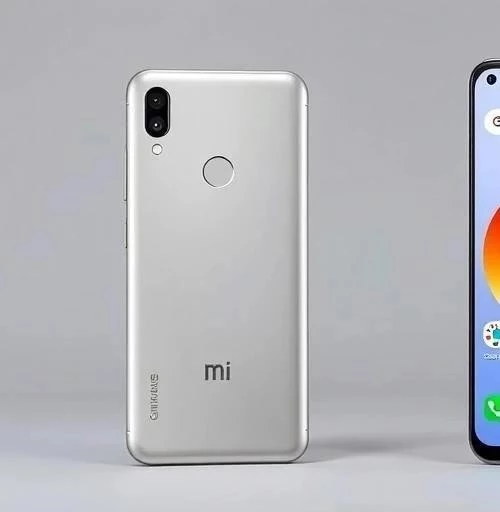
The Xiaomi Mi A1 was Xiaomi’s first smartphone based on Android One. Announced on September 5, 2017, it marked an unusual partnership: Xiaomi supplied the hardware, while Google’s Android One program shaped the software experience. The result was a phone that looked and felt like a Xiaomi, but arrived without the company’s familiar MIUI interface.
That combination made the Mi A1 more than a new model in a crowded catalogue. It was a small experiment in contrast: a Chinese manufacturer known for feature-rich custom software building a device around a cleaner, more straightforward version of Android. To understand why the phone mattered, it helps to look at both halves of its name—Mi A1, and Android One.
Android One: a different kind of promise
Android One is Google’s program for phones made by partner manufacturers. It is not a separate operating system in the way that Android and iOS are separate systems. Rather, it is an approach to Android: participating companies provide the device, while the software is designed to offer a relatively clean Android experience, with fewer manufacturer-added changes and a stronger emphasis on timely updates.
Before the Mi A1, Xiaomi phones were closely associated with MIUI, the company’s own Android-based interface. MIUI offered its own visual style, apps, and extra features. Many users enjoyed that richer, more customised environment. But others wanted something simpler—an interface closer to Google’s vision of Android, without as many layers between the user and the operating system.
The Mi A1 was Xiaomi’s answer to that second group. Its “A” was a signal that this was not simply another MIUI-powered Mi phone. The device belonged to Android One, and its software was central to its identity, not merely a detail buried in a specification sheet.
A Xiaomi phone with a Google-minded personality
In practical terms, the Mi A1 arrived with a clean Android interface and Google’s services at the centre of the experience. The familiar Xiaomi software environment was absent. For a long-time Xiaomi owner, that could feel like entering a well-known house after someone had rearranged the furniture: the essentials were still there, but the rooms looked different.
The phone launched with Android 7.1.2 Nougat. Xiaomi and Google presented it as a device intended to receive software updates, including an upgrade to Android Oreo. That update-focused pitch was one of Android One’s main attractions. It gave buyers reason to expect a more direct relationship with Android’s new versions than they might associate with a heavily customised phone.
“Stock Android” is often used as shorthand for this kind of clean experience, although it does not mean that every Android One phone is identical or that no partner has any influence over the software. The important point is that the Mi A1 did not use MIUI as its main interface. Xiaomi was deliberately making a phone whose software story differed from the one that had made the company famous.
The hardware: familiar strengths, carefully chosen
The Mi A1 was not a bare-bones device built only to showcase software. It paired Android One with hardware aimed at the popular mid-range market of 2017. Inside was Qualcomm’s Snapdragon 625 processor, a chip known for balancing everyday performance with relatively efficient power use. The phone commonly came with 4GB of RAM and 64GB of built-in storage, with a microSD card option for people who needed more room for photos, music, or apps.
Its front was dominated by a 5.5-inch Full HD display. That resolution made text and images look crisp at normal viewing distances, while the screen size gave the phone space for video, maps, and games. The Mi A1 was not trying to be a tiny one-handed handset; it belonged to the broad-screen era, when a display large enough for entertainment was becoming a mainstream expectation.
The body was made from metal, giving the phone a solid, cool-to-the-touch feel rather than the lighter impression of an all-plastic shell. A fingerprint reader sat on the back, where an index finger could naturally find it while lifting the phone. Xiaomi also retained a 3.5mm headphone jack, a small but meaningful convenience for people who still used wired headphones. Charging and data transfer used USB Type-C.
Power came from a 3,080mAh battery. As with any phone, real battery life depended on the user’s signal strength, screen brightness, apps, and habits. The specification nevertheless fit the Mi A1’s intended role: a balanced everyday handset rather than a device built around an unusually large battery or a headline-grabbing gaming feature.
Two rear cameras and a new kind of everyday photography
Photography was another part of the Mi A1’s appeal. Its rear camera system used two 12-megapixel cameras, with one offering a telephoto perspective. That setup enabled portrait-style images with a softened background and gave users a way to frame subjects more tightly than with a standard wide camera alone.
In 2017, dual cameras were becoming a familiar way for manufacturers to make a phone feel more versatile. The Mi A1 brought that feature into a mid-range package rather than reserving it for an expensive flagship. Its camera software also offered a portrait mode, inviting users to treat the phone not just as a pocket computer but as a small, always-ready camera.
There is a useful distinction here: two lenses do not automatically make every photograph better. Results still depend on light, processing, focus, and the scene itself. The Mi A1’s camera system mattered because it expanded the kinds of pictures the phone could attempt, while its price and positioning made those options accessible to more buyers.
The Mi 5X connection—and the important difference
The Mi A1 is often compared with Xiaomi’s Mi 5X, and for good reason. The two phones shared much of their physical design and core hardware. But they were not interchangeable in the detail that matters most to this question: the Mi 5X ran Xiaomi’s MIUI software, while the Mi A1 was the Android One model.
That makes the comparison a neat illustration of how software can give similar hardware a different personality. Imagine two identical notebooks: one filled with a carefully organised personal system, the other left almost blank for the reader to arrange. The paper is the same, but the experience of using it changes. In a similar way, Xiaomi could offer closely related hardware with two distinct software identities.
So, if the question is “Which Xiaomi phone first joined Android One?”, the answer is the Mi A1—not the Mi 5X. The latter helps explain the A1’s design lineage, but it does not replace it as Xiaomi’s first Android One smartphone.
Why Xiaomi made this phone
The Mi A1 showed Xiaomi testing a new route to customers. The company had built its reputation partly on giving buyers substantial hardware for the money and wrapping it in its own software. Android One let Xiaomi reach people who liked the company’s devices but preferred Google’s cleaner Android experience.
It also gave the Android One program a partner with a strong presence in the mid-range market. The partnership brought together two different strengths: Xiaomi’s ability to design and distribute affordable hardware, and Google’s role in the Android ecosystem. The phone was therefore interesting not because it invented a new category, but because it joined two approaches that had not always seemed like natural companions.
For buyers, that choice mattered. A person could choose a Xiaomi phone without choosing MIUI. Someone who wanted a cleaner interface could consider Xiaomi hardware, while someone who valued MIUI could continue looking at the company’s other models. The Mi A1 widened the company’s menu rather than replacing everything already on it.
What the Mi A1 did—and did not—mean
It is worth being precise about the word “first.” The Mi A1 was Xiaomi’s first Android One smartphone. It was not the first Android One phone ever made: Google’s program had existed for several years before the Mi A1 appeared. Nor did the phone mean that Xiaomi had abandoned MIUI. The company continued to make phones using its own software.
It also did not promise that every user would experience updates in exactly the same way forever. Update timing can depend on a device, region, carrier, and software release. Android One set expectations around a cleaner Android experience and software support, but it was still important for owners to check which updates were available for their particular handset.
These distinctions make the Mi A1’s achievement clearer, not smaller. Its significance lay in being Xiaomi’s first entry into the program and in showing that the company could make a phone whose main attraction included an Android experience it did not brand as MIUI.
A quick identification card
- Model: Xiaomi Mi A1
- First of its kind for Xiaomi: the company’s first Android One smartphone
- Announced: September 5, 2017
- Launch software: Android 7.1.2 Nougat
- Processor: Qualcomm Snapdragon 625
- Display: 5.5-inch Full HD screen
- Notable features: clean Android software, dual rear cameras, metal body, rear fingerprint reader, USB Type-C, and a headphone jack
The answer in one sentence
Xiaomi’s first smartphone based on Android One was the Xiaomi Mi A1, announced in 2017. It paired mid-range Xiaomi hardware with a clean Android experience, making it a distinctive alternative to the company’s usual MIUI-powered phones. If the Mi 5X was the familiar Xiaomi voice, the Mi A1 was that same voice speaking in a new accent.

6 Comments. Оставить новый
This is a refreshing reminder that software can be the plot, not just the fine print. The Mi A1’s unusual partnership turned an ordinary-looking launch into a quiet experiment about who gets to shape a phone’s personality.
There’s something delightfully counterintuitive about a company known for a richly customised interface making a phone whose appeal was restraint. The Mi A1 seems to have offered users a little more breathing room between themselves and their apps.
I like how the article treats the “A” as more than a letter—it becomes a small signpost pointing away from MIUI and toward a simpler Android experience. Sometimes a phone’s identity is defined by what its maker chooses not to add.
The Mi A1 sounds like a house with familiar Xiaomi architecture but the windows thrown open to Google’s cleaner software vision. That blend of recognisable hardware and a different digital atmosphere is what makes this device memorable.
The article captures the Mi A1 as a crossroads rather than a compromise: Xiaomi’s device-making met Google’s cleaner Android approach, and neither side vanished. It’s a neat example of how collaboration can make a familiar phone feel like a new idea.
The Mi A1 feels like a rare handshake between two design philosophies: Xiaomi brought the hardware, while Android One asked the software to travel light. That contrast gives the phone a more interesting story than a spec sheet alone could tell.