
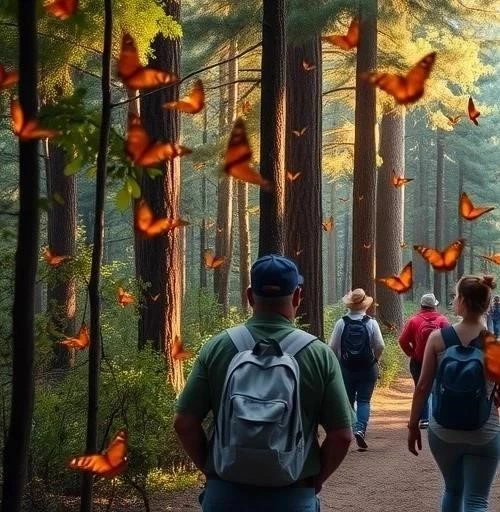
Each winter, millions of monarch butterflies gather in the highland forests of central Mexico. The protected wintering grounds lie in the mountains of Michoacán and the State of Mexico, roughly 100 kilometres from Mexico City in a straight line. Their altitude, winding roads and cool temperatures make the journey slower than the distance suggests. A thoughtful itinerary allows time for the sanctuary visit, local towns and rest between early departures.
When to go and where to stay
The viewing season generally runs from November through March. The butterflies arrive during the cooler months and cluster on fir trees; their visibility and activity depend on weather, temperature and conditions at the site. Local opening dates, access rules and transport arrangements can change, so confirm them shortly before travel. El Rosario, near Ocampo, and Sierra Chincua, near Angangueo, are among the best-known sanctuaries. Visiting both can offer a useful comparison, but one well-paced visit may be preferable to two rushed hikes.
Angangueo is a practical base for exploring the mountain area and offers a quiet setting for evening walks. Morelia can work as a first or final stop, while travellers starting in Mexico City may arrange a guided excursion or hire a vehicle. Mountain roads are slower than maps may imply. Staying near the sanctuary the night before a visit makes an early start easier and reduces the risk of arriving late.
Suggested five-day itinerary
Day 1: Arrive in Morelia
Travel to Morelia and check in, leaving the afternoon flexible for rest after the journey. In the evening, take a gentle walk through the historic centre, where plazas, arcades and lit buildings make an easy introduction to the region. Choose a nearby restaurant and prepare warm layers for the colder mountain air ahead. Avoid scheduling a late night: the next day involves a road journey.
Day 2: Morelia to Angangueo
Depart in the morning for Angangueo, allowing extra time for mountain roads and stops. After checking in, have lunch and keep the afternoon unhurried. A short evening walk through the town offers a chance to see its hillside streets and local daily life without tiring yourself before the sanctuary hike. Ask your accommodation or a local visitor service about current entrance arrangements, trail conditions and the best departure time.
Day 3: El Rosario sanctuary
Leave early, ideally after breakfast, and reach the sanctuary near opening time. Follow the marked route with an authorised guide where required. The ascent can be demanding: the trail rises through forest, and the altitude may affect visitors who are not accustomed to it. Walk slowly, pause when needed and carry water. Some visitors may find a horse available for part of the route, subject to local rules and availability; check animal-welfare practices and do not assume this option is suitable for everyone.
Observe the butterflies quietly from designated areas. They may cluster densely on trees and become more active when the day warms, but cold or overcast weather can keep them still. Do not touch them, step off the path, use flash or make loud noise. Return to Angangueo in the afternoon. Keep the evening walk short: a relaxed meal and an early night are more useful than adding another strenuous activity.
Day 4: Sierra Chincua or a slower mountain day
Set out in the morning for Sierra Chincua if access and weather permit. The visit also involves walking uphill, so use the same steady pace and follow local instructions. Alternatively, take a rest day in Angangueo, especially if the previous hike felt difficult. In the evening, explore the town on foot before dark, choosing a well-lit route and checking the return distance with your host. Sanctuary visits are daytime activities; evening walks should remain in town, not in the forest or protected butterfly areas.
Day 5: Return journey
After breakfast, depart for Morelia or Mexico City, depending on onward plans. Allow a generous travel buffer rather than connecting tightly to a flight or long-distance bus. If returning to Mexico City, a guided day-trip format may be more convenient, but it can involve a long day on the road. An overnight stop is a more comfortable choice for travellers who prefer not to combine a hike with a lengthy return drive.
Practical preparation
- Clothing: Wear layers, a warm outer jacket and comfortable shoes with reliable grip. Mornings can be cold, while the uphill walk may feel warm.
- Health and pace: The sanctuaries are at high elevation. Take breaks, bring water and snacks, and be cautious if you have a condition affected by altitude or exertion.
- Transport: Confirm road and entrance conditions locally. A driver or organised tour can simplify navigation, but check what the price includes and how much time is allowed at the site.
- Respect for nature: Stay on marked trails, follow guides and local rules, carry out rubbish and avoid disturbing wildlife. The forest is protected habitat, not just a viewing platform.
- Evenings: Plan modest town walks, dinner and rest. Bring a light for the walk back, and ask locally about safe routes and closing times.
This plan balances early sanctuary visits with calm evenings and enough recovery time. The butterflies are a natural spectacle, not a guaranteed performance: their numbers and behaviour vary with weather and season. Flexible timing, respectful observation and a slower pace make the journey more rewarding while supporting the conservation of their winter habitat.
3 Comments. Оставить новый
The itinerary is organized around practical travel considerations, including mountain-road travel times, an overnight stay near the sanctuaries, and preparation for cooler temperatures. These details help set realistic expectations for visitors.
The article provides a clear overview of the monarch butterfly viewing season and the main sanctuary options. Its emphasis on checking current access arrangements is useful, since local conditions and rules may change.
The article balances destination information with pacing advice, such as allowing time to rest and avoiding an overly rushed visit. The distinction between visiting one sanctuary at a comfortable pace and attempting to see two is particularly helpful.