
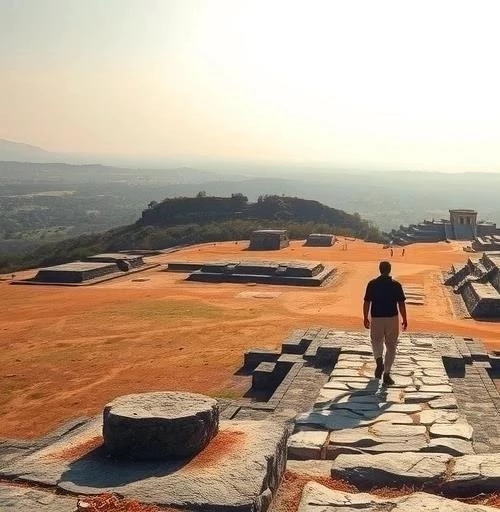
Monte Albán is often presented as a quick stop from Oaxaca, but the archaeological zone rewards a slower visit. Set on a plateau above the Oaxaca Valley, this ancient city was a major center of the Zapotec civilization. Its position, buildings and carved records offer a way to explore the history of Mexico beyond a short list of dates and monuments.
Begin with the landscape
Arrive early, when the light is softer and the site is usually quieter. From the entrance, take time to notice how the plateau was reshaped for construction. The views across the Oaxaca Valley explain why this location mattered: it provided visibility over the surrounding settlements and routes. The viewpoints are part of the experience, not merely places for photographs.
At the heart of the complex, the main plaza brings the scale of the ancient city into focus. Walk around it before choosing individual structures to examine. Temple ruins, platforms and courtyards are spread across a broad area, so a measured pace makes it easier to appreciate their layout. Stone stelae preserve carved imagery and inscriptions; some are displayed or protected, and their meaning is still studied by researchers.
Read the site in context
Monte Albán developed over many centuries, and its architecture reflects changing political and ceremonial life. Do not expect every building to be fully understood from a sign. A guide or a reliable site map can clarify what is known and where interpretations remain uncertain. Zapotec tombs are especially important to the story of the settlement, although access to individual burial spaces may be limited for conservation reasons.
For added context, visit the Oaxaca Museum in the city, where archaeological collections can help connect objects with the landscape. Together, the museum and the site make the region’s cultural heritage more legible. They also show why archaeological sites should be treated as historical places, not simply as scenic backdrops.
A slower route through Oaxaca
Make the visit part of a wider route through Mexico rather than an isolated checklist item. A day trip is practical, but independent travel allows more flexibility: spend the morning at Monte Albán, return to the colonial center of Oaxaca for lunch, and leave room for a museum or an unplanned walk. Local cuisine and craft markets offer a further introduction to the region, though shopping is best treated as an optional stop rather than the purpose of the day.
For travelers seeking non-touristy places in Mexico, the answer is not necessarily to avoid well-known monuments. It can be to visit them attentively, then explore smaller neighborhoods and nearby communities respectfully. A walk through the ancient city, followed by time in Oaxaca’s streets, creates a more balanced picture than rushing between attractions.
Practical planning
How to get to Monte Albán: taxis, organized tours and local transport connect the site with Oaxaca, while schedules and availability can vary. Check current options before setting out, and bring water, sun protection and comfortable shoes. There is limited shade, and paths include uneven surfaces. The season to visit depends on preference: the dry months are generally easier for walking, while warmer periods call for an earlier start. Check weather and opening information before travel.
Slow travel does not require a complicated itinerary. Allow several hours for the site, avoid packing the day with too many stops, and leave time to rest. This approach makes Monte Albán more than a photograph on a route through Mexico: it becomes a thoughtful encounter with the people, landscape and cultural heritage of the Oaxaca Valley.

1 Comment. Оставить новый
The article offers a useful overview of Monte Albán, balancing practical advice with historical context. Its emphasis on taking time to understand the site and respecting conservation limits is helpful for visitors.