
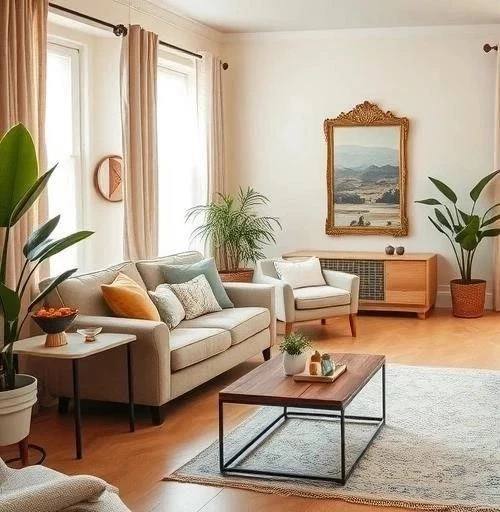
A beautiful home does not depend on expensive furniture or a major renovation. Thoughtful interior design is about making deliberate choices: deciding what a room needs, using what you already own, and spending only where an improvement will make a real difference. With a clear plan, a budget renovation can create a cozy home that feels personal, polished, and practical.
Start with a plan, not a shopping list
Before buying anything, assess each room. Notice what feels cluttered, poorly lit, or uncomfortable, then choose one priority. This simple step prevents impulse purchases and gives your interior styling a consistent direction. A limited color palette—two or three main shades, plus a small accent—helps different pieces work together. Neutral walls can be enlivened with a colorful cushion, artwork, or painted shelf; there is rarely a need to replace everything.
Good designer tips begin with function. Ask how you use the room, where you need clear pathways, and what should be within reach. Space zoning can make a shared room feel organized without building walls: use a rug to define a sitting area, a bookcase to separate work and rest, or a lamp to mark a reading corner. These functional design choices improve daily life as well as appearance.
Spend selectively and reuse creatively
Look for inexpensive interior ideas before committing to costly upgrades. A fresh coat of paint, new cabinet handles, or a rearranged layout can deliver a noticeable room transformation. Budget materials such as paint, peel-and-stick finishes, and simple timber trim are useful when chosen carefully and installed well. Their value is not that they imitate luxury, but that they solve a specific problem at a modest cost.
Furniture and accessories deserve the same practical scrutiny. Repair a wobbly chair, sand and repaint a table, or give a sturdy second-hand piece a new purpose. Furniture reuse is often more economical—and more distinctive—than buying mass-produced replacements. DIY decor, such as framed fabric scraps or a handmade planter, adds character, provided it suits the room rather than adding clutter. Economical decor works best when every object has a purpose or brings genuine pleasure.
Use light, textiles, and storage
Lighting in interior design changes how colors and proportions feel. Combine ambient light with a task lamp and a softer accent source; warm bulbs can make a plain room feel inviting. Home textiles are another affordable tool: curtains, cushions, and a throw can introduce texture and tie a color palette together. Choose washable, durable fabrics if the room sees heavy everyday use.
Storage organization is part of decorating, not an afterthought. Baskets, labeled boxes, and shelves can keep essentials accessible while reducing visual noise. Clear surfaces make even modest rooms feel calmer and more spacious. Avoid buying containers before sorting your belongings: first remove what you do not use, then select storage that fits what remains.
Style that lasts
A stylish interior is not the same as a room filled with trends. Choose a few meaningful details and leave breathing space around them. This approach to home improvement makes an interior update easier later, because accessories can change without replacing the foundations. The best interior solutions balance style and practicality, creating domestic comfort rather than a showroom effect.
In short, an interior without high costs is achievable through planning, reuse, and restraint. Compare options, invest in durable essentials, and make small changes in stages. A home becomes welcoming not because everything is new, but because its layout, light, colors, and belongings support the people who live there.



4 Comments. Оставить новый
The article makes a convincing case for planning before shopping. Choosing one room priority and a limited color palette are practical ways to avoid impulse purchases while keeping a home cohesive. I also appreciate the emphasis on function, since a room should work well for everyday life, not merely look polished.
The suggestions are useful because they focus on changes with a clear purpose, such as improving lighting, repainting, or adjusting a layout. The article also avoids implying that inexpensive materials must look luxurious, which makes its advice feel realistic and helps readers judge upgrades by their value.
This is a helpful, measured guide for anyone considering a home refresh on a limited budget. Its strongest point is that small improvements can be worthwhile when they address a specific need. A brief reminder to measure spaces and check material suitability before buying would make the practical advice even more complete.
I like how the article treats reuse as both a budget-conscious choice and a way to make a home more individual. Repairing or repurposing sturdy furniture can reduce waste as well as costs. The examples of rugs, bookcases, and lamps also show how space zoning can be achieved without major construction.