
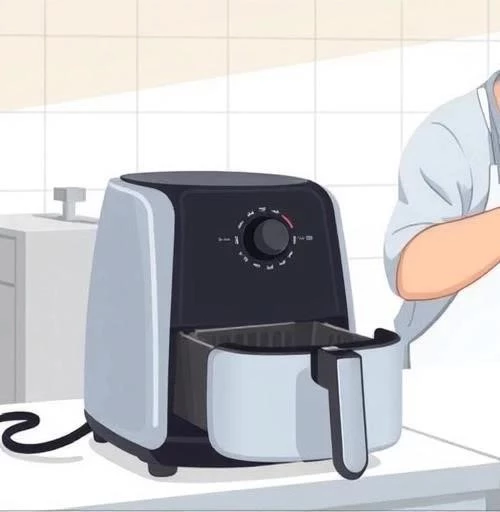
An air fryer that blows air but leaves dinner chilly is a tiny kitchen mystery: the fan is spinning, the timer is counting down, and the potatoes are staging a quiet protest. The good news is that many causes are simple—an unset control, a loose basket, or a power hiccup. Others point to a failed part. Work through these checks in order, and stop if you notice smoke, a burning smell, sparks, or a damaged cord.
First, make sure it is actually being told to heat
Some models start the fan as soon as a program begins, even while waiting for a temperature or confirmation. Check the display and manual: choose a cooking mode, set a temperature, enter a time, and press Start if required. A blinking screen, delayed-start setting, or paused cycle can look like a breakdown when the appliance is simply waiting for instructions.
Try a short test at a moderate temperature, such as 180°C (356°F), with the empty basket installed. Give the unit several minutes to warm. A brief pause before heat begins may be normal; an entire cycle of cold air is not. Avoid touching the heating element to test it—it can remain dangerously hot after the cycle ends.
Follow the power, not just the buttons
- Test the outlet. Unplug the fryer and check the socket with another small appliance. If that device also fails, inspect the household breaker or ask a qualified electrician. Do not use an outlet that feels hot, buzzes, or shows scorch marks.
- Connect directly to the wall. Air fryers draw substantial power. An extension lead, overloaded power strip, or shared circuit may cause an interruption or prevent reliable heating. Follow the manufacturer’s electrical instructions.
- Reseat the plug and basket. A basket that is not fully pushed in may leave a safety interlock open. Remove it, check for crumbs or packaging around the rails, then slide it firmly back into place. Never defeat or tape down an interlock.
- Let it cool and reset. Unplug the appliance for about 10–15 minutes, then reconnect it. A temporary control glitch or overheat protection may clear. If it repeatedly shuts off, find out why rather than repeatedly restarting it.
Airflow matters—even when the problem looks electrical
The fryer’s heat has to travel from the element into moving air. A basket packed to the brim, a blocked intake, or grease and crumbs around the vents can disrupt that journey; Switch off, unplug, and let the unit cool completely. Clean the basket and drawer as directed, and clear visible debris from the vents without poking inside. Leave open space around the appliance while it runs; pushing it against a wall can trap hot air.
Food piled high may cook unevenly, making the top seem warm while the centre stays stubbornly cold. Reduce the load, shake or turn food when the manual recommends it, and check that the drawer closes completely; Cleaning can restore airflow, but it cannot repair a failed heater.
Read the symptoms like clues
- Fan runs, but there is no warmth: the heating element, thermostat, thermal fuse, wiring, or control board may have failed. These parts are inside the appliance and are not safe to diagnose by touching or probing them.
- No fan and no heat: suspect the outlet, plug, power supply, door or basket interlock, or internal electronics.
- It heats briefly, then goes cold: overheating protection may be activating because airflow is restricted, the room is unusually hot, or an internal component is failing.
- It heats weakly or unevenly: check the selected temperature, food load, cleanliness, and whether the drawer is seated. If those are right, a sensor or heater problem becomes more likely.
When a reset is not the cure
Heating elements can burn out; thermostats and temperature sensors can drift; thermal fuses can open permanently; and a control board can fail to send power to the heater. A sudden pop, repeated breaker trips, a persistent burning-plastic smell, visible damage, or a hot plug are reasons to stop using the fryer. Unplug it if safe, keep it away from flammable items, and contact the manufacturer or a qualified repair technician.
Do not open the casing, bypass a fuse, or replace internal wiring unless you are properly qualified and the manufacturer permits that repair. Unplugged appliances can still present electrical and burn hazards, and an improvised fix can defeat protections designed to prevent fire or shock. Check the warranty before seeking a repair; unauthorized disassembly may affect coverage.
A quick, safe recovery plan
- Stop the cycle and inspect the display, temperature, timer, and start setting.
- Unplug the fryer; check the wall outlet, cord, plug, vents, and basket for obvious problems.
- Let it cool, clean removable parts, and reinstall the basket fully.
- Try one brief, supervised test on a suitable direct wall outlet.
- If it still blows cold air—or shows any danger signs—stop and arrange service.
Think of an air fryer as a small wind tunnel with a hidden furnace. The fan is only the messenger; the heater must supply the heat, the sensor must measure it, and the safety switches must agree that cooking can begin. A careful reset and cleaning solve many simple cases. If the wind returns but the warmth does not, the mystery is likely inside the casing—and that is where a technician, not a kitchen experiment, should take over.


7 Comments. Оставить новый
“Follow the power, not just the buttons” is a wonderfully practical principle. It applies to air fryers, printers, and perhaps half the mysteries of modern life.
The advice to plug directly into the wall deserves a spotlight. A power strip can look like a harmless convenience right up until dinner becomes a cold-air experiment.
The basket interlock is the unsung gatekeeper of dinner. A few crumbs can apparently persuade an entire appliance to become a very enthusiastic fan.
The empty-basket test is a neat diagnostic ritual: simple, controlled, and much less dramatic than sacrificing a batch of potatoes to science.
I like how this turns troubleshooting into a calm little investigation rather than a button-mashing contest. The reminder not to touch the heating element is especially important—curiosity is no substitute for insulated fingers.
This is refreshingly clear about when to stop troubleshooting. Smoke, sparks, and a damaged cord are not plot twists to investigate—they are the cue to step away.
A useful reminder that a blinking display may mean “I’m waiting,” not “I’m broken.” Appliances could stand to be a little more poetic about their intentions.