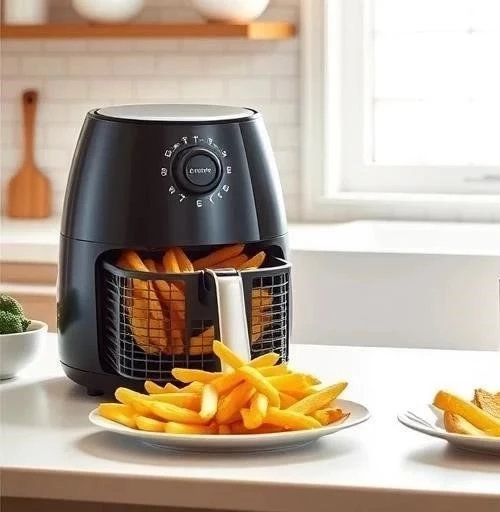
Choosing between an air fryer and a traditional deep fryer depends on what you value most: a lighter way to cook, or the rich, familiar crunch of food cooked in hot oil. Both appliances can make crisp fries, chicken, and snacks, but they work differently and suit different kitchens. For most everyday cooks, an air fryer is the more versatile choice. If your priority is classic fried flavor and texture, however, a deep fryer may be worth the extra oil and cleanup.
How the appliances work
An air fryer is a compact convection oven. A heating element warms the air, and a fan circulates it rapidly around the food. A small amount of oil can help food brown and crisp, but many recipes require little or none. The appliance cooks in a perforated basket or tray, allowing hot air to reach the food from several directions.
A deep fryer heats a reservoir of oil, and food cooks while submerged in it. The oil transfers heat efficiently and coats the surface, producing the characteristic crisp crust and moist interior associated with restaurant-style fried food. This method requires enough oil to cover the food, as well as careful handling of a hot liquid.
Texture and taste
For genuine deep-fried results, the deep fryer usually wins. Its even contact with hot oil creates a golden, crisp exterior and a distinctive flavor that an air fryer cannot completely reproduce. It is particularly effective for battered fish, doughnuts, tempura, and foods that are traditionally fried. Wet batters can be troublesome in an air fryer because they may drip through the basket before setting.
An air fryer can still make many foods appealingly crisp, especially frozen fries, breaded chicken, vegetables, and roasted potatoes. The result is generally closer to a small convection oven than to classic deep-frying. Food may be less uniformly browned, and a light coating of oil often improves the finish. Shaking the basket or turning pieces partway through cooking helps them brown more evenly.
Health and nutrition
Air frying typically uses substantially less added oil, so it can reduce the fat and calories contributed by cooking. That may be useful if you want to enjoy crisp foods more often without filling a pot or fryer with oil. Still, an air-fried meal is not automatically healthy: the ingredients, portion size, salt, and frequency of eating matter too. Frozen or heavily breaded foods remain processed foods, even when cooked without much oil.
Deep-fried food absorbs some oil, although the amount varies with the food, temperature, coating, and cooking time. Using oil at the recommended temperature and avoiding overcrowding can help prevent greasy results. Neither appliance makes every meal nutritious; the choice is best understood as one factor in a broader diet.
Convenience, safety, and cleanup
Air fryers are often easier for routine cooking. They heat up quickly, contain splatters, and usually have a removable basket that can be washed after use. Many models also roast, reheat, or bake, making them useful beyond frying. Their drawbacks include limited capacity, fan noise, and the need to cook in batches when serving a crowd. The basket and the space around the appliance can also become very hot.
A deep fryer can cook a large batch quickly, but it takes more effort to set up and clean. Oil must cool before it can be filtered, stored, or discarded safely; it should never be poured down a drain. Hot oil presents a burn and fire risk, so the fryer needs a stable position, careful supervision, and a sensible distance from water. Its odor may linger in the kitchen as well;
Cost and energy use
Prices vary widely for both appliances. A basic air fryer is often affordable, but larger or multifunctional models can cost considerably more. Deep fryers range from simple countertop units to larger models with oil filters and temperature controls. Remember to include the recurring cost of cooking oil, replacement filters, and storage needs when comparing prices.
Because an air fryer heats a small space and does not need to warm a large quantity of oil, it can be efficient for small portions. A deep fryer may make sense when cooking several servings at once, since it can handle a larger batch without repeated cycles; Actual energy use depends on the appliance, quantity, and cooking time.
Which one should you choose?
- Choose an air fryer if you want everyday convenience, less added oil, easy cleanup, and an appliance that can roast or reheat as well as crisp.
- Choose a deep fryer if you often cook traditional fried foods, especially battered items, and care most about the classic flavor and texture.
- Consider your household: a small air fryer may be frustrating for a large family, while a deep fryer may be excessive if you fry only occasionally.
Bottom line: For most homes, the air fryer is the better all-round purchase because it is flexible, comparatively easy to clean, and uses little oil. The deep fryer is the better specialist tool when authentic deep-fried results matter more than convenience. Think about the dishes you cook most often, your available counter space, and how much cleanup you are willing to do. The best appliance is the one that fits your habits—not simply the one with the crispiest promise.