
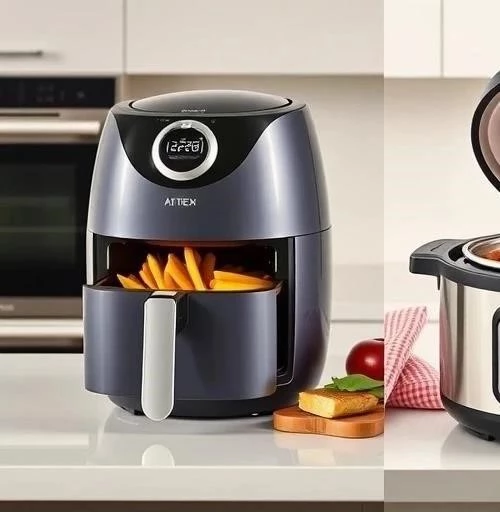
An air fryer and a multicooker can both make everyday cooking easier‚ but they work in different ways and suit different dishes. An air fryer circulates hot air around food‚ much like a compact convection oven. A multicooker heats food in a covered bowl and offers modes such as boiling‚ steaming‚ stewing and slow cooking. Neither is universally better: the right choice depends on what you cook most often‚ how many people you feed and the results you prefer.
How an air fryer works
A heating element warms the air‚ while a fan moves it around the cooking chamber or basket. This dry‚ circulating heat browns and crisps the surface of food. Many dishes need little or no added oil‚ although a small amount can improve browning or prevent sticking. Air fryers are commonly used for vegetables‚ fish‚ chicken‚ frozen snacks and small baked items. They can also reheat leftovers while keeping their exterior crisp.
The main advantage is texture: the food can develop a browned exterior without deep-frying. Preheating is often quick‚ and cooking small portions may take less time than using a full-size oven. However‚ the basket has limited capacity‚ and food may need to be turned or shaken for even results. A crowded basket blocks airflow‚ so large batches can take longer or cook unevenly. Some models are noisy‚ and their baskets and accessories require cleaning after use.
How a multicooker works
A multicooker uses an electric heating element to warm a removable pot. Its lid helps retain heat and moisture‚ making the appliance well suited to dishes that simmer or steam. Depending on the model‚ preset programs may include rice‚ porridge‚ soup‚ yoghurt‚ baking‚ steaming and slow cooking. A pressure-cooking function is available on some models‚ but it is not standard on every multicooker.
Multicookers are useful for one-pot meals‚ grains‚ beans‚ soups‚ stews and soft-cooked dishes. Many offer a delayed start or keep-warm setting‚ which can help fit cooking around a household schedule. Once ingredients are added‚ some recipes need little supervision. On the other hand‚ the moist cooking environment usually will not create the crisp surface an air fryer produces. Programs may also take longer than expected‚ and results depend on the pot’s capacity and the appliance’s settings.
Comparison at a glance
| Feature | Air fryer | Multicooker |
|---|---|---|
| Cooking method | Circulating hot‚ dry air | Heated pot; often moist cooking |
| Best for | Crisping‚ roasting‚ reheating | Soups‚ grains‚ stews‚ steaming |
| Typical texture | Browned or crisp exterior | Soft‚ tender or simmered |
| Batch size | Limited by basket space | Limited by pot capacity |
| Supervision | May need shaking or turning | Often runs with little attention |
Which one should you choose?
Choose an air fryer if crispness matters most and you regularly prepare portions of meat‚ fish‚ vegetables or frozen foods. It is also a practical option when you want to roast or reheat food without heating a large oven. Check the basket’s usable capacity rather than relying only on the advertised volume‚ and consider whether it will fit on your counter.
Choose a multicooker if your usual meals include porridge‚ rice‚ soup‚ beans or stews‚ or if you value hands-off cooking and a keep-warm function. Look at the pot size‚ available programs and how easy the inner pot is to wash. A delayed-start feature can be convenient‚ but perishable ingredients should be handled according to food-safety guidance rather than left at room temperature for extended periods.
Can one replace the other?
Only partly. Some multicookers have an air-fry lid or a separate crisping function‚ while some air fryers include accessories for baking or roasting. These combinations can save space‚ but a secondary function may not perform as well as a dedicated appliance. Neither device is an ideal substitute for the other when a recipe depends on a specific texture or cooking method. Check the manual for compatible accessories and cooking limits.
Bottom line
There is no single winner. An air fryer is the stronger choice for quick‚ browned and crisp food; a multicooker is more versatile for moist‚ one-pot meals and grains. If you cook both kinds of dishes often and have room in the kitchen‚ owning both can be useful. If you are buying just one‚ list the meals you make during a typical week and choose the appliance that suits the largest share of them. Capacity‚ cleaning‚ counter space and ease of use matter as much as the number of preset programs.

2 Comments. Оставить новый
The comparison clearly explains how the two appliances differ in cooking method, texture, and typical uses. The notes about capacity and batch size are useful for readers deciding which option better fits their household.
The article gives a balanced overview without presenting either appliance as universally superior. A brief comparison of cleaning effort and approximate capacity across common models could further help readers make a practical choice.