
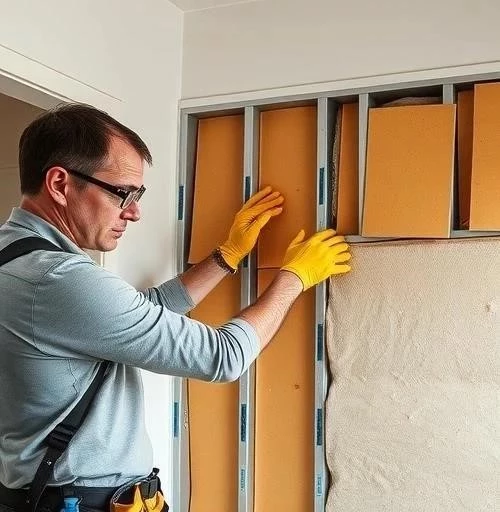
Apartment soundproofing can reduce disturbance from neighbors and improve acoustic comfort‚ but only when the system is selected and installed correctly. Wall sound insulation‚ sound-insulating partitions and acoustic panels should be chosen according to the noise level‚ its source and the building’s condition. Before work begins‚ identify whether the main problem is airborne noise‚ such as voices or music‚ or impact noise transmitted through floors and structural elements.
Assessment and design
Installation requirements start with an inspection of walls‚ ceilings‚ floors‚ electrical outlets and service penetrations. A specialist can assess the sound insulation index of existing assemblies and recommend sound-insulating materials suited to the target. Noise-protection assemblies must address weak points as well as the main surface: even small gaps can undermine the result. Sealing joints around frames‚ pipes and sockets is therefore essential.
A frame construction may offer effective wall sound insulation‚ but it takes up space. Compare the expected reduction in noise with the need to preserve usable floor area. For inter-room partition sound insulation‚ consider whether a lightweight partition is adequate or whether a more substantial system is needed. A layered assembly should be designed as a complete system; mixing incompatible products can reduce performance.
Mounting and structural safety
Follow the manufacturer’s technical requirements and applicable building codes and regulations. Fixing to walls and ceilings must suit the substrate and avoid damaging hidden wiring or pipes. Check load-bearing structures and the permissible load before attaching heavy panels or frames. Use vibration isolation where rigid connections could transmit sound through the building. Installation quality matters: gaps‚ loose fasteners and poorly fitted boards create acoustic bridges.
In an apartment building‚ work must also respect fire safety requirements and local building standards. Choose materials with documented fire performance and consider material sustainability‚ emissions and suitability for indoor use. Do not cover ventilation grilles or block air circulation; maintain room ventilation after installation. If the work changes partition layouts or affects shared structures‚ check whether renovation approval is required.
Practical checks
Rules for installation in apartment buildings vary by location‚ so confirm local requirements before starting. Keep product documentation and follow the specified sequence‚ fastener spacing and joint treatment. Inspect the completed work for continuous sealing and secure attachment. For protection from neighbors’ noise‚ treating only one wall may not be enough: sound can travel through ceilings‚ floors and adjoining walls. A coordinated solution‚ correctly fitted‚ is more reliable than adding panels without diagnosing the transmission path.
Good design balances performance‚ safety‚ ventilation and space. Properly selected noise-protection structures can lower intrusive noise and make everyday living more comfortable‚ although no system can promise silence in every building.
5 Comments. Оставить новый
The article does a good job explaining the trade-off between sound reduction and lost floor space. It also makes clear why a complete, compatible system matters.
Useful advice for anyone planning acoustic upgrades in an apartment. The reminders about hidden wiring, structural loads and building requirements are particularly important.
I appreciate the emphasis on inspecting gaps, outlets and service penetrations. Those details are easy to overlook but can make a real difference to the finished result.
A clear and practical overview of apartment soundproofing. The distinction between airborne and impact noise is especially helpful when deciding where to begin.
A sensible guide that focuses on both material choice and installation quality. I would have liked to see more on measuring results, but the practical recommendations are strong.