
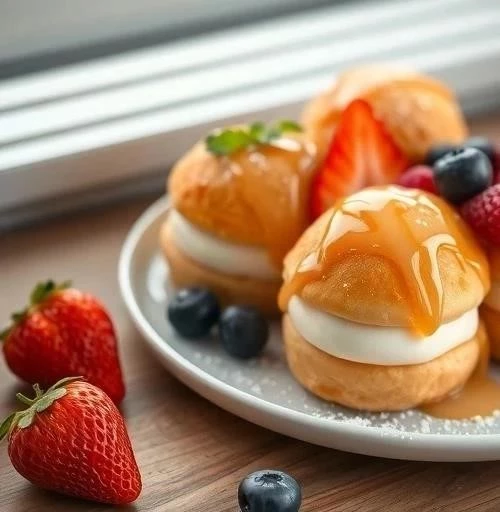
Golden profiteroles filled with fresh berries bring the charm of French pastry into your kitchen. Their crisp shell, airy centre and cool berry cream make a dessert that looks impressive but is achievable at home. The secret is not expensive equipment: it is proper choux pastry, careful baking and filling the shells only after they have cooled.
Ingredients
- 125 ml water, 125 ml milk, 100 g butter and a pinch of salt
- 150 g plain flour and 4 large eggs
- 200 ml whipping cream, 150 g pastry cream and 2 tablespoons icing sugar
- 150 g fresh berries: strawberries, raspberries, blueberries or currants
- 1 teaspoon lemon juice; extra berries and berry sauce to decorate
Make the choux pastry
Heat the water, milk, butter and salt in a saucepan until the butter melts and the mixture just comes to a boil. Add all the flour at once, then stir firmly over medium heat. Keep mixing until the dough forms a smooth ball and leaves a thin film on the pan. This step dries the dough; skipping it can leave the shells heavy.
Cool the dough for five minutes. Beat in the eggs one at a time, mixing well after each addition. The finished dough should be glossy and fall from the spoon in a thick V-shape. Depending on egg size, you may not need every drop of the final egg. Correct consistency matters more than blindly following a number: dough that is too stiff will not puff, while runny dough will spread.
Shape and bake
Heat the oven to 200°C (390°F). Pipe or spoon walnut-sized mounds onto a lined tray, leaving space between them. Smooth any peaks with a damp finger. Bake for 15 minutes, then lower the temperature to 175°C (350°F) and bake for 15–20 minutes more. Avoid opening the door early: a sudden change in temperature can collapse the profiteroles. They are ready when deeply golden and light. Make a small hole in each base and return them to the switched-off oven for five minutes to dry. This helps preserve a crisp shell.
Berry filling and finishing
For the cream for profiteroles, whip the cold cream with icing sugar to soft peaks, then fold it gently into chilled pastry cream. This combination gives a stable, silky berry cream without feeling too heavy. Chop the strawberries and toss them with raspberries, blueberries or currants and lemon juice. Fold some fruit into the cream, or keep it separate for a brighter, more textured pastry filling. If the berries are especially juicy, drain them first so the shells stay crisp.
Pipe the filling through each hole only when the shells are cool. For a bakery-style recipe finish, drizzle with berry sauce and add a few fresh berries just before serving. The sauce can be made by warming crushed berries with a little sugar and straining the mixture. Use a light hand: decoration should highlight the fruit, not hide the delicate pastry.
Why this method works
Good homemade profiteroles depend on steam. Moisture in the dough expands in the hot oven, creating the hollow centre; thorough drying sets the structure. The two-stage baking temperature first encourages lift, then cooks the shells through. Cooling before filling protects the cream, while adding the berries at the end keeps their flavour fresh. These small details turn home baking into a reliable result rather than a gamble.
Serve these berry-filled choux pastries soon after assembly for the best contrast between crisp shell and soft cream. They are a lovely sweet bake for afternoon tea, a celebration or any occasion that calls for a berry dessert. Once you master the basic recipe for profiteroles, vary the fruit with the season and enjoy elegant, airy profiteroles at home.



8 Comments. Оставить новый
The combination of pastry cream, whipped cream and fresh berries sounds appealing without being overly complicated. The suggested mix of berries also makes the filling easy to adapt to what is in season.
The explanation of how the dough should look after the eggs are added is especially useful. A thick V-shape gives home bakers a practical way to judge consistency instead of relying only on the number of eggs.
This recipe balances precision with useful flexibility. Noting that the final egg may not all be needed is good advice, since egg size and dough consistency can vary.
I like that the recipe explains both what to do and why. Details such as cooling the dough before adding eggs and waiting for the shells to cool before filling can prevent common mistakes.
I appreciate the advice to dry the dough in the saucepan before adding the eggs. It explains why that step matters and should help prevent dense profiteroles.
Making a small hole in each shell and letting them dry in the switched-off oven is a sensible detail. Keeping choux pastry crisp is important, particularly when it will later be filled with cream.
The instructions make an impressive-looking dessert feel achievable for a home cook. Clear visual cues for the dough and baked shells are particularly valuable when preparing choux pastry for the first time.
The two-stage baking temperature seems well considered: the hotter start encourages the pastry to rise, while the lower temperature gives the shells time to cook through. The warning not to open the oven early is helpful too.