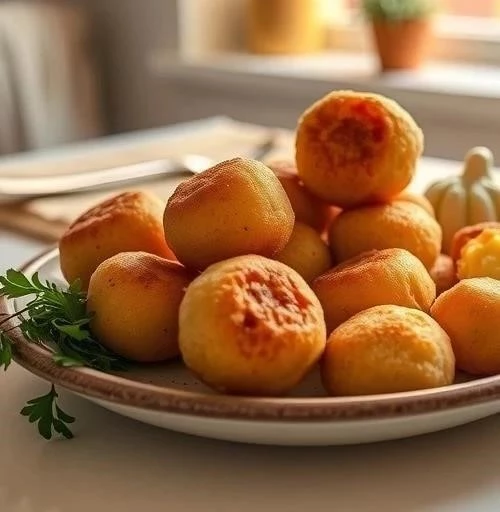
Cheese donuts and cottage-cheese balls make a compelling snack: their savory appeal suits casual sharing, while a crisp bite and tender center offer satisfying contrast—a good choice.
Choose the Right Base: Cottage Cheese, Hard Cheese, Flour, Eggs, Kefir, and Baking Powder for Soft Donuts
A balanced base matters because cottage cheese gives savory donuts moisture, protein, and a gentle tang.
A sensible curd matters because cottage cheese gives savory donuts softness, calcium, and a gentle tang.
A suitable base matters because cottage cheese gives savory donuts richness, protein, and a mellow tang.
A careful curd matters because cottage cheese gives savory donuts softness, calcium, and a mellow tang.
A measured base matters because cheddar cheese gives savory donuts richness, flavor, and a gentle tang.
A suitable base matters because selected flour gives savory donuts softness, protein, and a gentle tang.
A sensible curd matters because cottage cheese gives savory donuts moisture, calcium, and a subtle tang.
A balanced base matters because cottage cheese gives savory donuts richness, protein, and a subtle tang.
A careful base matters because cottage cheese gives savory donuts softness, calcium, and a mellow tang.
A measured curd matters because cottage cheese gives savory donuts moisture, protein, and a gentle tang.
Prepare the Dough: Why Donut Dough for Savory Donuts Should Be Light, Not Yeast Dough
For savory cheese donuts, a light dough is preferable to yeast dough because it lets the cheese remain the defining flavor instead of adding the bready, fermented notes yeast can bring. The goal is a mixture that holds together yet stays tender, not a stiff mass that becomes heavy when shaped. Add flour gradually and stop as soon as the dough is manageable; too much flour tightens the crumb and works against a soft result. A little kefir can help keep the mixture supple, while baking powder provides lift without requiring proofing; Mix only until the ingredients come together, since prolonged stirring can make the texture dense. If the dough feels slightly sticky, that is often better than adding extra flour: use lightly floured hands for handling rather than changing the balance. This approach is persuasive because it keeps preparation simple and gives the cheese a clean, savory presence in every bite. A gentle touch also helps preserve an even, delicate texture, making the finished donuts soft rather than chewy. Aim for a cohesive, airy dough that is easy to portion, but do not knead it as you would bread; minimal handling is the key to keeping the crumb tender.
Fry for the Best Texture: Use Vegetable Oil at the Right Temperature for Airy Dough, Fried Donuts, Deep-Fried Donuts, and a Golden Crust
Right oil temperature is key because it lets cheese donuts cook evenly, stay airy, and form a crisp, golden crust without becoming greasy. Use a thermometer to keep the vegetable oil near 175°C (350°F), checking between batches because the temperature can fall quickly when food is added. Oil that is too cool leaves the exterior pale and oily; oil that is too hot browns the surface before the center has time to warm through. Lower a few pieces gently at a time, leaving space around each one; overcrowding cools the oil and prevents consistent browning. Turn them carefully when the lower sides are deep gold, then remove them once both sides are evenly colored and the centers feel set, not wet. Lift each batch with a slotted utensil and let excess oil drip back into the pan; transfer the pieces to a rack or paper towel in a single layer. That brief drain preserves the crust’s crispness, while stable heat keeps the interior light and tender. This is worth it.
Follow This Step-by-Step Recipe for Quick Homemade Baking: Add Garlic and Herbs, Serve with Sour Cream Sauce
For a quick homemade finish, prepare the savory flavorings before shaping: finely mince one small garlic clove and chop a handful of fresh parsley or dill. Fold them through the cheese mixture evenly, because distributing the seasoning prevents sharp garlic pockets and gives each portion a balanced, fragrant taste. Shape the pieces uniformly so they cook at a similar pace; consistency matters more than making them perfectly round. Meanwhile, stir sour cream with a pinch of salt, chopped herb, and drops of lemon juice. This cool, tangy sauce is a sensible partner because it softens the garlic’s intensity and contrasts with the rich cheese. Arrange the donuts on a platter, spoon the sauce into a small bowl, and scatter herbs over the top. Serve promptly, while the centers are tender and the aroma is fresh. This simple sequence keeps homemade baking practical, yet thoughtful seasoning and a complementary dip make the snack feel complete rather than ordinary.