
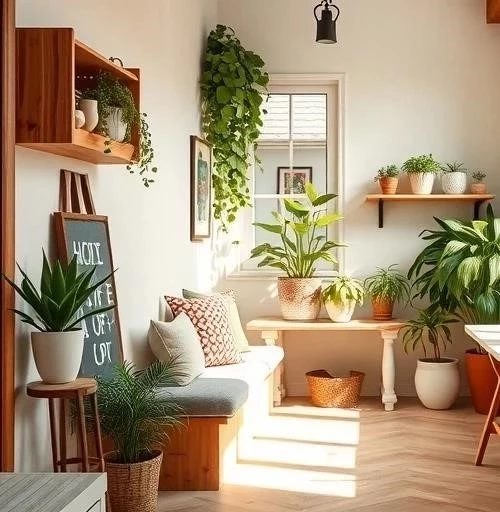
Start with what the space needs to do
Before choosing colors or accessories, decide how you want to use the loggia. It might become a quiet reading nook, a small home office, a place for plants, or an extension of the kitchen for extra storage. One clear purpose usually produces a better result than trying to squeeze several unrelated functions into a few square metres.
Measure the walls, window openings, sill height and door swing. Note where sockets, radiators and drainage pipes are located. These details guide the layout and prevent costly mistakes. An individual plan does not have to mean hiring a designer: a careful sketch with dimensions can help you compare options and buy only what fits.
Choose layout over fashionable decoration
Unconventional solutions are often practical responses to unusual dimensions. A shallow counter can run beneath the window, a fold-down desk can disappear after work, and a bench can double as a storage chest. Such choices support rational use of floor area and preserve a clear route through the room. Compact furniture and built-in storage are especially useful where a standard cabinet would block the door or make the space feel cramped.
Divide the loggia into zones only when each one has a real purpose. A work area may need a stable surface, task lighting and a comfortable chair; a relaxation corner may need a bench and a warm reading light. Avoid filling every empty corner. A small, uncluttered layout often feels more generous than a room crowded with decorative items.
Spend first on comfort and durability
Insulation, glazing and moisture control affect whether the loggia can be used throughout the year. Check the condition of the existing windows and ask qualified professionals about safe, building-compliant options before changing the structure. Insulating the floor, walls or ceiling may be worthwhile, but the correct solution depends on the building and local requirements; Do not treat a loggia as a heated room until its construction and heating arrangements have been assessed.
For finishes, choose durable materials that tolerate sunlight, temperature changes and regular cleaning. A simple, well-installed floor and washable wall surface usually provide more lasting value than a costly accent feature. A practical interior is not necessarily plain; color, textiles and a few plants can add character without driving up the renovation bill.
Keep the budget under control
Budget renovation works best when spending follows a priority list: safety and repairs first, comfort second, storage and furniture third, decoration last. Reuse sound furniture, compare standard products, and consider assembling simple pieces yourself if you have the tools and skills. Savings should not come from unsafe electrical work, poor waterproofing or unsuitable materials. A small contingency fund also helps cover hidden defects discovered during the work.
Good planning can reduce waste and avoid buying items that do not fit. This is where a custom layout can save money: it makes the most of usable area and may remove the need for expensive bespoke décor. Functionality instead of decoration is not a compromise; it is a way to make every purchase earn its place.
Let trends inspire, not dictate
Current trends can offer useful ideas—natural textures, calm colors and flexible furniture, for example—but they should not decide the layout. Trends change; a well-positioned desk, accessible storage and comfortable seating remain useful. For small-space design, ergonomics matters as much as appearance: check that drawers open fully, a chair can be pulled out, and frequently used items are within easy reach.
The best loggia design is therefore personal rather than fashionable. Begin with daily routines, plan storage, confirm technical requirements and select durable finishes. With a modest budget, an unconventional arrangement can create more useful living space than an expensive makeover. The measure of success is simple: the loggia feels comfortable, stays easy to maintain and genuinely supports the way you live.
5 Comments. Оставить новый
A helpful reminder that an uncluttered layout can make a compact space feel larger. The suggestions are easy to adapt to different homes and budgets.
This article makes smart use of limited space feel achievable. I appreciate that it prioritizes everyday comfort and function over decorative trends.
The advice to decide on a clear purpose before buying furniture is especially useful. A measured sketch can save both space and money.
I like the focus on practical solutions rather than copying a magazine look. Fold-down furniture and storage benches make a lot of sense for a small loggia.
The measuring checklist is a great detail. Remembering door swings, sockets and pipes before planning furniture could prevent frustrating mistakes.