
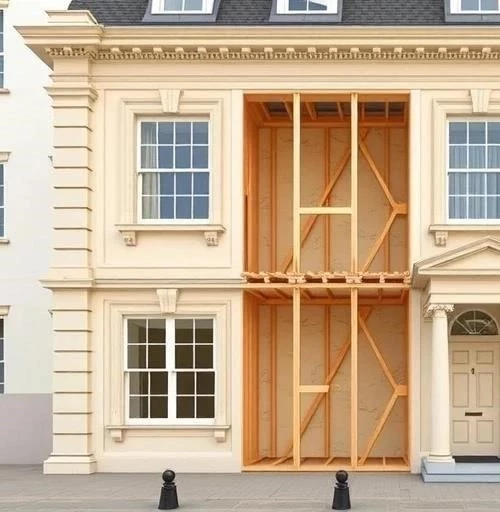
A classical house seems to have stepped out of another century: balanced windows, a composed entrance, a confident cornice․ Yet behind that calm façade, a light, carefully engineered frame can do the hard work․ Frame construction is not a style in itself; it is a flexible stage on which traditional architecture can be rebuilt with contemporary precision․
Begin with proportion, not ornament
In classical design, architectural proportions matter more than decoration․ Plan the façade’s rhythm first: align openings, establish the central axis, and make the symmetry of the façade feel intentional rather than forced․ A porch, columns and pilasters, and a well-scaled cornice can then give the building its familiar silhouette․ Use mouldings and other decorative elements selectively; a few crisp details often speak more elegantly than a crowded façade․
What sits behind the façade?
The wall assembly is a layered system․ The load-bearing frame—wooden or metal—carries the building’s loads, while sheathing helps stabilize it․ The exact wall construction depends on engineering, climate, and the chosen finish․ Insulation fits between the framing members; an interior vapour barrier is placed according to the project’s moisture strategy․ On the exterior, wind protection and a ventilated cavity can help manage moisture, especially behind cladding․ Details around windows, floors, and the roof matter as much as the materials: small gaps can undermine comfort and durability․
Making a classical skin work
Exterior finishing should be chosen with both appearance and weight in mind․ A plaster façade can echo historic masonry, while wall cladding offers other textures and colours․ Neither finish is automatically suitable for every frame: the support, drainage, movement, and fixing method must be designed as one system․ Repeating the façade’s proportions in trim and window surrounds helps modern construction feel at home in a classical composition․
Inside, interior finishing completes the quiet transformation․ Thoughtful sound insulation can soften noise between rooms; continuous thermal insulation reduces heat loss․ Together with careful air sealing and correctly detailed ventilation, these measures support home energy efficiency without asking the exterior to reveal its modern origins․
Beauty that lasts
Classical style is not a costume applied at the last minute․ It grows from measured openings, a legible entrance, balanced massing, and honest detailing․ Frame technology makes that vision adaptable, but long-term durability depends on sound design, dry materials, skilled installation, and maintenance suited to the finish․ The most convincing result is a meeting of modern technology and classical design: a house that looks rooted in tradition, feels comfortable today, and is built to welcome tomorrow․

6 Comments. Оставить новый
The strongest point here is that beauty begins with rhythm, not embellishment. A façade can feel almost musical when its openings keep time and its details know when to stay silent.
I appreciate the warning that a beautiful finish cannot rescue a poorly considered assembly. Architecture is wonderfully visual, but its best decisions often happen where the eye never lands.
The article leaves me thinking about the façade as a well-tailored coat: proportion gives it poise, while the layers beneath decide whether it actually fits the climate. A thoughtful blend of elegance and practicality.
This makes moisture management sound less like a technical footnote and more like the building’s weatherproofing choreography. The hidden layers deserve their own quiet applause.
I like the idea of the frame as a quiet stagehand: it does the lifting while the classical façade takes its graceful bow. A useful reminder that good architecture is often teamwork between what we see and what we don’t.
A classical look built on a modern frame feels like an old melody played on a new instrument. The tune survives, but the engineering gives it a different kind of confidence.