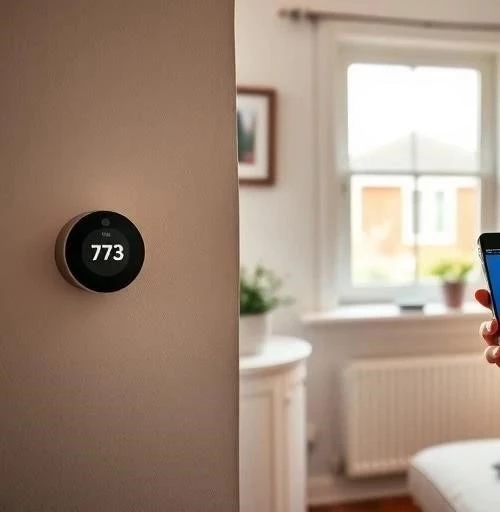
For a small home, the best remote heating system is usually a simple smart thermostat connected to a reliable controller—not a costly, feature-heavy smart-home package. The right choice depends on the boiler, internet coverage and whether you need control only from an app or continued access during an internet outage.
Start with the heating equipment
Check how the boiler accepts commands before buying anything. An electric boiler may support a straightforward thermostat connection; a gas boiler often needs a compatible controller that switches its designated input. A circulation pump, radiators and underfloor heating may also need separate zones or controls. Confirm compatibility with the boiler manufacturer or installer: incorrect wiring can damage equipment or disable safety functions.
Wi-Fi or GSM?
A Wi-Fi thermostat is a practical choice when the house has stable internet. It can provide remote boiler control, scheduling and temperature adjustments through a mobile app. A GSM module is worth considering if broadband is unreliable: it can send alerts or accept basic commands over the mobile network. Neither option guarantees control during a power cut, so check backup-power requirements and the system’s behavior when communications fail.
A room thermostat with a correctly placed temperature sensor helps maintain a comfortable temperature without heating an empty house. Schedules can lower the setting while you are away and warm the rooms before you return. This is often more effective for energy saving and reducing heating costs than buying extra smart features. Avoid large temperature swings, especially with underfloor heating, which responds slowly.
Safety and practical priorities
For a country home with autonomous heating, prioritize frost protection, reliable alerts and simple operation. Leak sensors can warn of water escaping near pipes or equipment, but they do not replace inspection or a suitable shut-off valve. Ask whether the heating controller can restore its schedule after a power interruption and whether someone can respond to an alarm. Remote monitoring is useful only when alerts are noticed and acted upon.
In short, choose a compatible Wi-Fi thermostat for a small home with dependable internet; choose GSM where mobile coverage is stronger than broadband. Add zone control only if rooms genuinely need different temperatures. This measured approach to heating automation offers convenience and potential savings without adding unnecessary complexity.
Requested search terms
умный термостат; система умного дома; автоматизация отопления; удалённое управление котлом; управление отоплением со смартфона; Wi-Fi терморегулятор; GSM-модуль для котла; датчик температуры; комнатный термостат; контроллер отопления; электрокотёл; газовый котёл; циркуляционный насос; радиаторы отопления; тёплый пол; энергосбережение; снижение расходов на отопление; поддержание температуры; мобильное приложение; дистанционный контроль; расписание отопления; датчики протечки; защита от замерзания; автономное отопление; отопление загородного дома.