
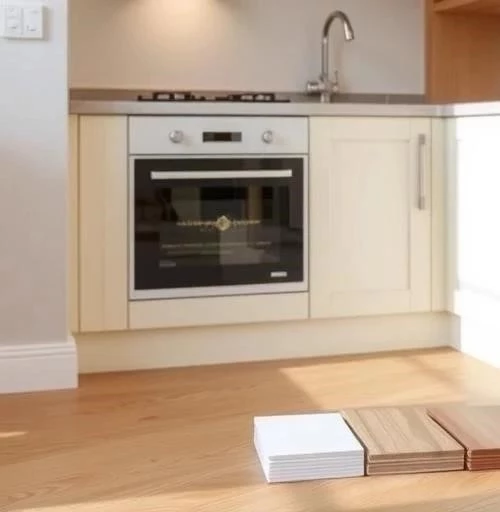
In a compact kitchen, every finish should earn its place. An MDF skirting board can create a neat transition between the floor and wall, hide a small expansion gap and make the room feel complete. However, standard MDF is vulnerable to water, so choose a sealed, moisture-resistant product and wipe up spills promptly. This balance of appearance and care is more convincing than choosing by price alone.
Material, finish and profile
For the kitchen, check the coating, sealed edges and manufacturer’s moisture guidance. A laminated skirting board is practical when its surface resists everyday scuffs and can be cleaned gently. It still should not be treated as waterproof. Compare the profile with cabinet fronts and door trim: a simple shape is easier to wipe and usually suits a small room better than a deeply grooved design.
Colour affects how the room reads. Matching the skirting to the floor creates a continuous base; matching it to the walls can make the perimeter less noticeable. White skirting gives a crisp contrast, but shows dirt sooner. In a small kitchen, a restrained palette can support the visual enlargement of space, though lighting and uncluttered surfaces matter more than trim alone.
Size and installation
Choose height and width in proportion to the room and the gap to be covered. A tall board may overwhelm a low, narrow kitchen; a very narrow one may fail to conceal the joint. Confirm compatibility with the flooring before buying: laminate needs room for movement, while tile and linoleum have different edge conditions. The fixing method should suit both the wall and the manufacturer’s instructions. Accurate measuring and careful cutting make installation look cleaner; seal exposed cuts where recommended.
For a small apartment, the best choice is not simply the most fashionable one. Prioritise moisture protection, wear resistance, easy cleaning and a profile that works with the floor. These decisions support practicality and durability without visually crowding a compact kitchen.
Keyword references
плинтус из МДФ для кухни; кухонный плинтус; напольный плинтус; влагостойкий плинтус; ламинированный плинтус; белый плинтус; цвет плинтуса под пол; плинтус под цвет стен; высота плинтуса; ширина плинтуса; профиль плинтуса; монтаж плинтуса; установка плинтуса на кухне; крепление плинтуса; уход за плинтусом; износостойкость; защита от влаги; совместимость с напольным покрытием; плинтус для ламината; плинтус для плитки; плинтус для линолеума; плинтус для маленькой кухни; визуальное увеличение пространства; интерьер малогабаритной квартиры; компактная кухня; сочетание цветов в интерьере; практичность и долговечность.



4 Comments. Оставить новый
The comparison of skirting colours explains how trim can affect the room’s appearance while keeping expectations realistic. The reminder that lighting and uncluttered surfaces matter more than trim alone adds helpful perspective.
The installation section makes a strong point about allowing for flooring movement and checking compatibility before purchasing. This detail helps readers avoid treating skirting as a purely decorative choice.
The article gives practical advice by treating moisture resistance as a priority without implying that MDF is waterproof. Its guidance on sealed edges and prompt spill cleanup is especially useful for kitchen settings.
The article balances appearance, maintenance and durability rather than recommending one style for every kitchen. Its advice to choose a profile in proportion to the room is clear and practical.