
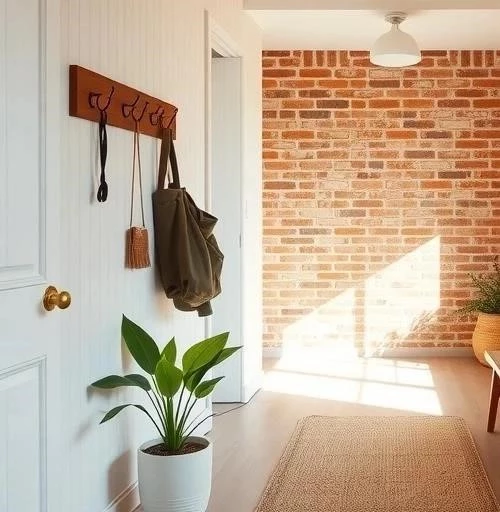
Brick can bring depth, warmth and a natural character to an entrance without requiring a complete remodel. Used thoughtfully, decorative brick in a hallway works with wood, plants and simple furnishings to create a welcoming first impression. A brick wall in an interior may suggest a loft, but it can also suit an eco-style interior when its color, texture and surrounding materials are chosen with care. The aim is not to make the hallway look rustic at any cost, but to balance tactile surfaces with practical design and a calm palette.
Choose the right surface and scale
Brick finishing in a hallway can take several forms. Exposed masonry is an option when a suitable wall already exists, while imitation brickwork can be created with lightweight panels, decorative plaster or brick tile. These solutions differ in thickness, weight, installation method and maintenance needs. Clinker tile is durable and often appropriate for areas that receive frequent contact, though its pronounced texture may feel heavy in a narrow passage. Before choosing a finish, check the wall condition, the product’s care instructions and whether moisture-resistant materials are needed near an exterior door.
Scale matters as much as material. Small, evenly spaced units may make a compact wall feel busy, while larger or smoother forms can appear calmer. A one-wall finish is often easier to integrate than covering every surface. It can define a niche, frame a bench or mark the transition between the entrance and the rest of the home. This accent wall approach keeps the brick visible without overwhelming the space. For a small hallway interior, limit strong patterns and leave adjoining walls comparatively plain.
Color, texture and natural materials
Color affects the room’s perceived brightness. White brick reflects more light and can help create a bright hallway, especially when paired with pale paint and an uncluttered floor. Aged brick in muted red, sand or gray adds character, but darker tones are best used in moderation where daylight is limited. Natural shades such as cream, clay, soft brown and sage can connect the finish with the outdoors. A restrained palette also supports an eco-friendly interior, where visual comfort comes from considered choices rather than excess decoration.
Natural materials are central to an eco-style hallway, but they do not have to dominate every surface. Wood in the finish might appear as a slim bench, a shelf, a frame or a section of wall paneling. The combination of brick and wood brings together a rough, mineral texture and a warmer grain. Cork panels offer another tactile option and can soften the acoustics of a hard-surfaced entrance. Decorative plaster, woven baskets and a few carefully chosen plants can complete the mix. The result depends on a balanced combination of textures, not on adding as many different materials as possible.
Plan the layout around everyday use
Wall design in a hallway should account for coats, bags, footwear and regular cleaning. A practical wall finish is one that suits the amount of traffic it receives and can be maintained without complicated treatment. Consider where people pass, sit or set things down before placing textured tile or fragile decor. Keep the most exposed lower sections easy to wipe, and use a bench, hooks or a narrow console to make the entrance functional. Brick decor is most effective when it has a clear role in the layout rather than serving as a surface with no connection to daily routines.
Lighting also changes how brick reads. A ceiling fixture provides general illumination, while a wall light or directed beam can bring out surface variation. In a narrow space, avoid lighting that casts harsh shadows across a highly irregular finish. A hallway mirror opposite a light source can help distribute brightness and make the entrance feel more open. Mirror size and placement should leave enough clear wall to appreciate the material. In a dim entrance, light-colored finishes, simple fittings and clear pathways usually matter more than adding extra decoration.
Refresh without a major remodel
An interior refresh without renovation is possible when the existing walls are sound and the chosen product can be installed over them safely. A budget hallway update might involve adding brick tile to a limited area, painting a plain wall, replacing a dated mirror or improving the lighting. A quick DIY renovation still requires measurement, preparation and attention to the manufacturer’s instructions. Protect floors and fittings, test colors in the actual light and check that doors, switches and trim remain accessible. If the wall is damp, damaged or uneven, solve that issue before covering it.
For renters or homeowners who prefer reversible changes, removable panels or carefully placed decor may be more suitable than permanent masonry work. Always confirm how a product is fixed and whether removal could damage the underlying surface. Small updates can make the entrance feel noticeably different, but a finish should not conceal electrical access, ventilation or existing defects. Choosing a limited area also helps manage cost and makes it easier to adjust the design later.
Keep the overall effect calm
A cozy interior is shaped by more than its wall finish. Leave enough space for movement, choose storage that fits the household’s needs and avoid filling every corner. Nature-inspired decor can include a wooden tray, a ceramic pot or a modest plant suited to the available light. For an eco-style hallway, prioritize durable products and materials that are appropriate for the space; natural appearance alone does not guarantee environmental performance. Check product information and maintenance requirements before buying.
Brick is most successful in an entrance when it supports the room rather than competing with it. A single textured surface, a few natural materials and well-planned hallway lighting can create a distinct design for the entrance zone without a major overhaul. Whether the choice is white brick, aged masonry, clinker tile or a lighter imitation, the guiding principle remains similar: combine practicality with warmth, and let minimalism and naturalness shape the final result.
8 Comments. Оставить новый
The piece presents brick as a flexible design element rather than a style that must dominate the whole hallway. The examples of framing a bench or defining a niche are useful.
The article connects material choice with both appearance and upkeep. The reminder to consider moisture near an exterior door adds useful practical context.
The comparison of lighter and more muted brick colors makes the design considerations easy to follow. It also appropriately notes the role of available light.
The article clearly explains how different brick finishes can affect a hallway. Its emphasis on checking wall condition and maintenance requirements is useful.
This is a balanced introduction to decorative brick in an entrance. It addresses visual impact alongside material weight, installation and care.
This is a practical overview of brick options for hallway design. Comparing exposed masonry, panels, plaster and tile helps clarify that the materials have different installation needs.
The discussion of scale is helpful, particularly the point that a single accent wall can add texture without making a narrow entrance feel crowded.
The advice to balance textured brick with simpler adjoining walls offers a clear approach for using this finish in a compact space.